The Digital Product Passport will change how textile products enter, move through and remain visible in the European market.
For garment exporters, this is not simply another certificate to place in a shipment file. It is a shift towards structured product information that can be accessed throughout the product’s lifecycle.
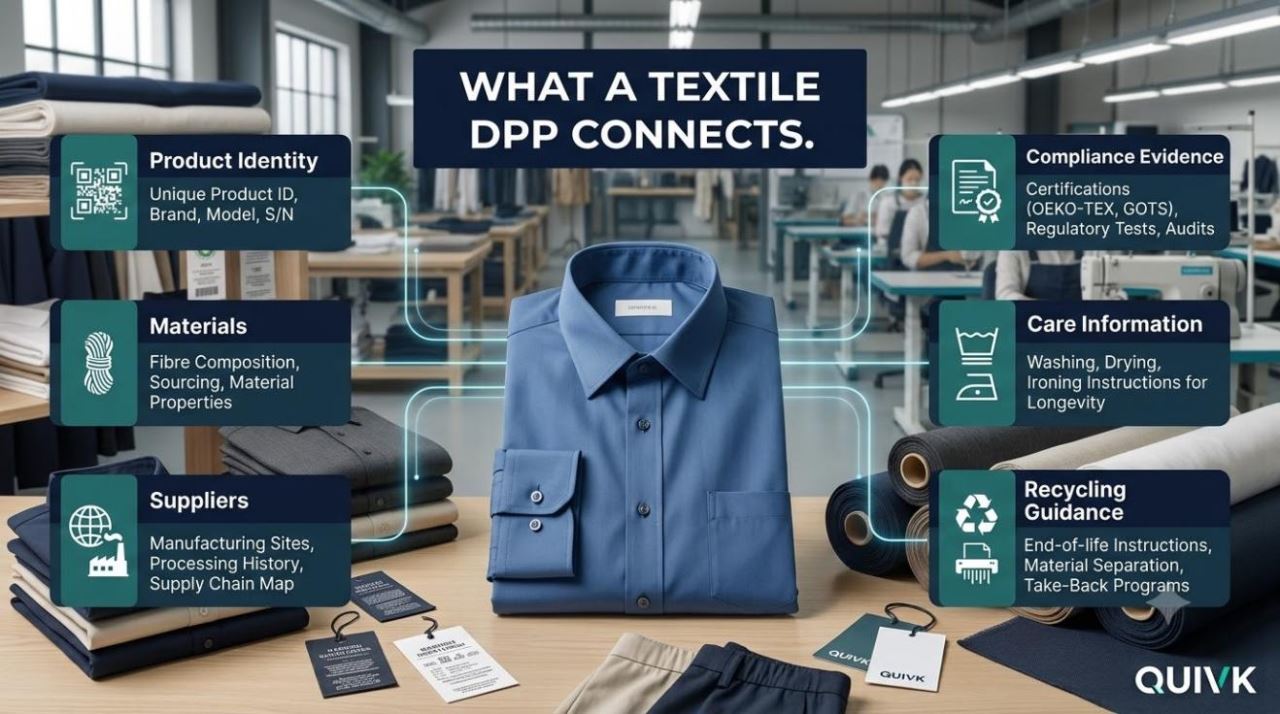
The physical garment may carry a QR code or another machine-readable data carrier. The real work, however, sits behind that code: product identity, materials, supplier evidence, compliance documents, care information and end-of-life guidance.
What is a Digital Product Passport?
The European Commission describes the DPP as a digital identity card for products, components and materials. It is intended to support sustainability, circularity and legal compliance by making relevant information available in a transparent and standardised digital form.
Depending on the applicable product rules, a passport may contain information relating to:
- Product identity
- Material composition
- Origin and manufacturing
- Environmental performance
- Repairability
- Use and maintenance
- Reuse and recycling
- Compliance evidence
The exact textile requirements are not yet final. They will be defined through the textile-specific delegated act.
This distinction matters. Factories should prepare for the direction of travel without presenting proposed data fields as confirmed legal requirements.

Why Exporters Should Start Before the Deadline
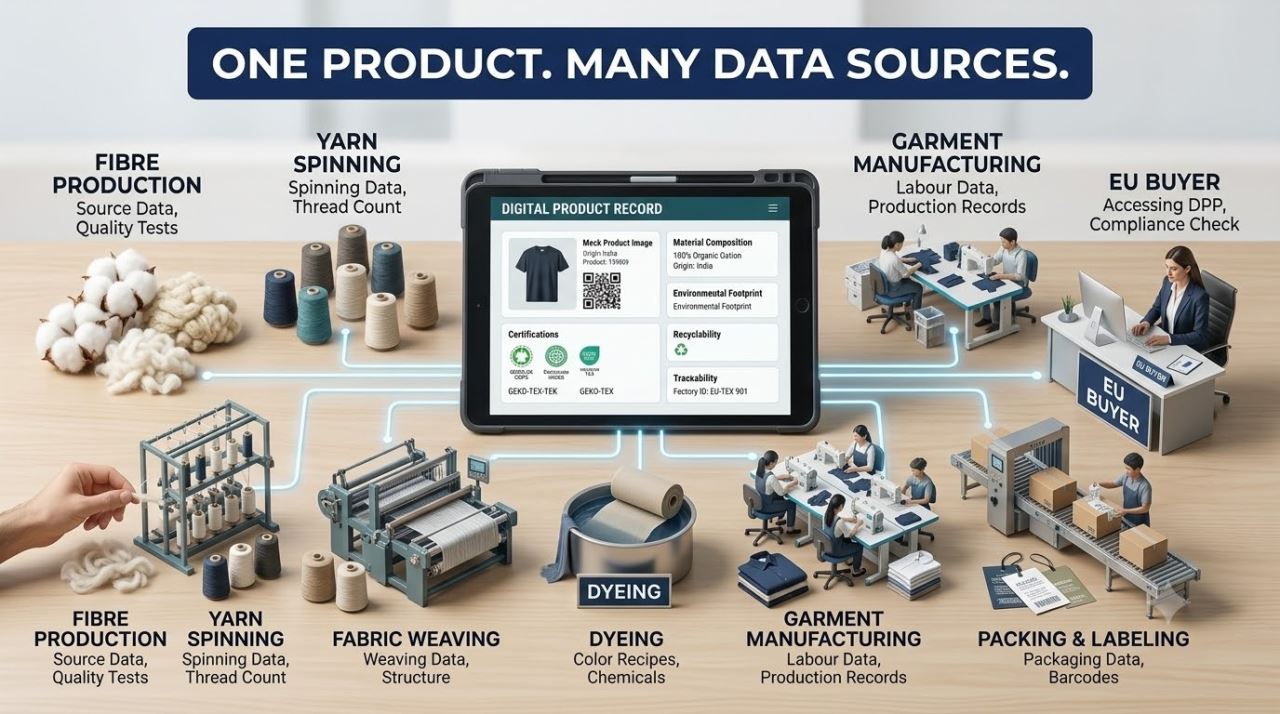
A garment supply chain rarely belongs to one organisation.
It may include fibre suppliers, spinning mills, fabric manufacturers, dyeing and finishing units, printers, embroidery units, washing facilities, garment factories, trim suppliers, testing laboratories and packaging providers.
When an EU buyer asks for product-level evidence, the exporter cannot create credible upstream information after production has finished.
The information must already exist. It must be connected to the correct material, supplier, product, order or batch.
DPP readiness therefore begins with five questions:
- What product information do we currently hold?
- Where is that information stored?
- Who owns and approves it?
- What evidence supports each claim?
- Can the information be connected to a consistent product identity?
What Information Should Factories Prepare?
Product identity
Factories should align product names, buyer article numbers, internal style numbers, SKUs, colours, sizes, production orders and identifiers such as GTINs.
Different departments should not use conflicting references for the same product.
Material and component information
The data structure may need to cover more than the main fabric. Relevant components can include:
- Lining and interlining
- Thread
- Buttons and zippers
- Elastic
- Labels
- Coatings
- Printing materials
- Trims
- Packaging
Supplier and facility information
Exporters should understand which organisations and sites contributed to the product.
This does not mean every supplier detail must be publicly disclosed. Different information can be made available to consumers, buyers, authorities and authorised partners.
Compliance evidence
Claims should be connected to controlled evidence, including certificates, test reports, restricted-substance declarations, transaction records and buyer approvals.
Use and circularity information
The product record may also include care, maintenance, repair, reuse, sorting and recycling guidance.
A DPP Is More Than a Code
Printing a QR code is the easiest part of the project.
A useful passport requires:
- A stable product identifier
- Structured and verified data
- Supporting evidence
- Role-based access
- Version control
- An update process
- Long-term information availability
The code is the doorway. The product passport is the information system behind it.
Practical Readiness Checklist
- Identify your highest-priority EU product categories.
- List the product information already requested by buyers.
- Map material, supplier and compliance information by department.
- Identify unsupported claims and expired evidence.
- Standardise product identities across systems.
- Select one product family for a pilot.
- Assign a cross-functional DPP owner.
- Test a passport with real factory information.

Key Takeaway
The first DPP investment should be in data readiness and ownership, not only in software or code printing.
CTA
QUIVK helps garment and textile exporters assess existing product data, identify DPP gaps and plan practical factory-level implementation.