
Why exporters should understand the boundary between product, components and packaging data
A garment does not travel alone.
It may be packed with:
- polybag
- hanger
- size sticker
- tissue paper
- cardboard
- carton
- tags
- protective inserts
Packaging is an important sustainability topic in its own right.
This creates a practical DPP question:
How much packaging information belongs in the product passport?
The final answer depends on applicable product-specific rules and separate packaging requirements.
But exporters can prepare by understanding their packaging data today.
In many factories, garment BOM and packaging BOM are not controlled in exactly the same way.
Merchandising may manage the garment.
Packing teams manage cartons.
The buyer may nominate packaging materials separately.
Sustainability teams may track plastic reduction.
DPP preparation can reveal that packaging information is often less structured than the garment itself.
The first step is simply knowing what is actually used.
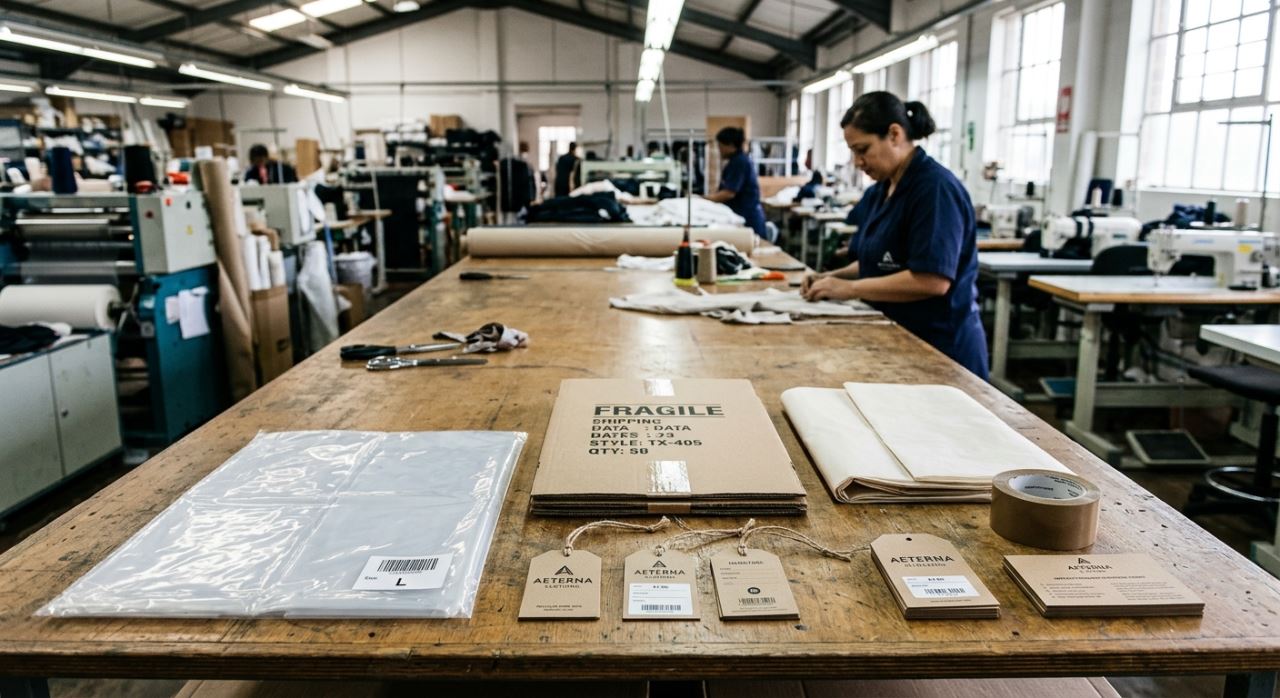
For one product or order, list:
- polybag type
- hanger material
- paper inserts
- tags
- carton specification
- adhesive labels
- protective materials
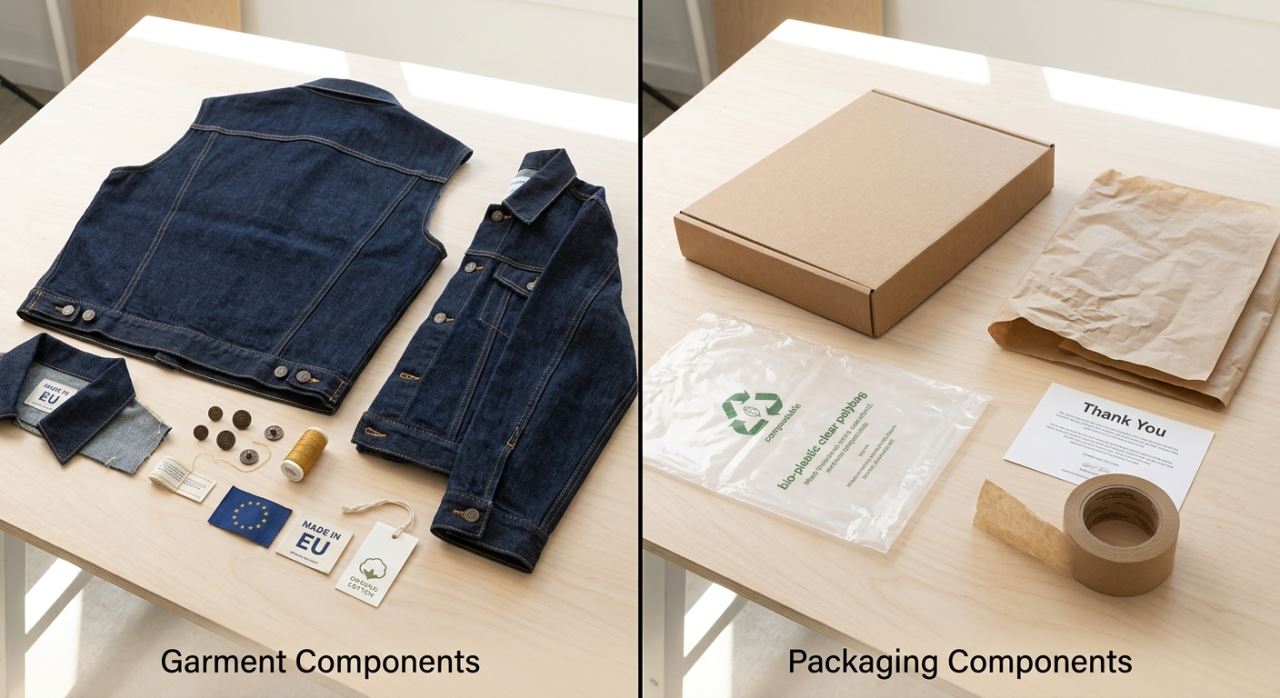
Then ask:
- Which are product components?
- Which are packaging?
- Who supplies them?
- What material are they made from?
- Are sustainability claims supported?
This creates useful visibility.
Factories should also avoid mixing regulatory frameworks casually.
Textile products and packaging can be subject to different rules.
Not every packaging field automatically belongs in the textile passport.
However, packaging data still has commercial value.
Buyers increasingly ask about:
- plastic reduction
- recycled content
- paper certification
- carton optimization
- packaging weight
Keeping this information structured can support buyer reporting and other compliance needs.

It is also useful to distinguish between:
- consumer-facing packaging
- unit packaging
- inner packaging
- shipping cartons
- pallets
A garment hangtag has a very different relationship to the product from a master shipping carton.
Clear classification makes data easier to reuse.
The same principle applies to sustainability claims.
“Recyclable packaging” is broad.
A stronger record identifies the actual material, verified recycled content, certification and appropriate disposal information.
Specific data is more useful than broad language.
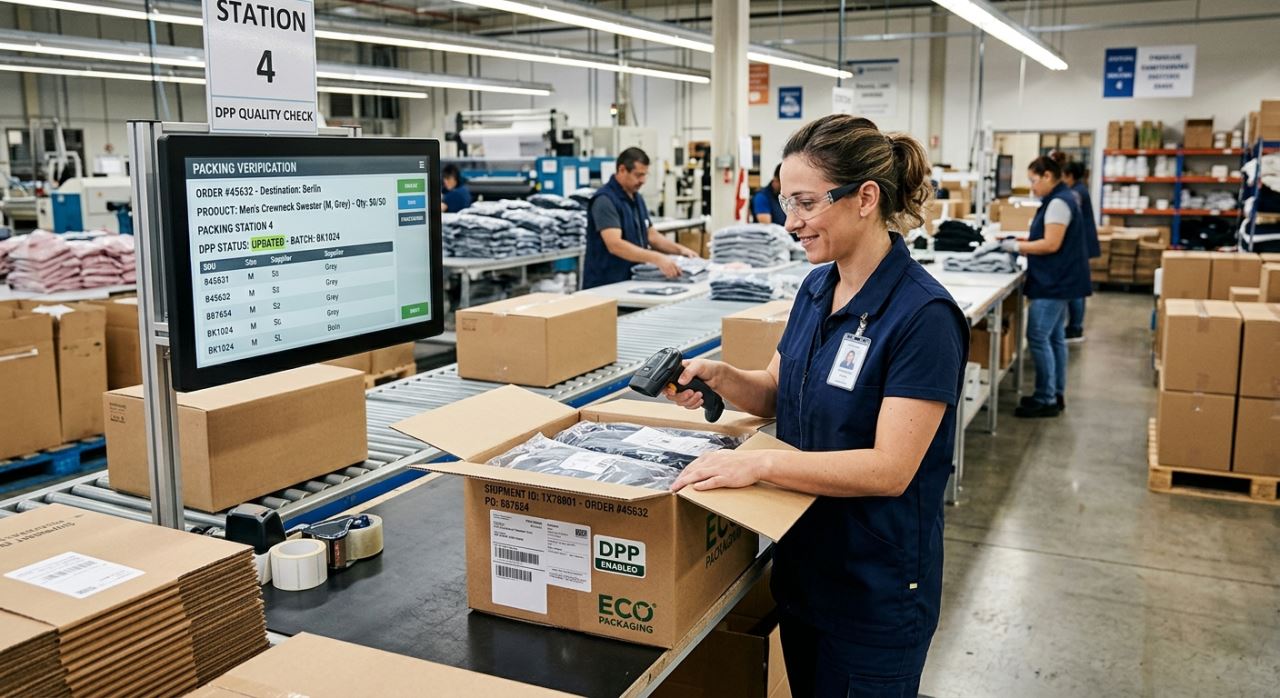 Key Ideas
- Packaging data is often managed separately from garment product data.
• Exporters should understand what packaging materials are actually used.
• Product and packaging requirements may come from different regulatory frameworks.
• Packaging information still has commercial and sustainability value.
• Unit, consumer and logistics packaging should be distinguished.
• Packaging claims should be precise and supported.
Conclusion
Packaging may not always sit at the Centre of textile DPP.
But poor packaging data can still create problems for buyers and sustainability programs.
At QUIVK, we believe exporters should build a clear boundary:
- What belongs to the garment?
- What belongs to packaging?
- What belongs to logistics?
Once that boundary is clear, the right information can be used in the right system.