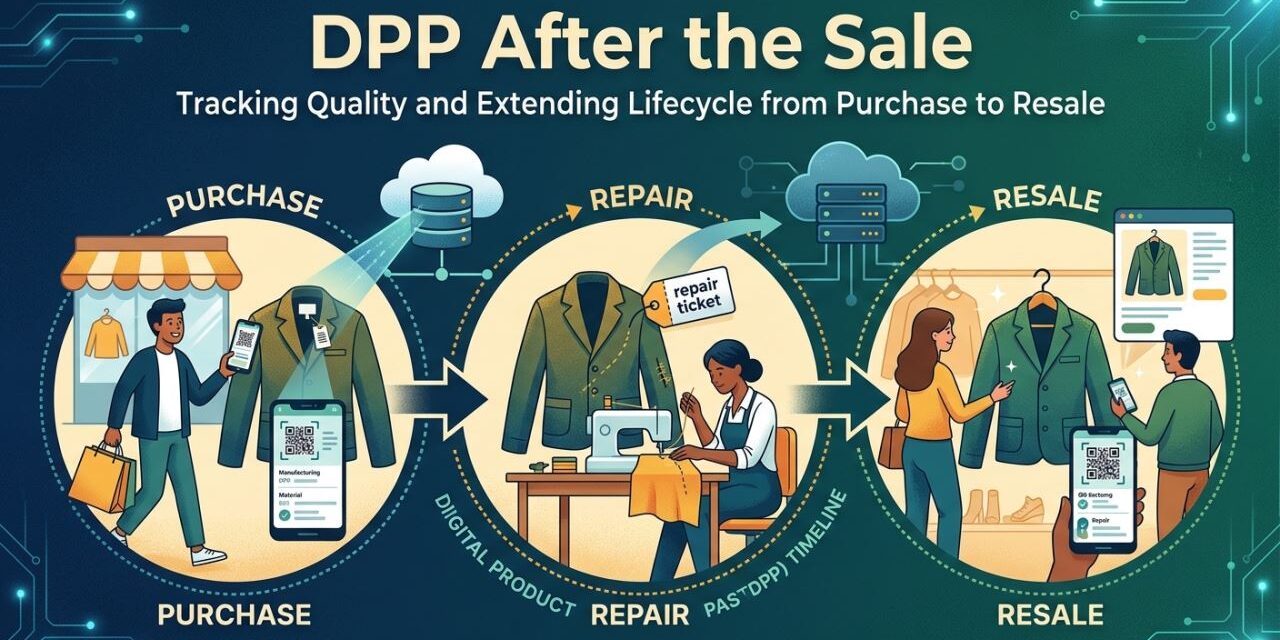
The product passport can remain useful long after a garment leaves the factory
Most factory information systems are focused on one milestone:
shipment.
Once goods leave the warehouse, the manufacturing job appears complete.
Digital Product Passport changes that perspective.
A persistent product identity can remain useful during the product’s life.
That creates opportunities beyond compliance.
- Repair.
- Returns.
- Resale.
- Authentication.
- Recycling.
This does not mean every garment needs advanced post-sale services.

But exporters and brands should understand what becomes possible when product identity survives beyond shipment.
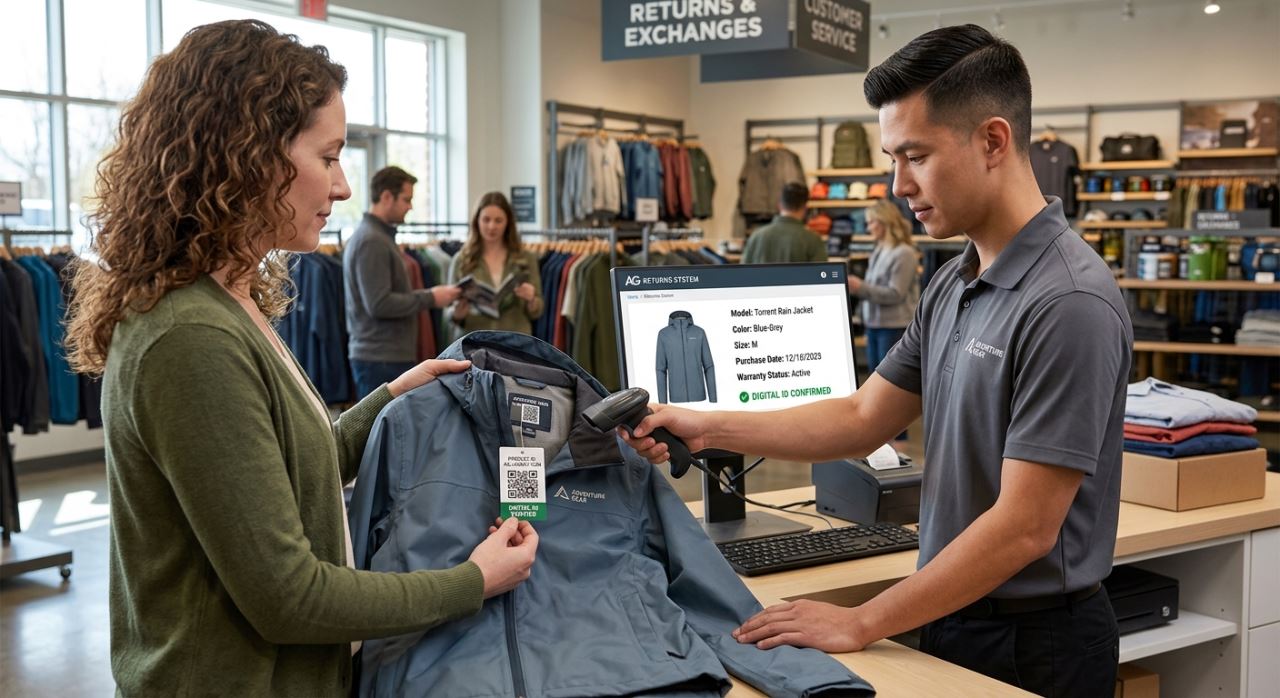
A returned garment may raise basic questions.
- What product is this?
- Which batch?
- Which material?
- When was it produced?
- Is the item authentic?
A reliable digital identity can help connect the returned product to its original information.
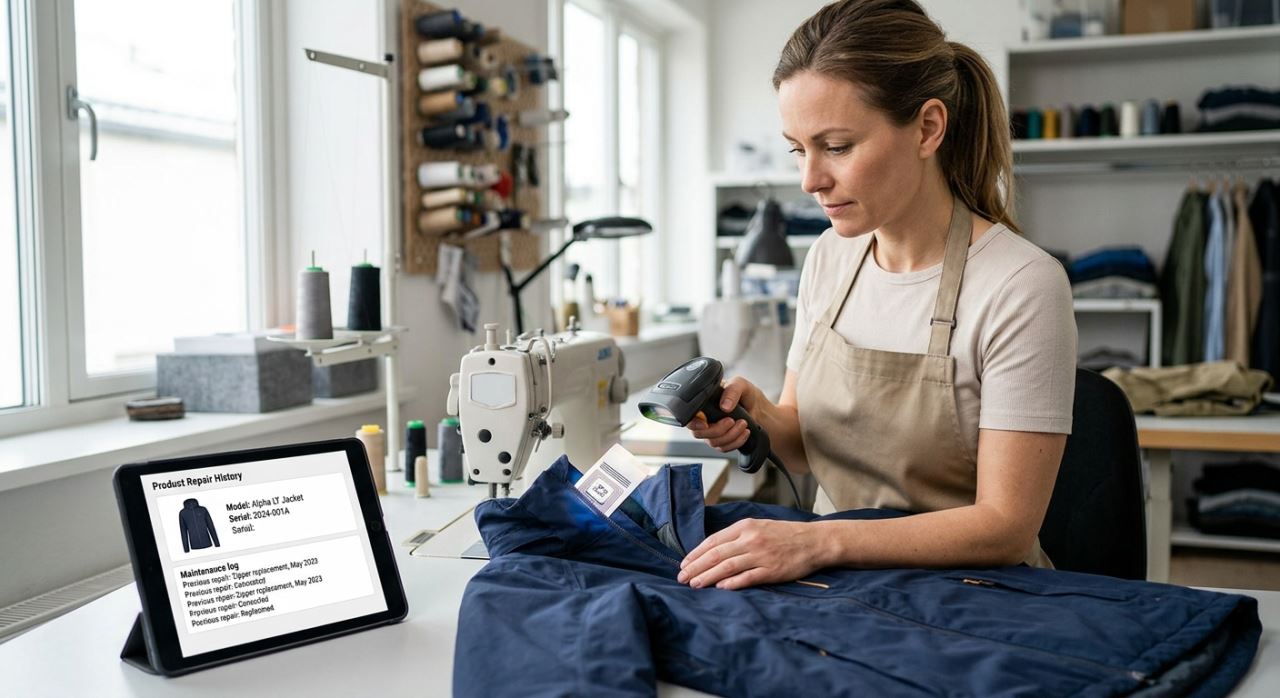
Repair services can also benefit.
A repairer may need material details, construction information, replacement components, care limitations or specific repair instructions.
A Digital Product Passport can provide selected information without requiring the repairer to contact the original manufacturer.
Resale is another area where persistent identity can become useful.
Second-hand markets often suffer from information loss.
 The receipt disappears.
Labels become unreadable.
The second owner knows very little about the product.
A digital identity can preserve information such as composition, care, model details, repair guidance and original manufacturer information.
For selected high-value products, item-level identity could eventually support service history.
For example:
zipper replaced
professional repair completed
authentication performed
But companies should be careful about privacy.
Product history and personal ownership history are not the same thing.
Personal data should not be added casually to a passport.
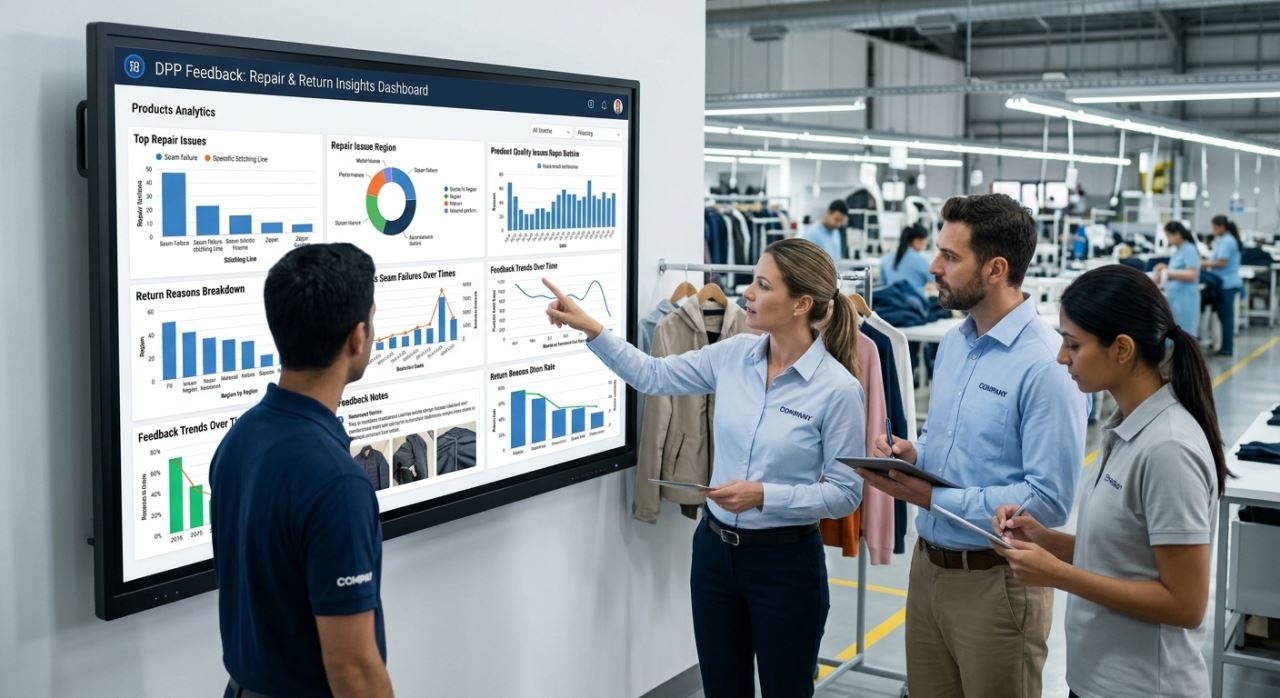
Post-sale data can also create feedback for manufacturers.
If the same zipper repeatedly fails, design teams should know.
If one fabric shows excessive wear, quality teams can investigate.
If consumers repeatedly misunderstand care guidance, that guidance can be improved.
Digital identity can therefore create a feedback loop from the market back to product development.
That is valuable beyond compliance.
Key Ideas
- DPP can remain useful after the initial sale.
• Product identity can support returns and product verification.
• Repairers may benefit from authorized product information.
• Resale can preserve product knowledge for future owners.
• Item-level identity may support service history for selected products.
• Personal data should not be mixed casually with product history.
• Post-sale information can improve future product design and quality.
Conclusion
The traditional factory view ends at shipment.
The DPP view can continue through the life of the product.
At QUIVK, we believe this is where Digital Product Passport becomes more interesting than a compliance document.
It can help a product remain understandable.
Repairable.
Reusable.
And useful for longer.