

Why textile exporters should look beyond the visible code
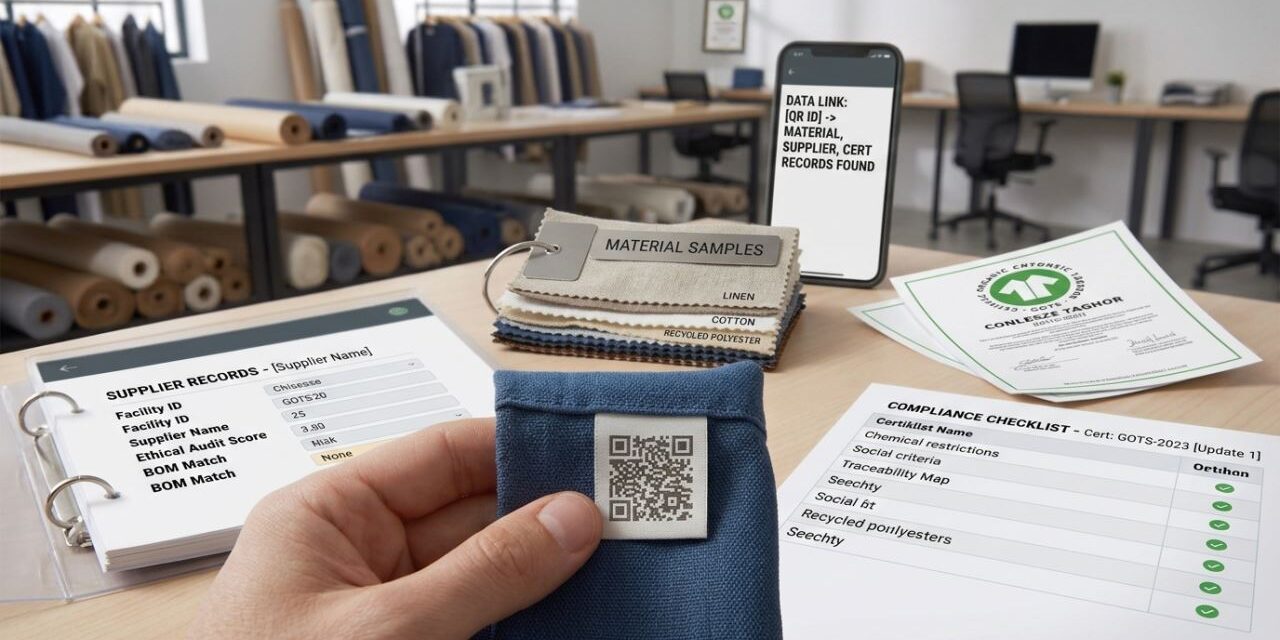
A QR code is usually the first thing people notice when Digital Product Passports are discussed.
That makes sense.
It is visible.
It is easy to demonstrate.
A person scans a garment and information appears on a phone.
But this simple experience can create the wrong impression.
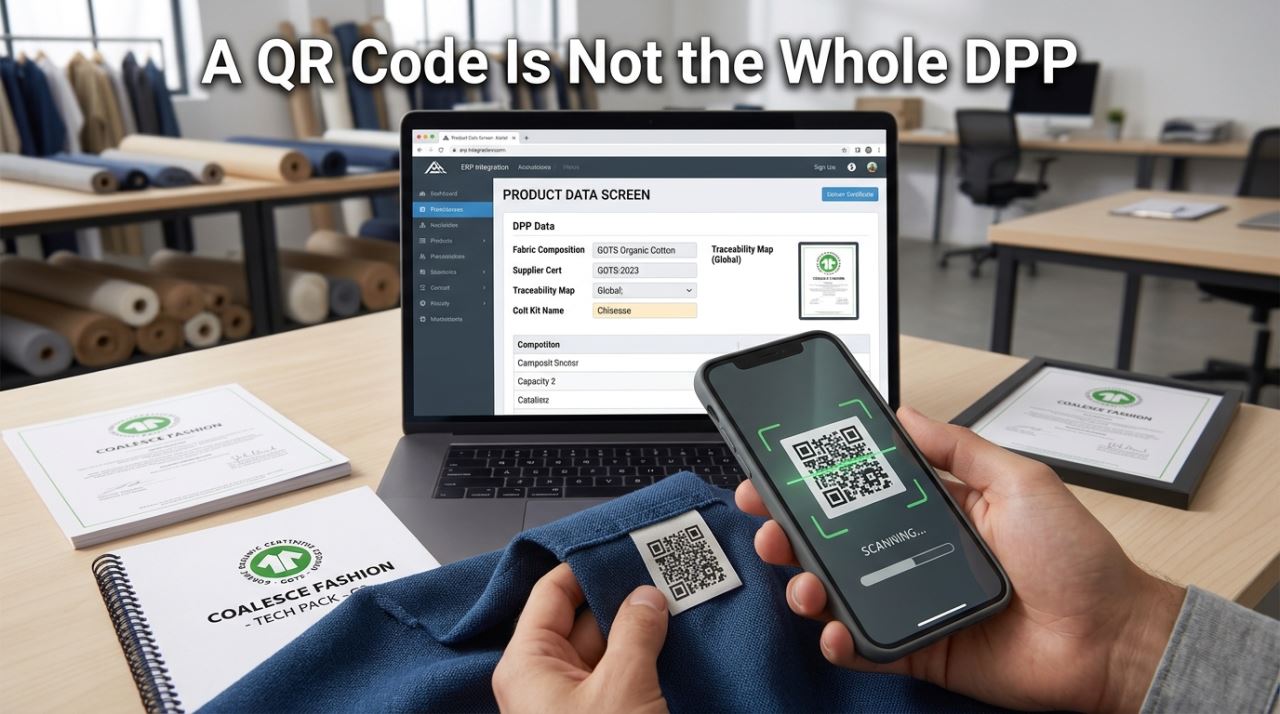
A QR code is not the Digital Product Passport.
It is only one possible way of reaching it.
Under ESPR, the DPP must be connected through a data carrier to a persistent unique product identifier, while the applicable product rules will define details such as the carrier, its placement and whether the passport operates at model, batch or item level. The underlying data is also expected to use open, interoperable formats.
For exporters, the real question is therefore not:
“Can we print a QR code?”
It is:
“What trustworthy information exists behind the code?”

A QR code solves an access problem
At its simplest, a QR code can direct a user to a website.
That website may show:
product images
material composition
brand story
care instructions
sustainability claims
This can be useful.
But many ordinary product pages already do this.
A Digital Product Passport needs a stronger structure.
It needs to know exactly which product is being accessed.
The data should be organized.
Claims should be supported.
Access should be controlled.
Updates should be managed.
Information may need to move between systems.
That is a much larger problem than generating a square barcode.
Product identity is the foundation
Imagine a factory manufactures one polo-shirt design throughout the year.
The design appears unchanged.
But the fabric supplier changes.
One batch uses certified cotton.
Another batch uses conventional cotton.
A third production run is made at another facility.
If every garment points to the same generic product page, the information may become misleading.
This is why product identity matters.
The DPP may eventually need to operate at model, batch or item level depending on the product-specific rules.
Even before those rules are final for textiles, exporters should understand how much their product information varies.
Claims should connect to evidence
Suppose a passport says:
“Made with recycled material.”
That sounds positive.
But a buyer or regulator may ask:
How much recycled material?
Which component?
Who supplied it?
Which evidence supports the claim?
Which production batch used it?
A strong DPP should make it possible to answer these questions.
The platform does not necessarily need to show every supporting document publicly.
But the organization should be able to connect a claim to evidence.
Different users need different information
A consumer does not need access to every confidential supplier document.
A sourcing manager may need more information than the consumer.
A regulator may require different information again.
Internal users may need editing and approval rights.
A useful DPP platform therefore needs role-based access.
The same product can have one identity while different authorized users see different information.
Updates should not break the product identity
Another weakness of a basic QR webpage is that companies often treat it like campaign content.
Websites get redesigned.
Pages move.
URLs disappear.
The product remains in the market.
A DPP is intended to remain relevant throughout the required information period.
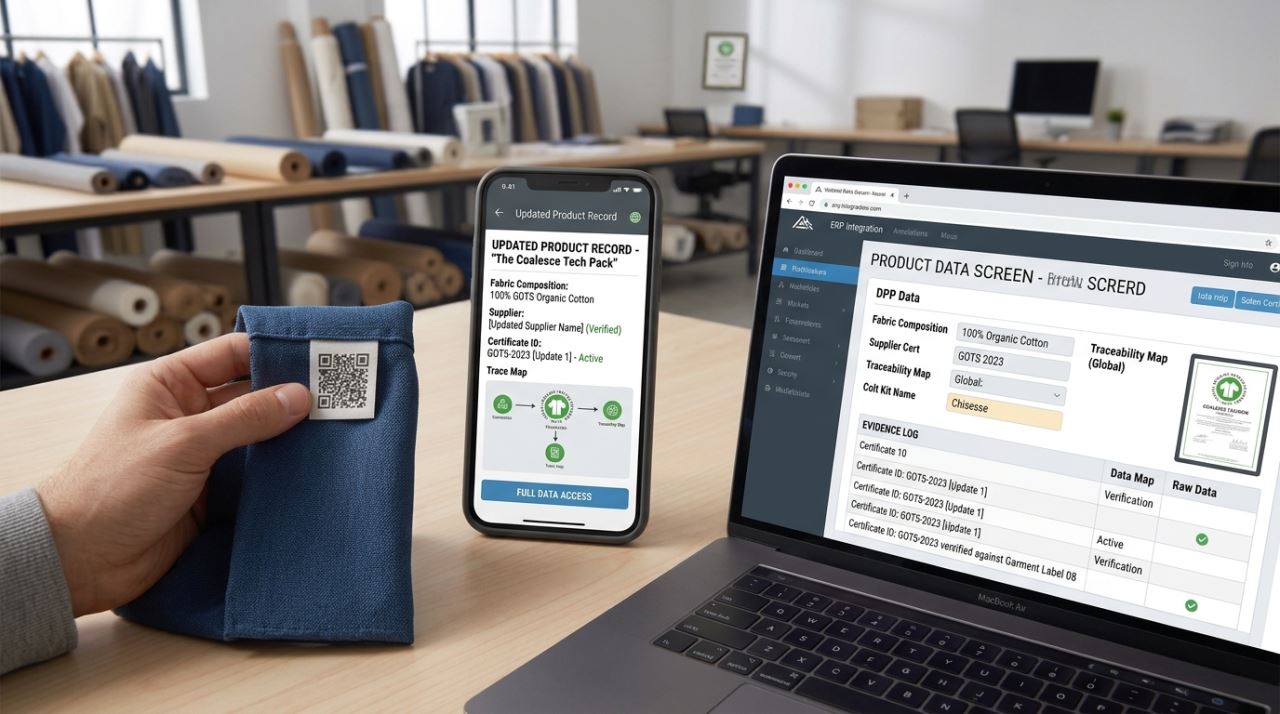
The product identity should remain stable while controlled digital information can be updated.
This is particularly important for:
certificate renewals
improved care instructions
repair information
recycling services
regulatory updates
Avoid vendor lock-in
ESPR explicitly requires DPP data to use open standards and interoperable formats and to be transferable without vendor lock-in.
This should influence platform selection.
Before choosing a system, ask:
Can we export our product data?
Is there an API?
Who owns the information?
Can another authorized system access it?
What happens if we change providers?
Can the identifier remain stable?
These questions are more important than how attractive the QR demonstration looks.
What should exporters test?
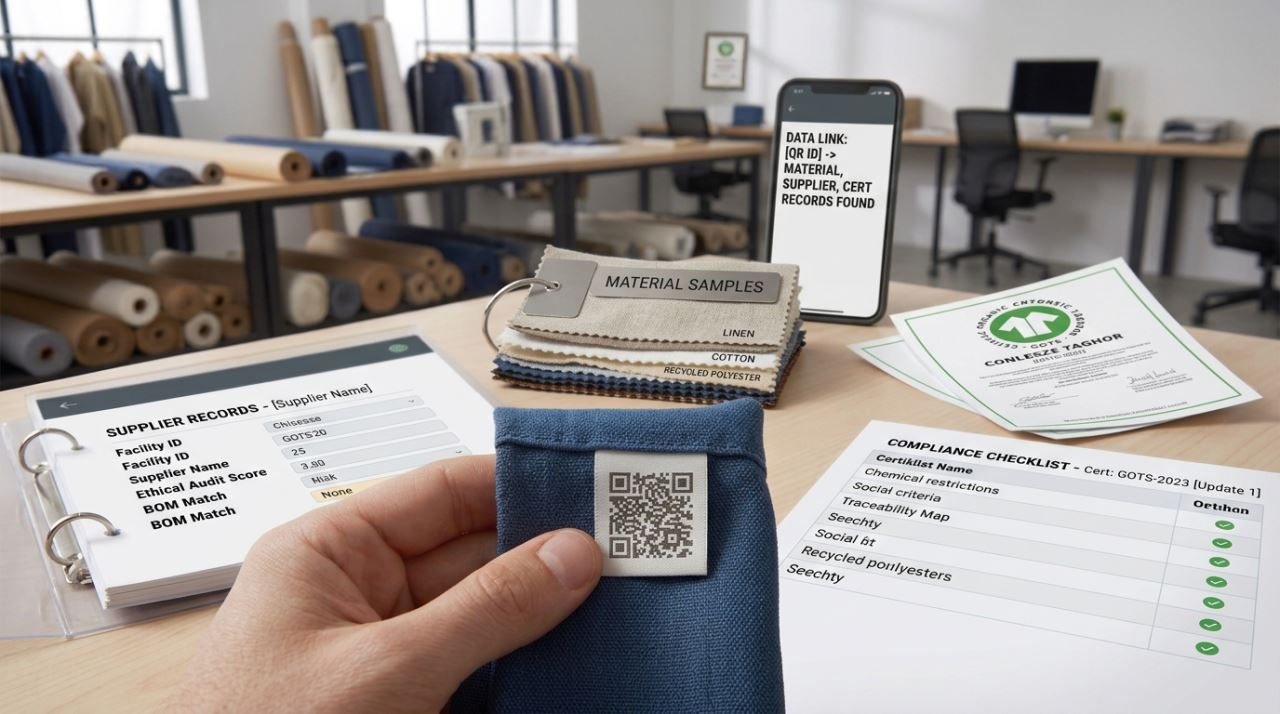
Take one real product.
Create the product identity.
Add material information.
Connect a certificate.
Define public and buyer views.
Generate the QR code.
Print it on the intended label.
Scan it on several devices.
Then change one piece of information.
Does the product identity remain intact?
Can the change be approved?
Is there a record of what changed?
That is a much more useful DPP test.
Key Ideas
- A QR code is a data carrier, not the complete Digital Product Passport.
• Product identity must exist behind the code.
• Product claims should be connected to evidence.
• Different users may require different levels of access.
• Product information needs controlled updates.
• DPP systems should support interoperability and data portability.
• Exporters should test the entire information process, not only scanning.
 Conclusion
The QR code will probably remain the most visible part of a Digital Product Passport.
But it is also the easiest part.
The real work happens behind it.
Product identity.
Data quality.
Evidence.
Permissions.
Updates.
Interoperability.
At QUIVK, we believe exporters should judge a DPP by what happens after the scan.
Because a code can open almost anything.
A passport should open trusted product information.






