

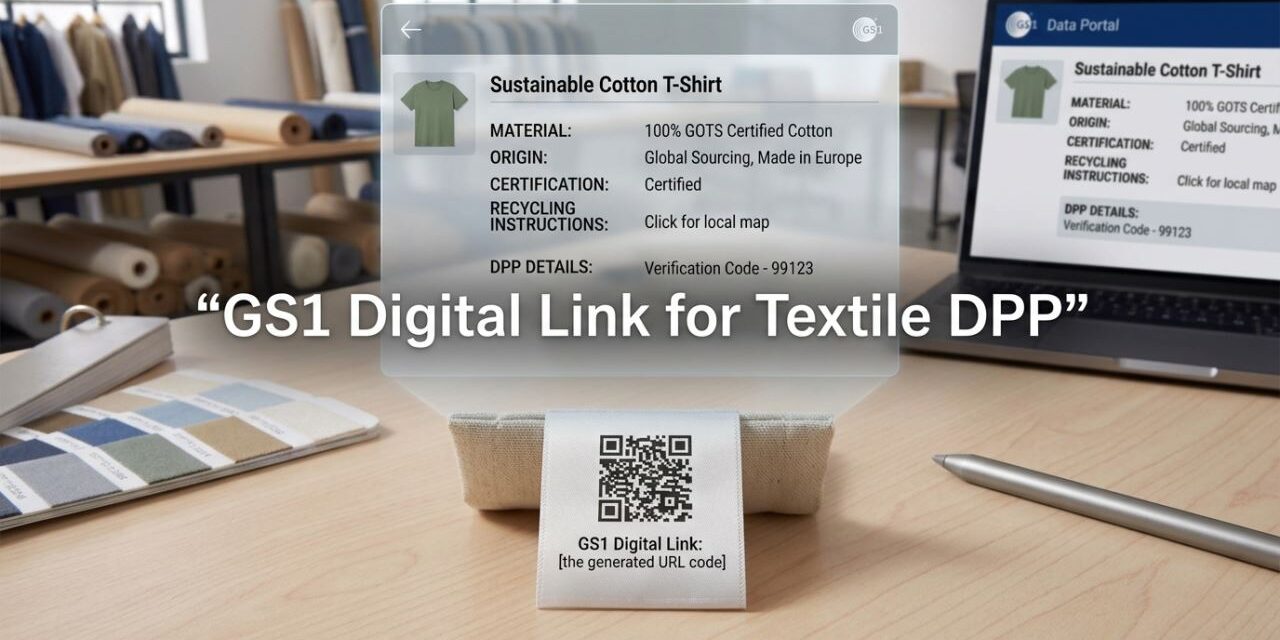
How a standards-based product identity can connect a garment to digital information
Most textile exporters already work with several product identifiers.
A buyer may have an article number.
The factory has a style number.
ERP has an SKU.
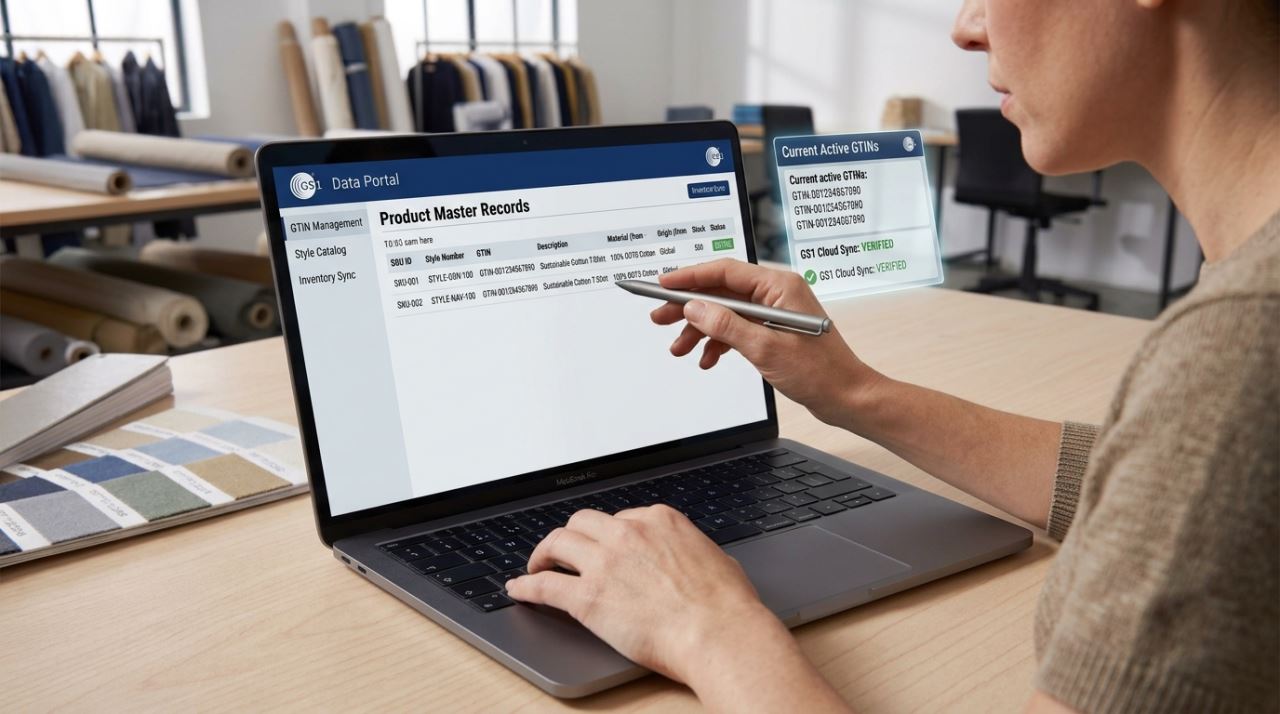
A retail product may have a GTIN.
Production may have a batch or lot number.
Digital Product Passport implementation creates a simple but important question:
Which identity should connect the physical garment to its digital information?
One relevant technology is GS1 Digital Link.
GS1 Digital Link provides a standardized way to represent GS1 identification keys in web addresses so they can connect to online information and services. It extends existing GS1 identification rather than creating an entirely separate identity system.
For exporters already using GS1 identifiers, this can be particularly useful.
Think of it as identity plus web access
A normal product webpage might look like:
company.com/product/polo-shirt
That page may identify the product informally.
GS1 Digital Link takes a standards-based identifier such as a GTIN and represents it within a web-compatible structure.
The product identity can then connect to relevant online resources.
This is important because the physical code becomes more than a random website shortcut.
It carries or references a recognized product identity.
Why stable identity matters
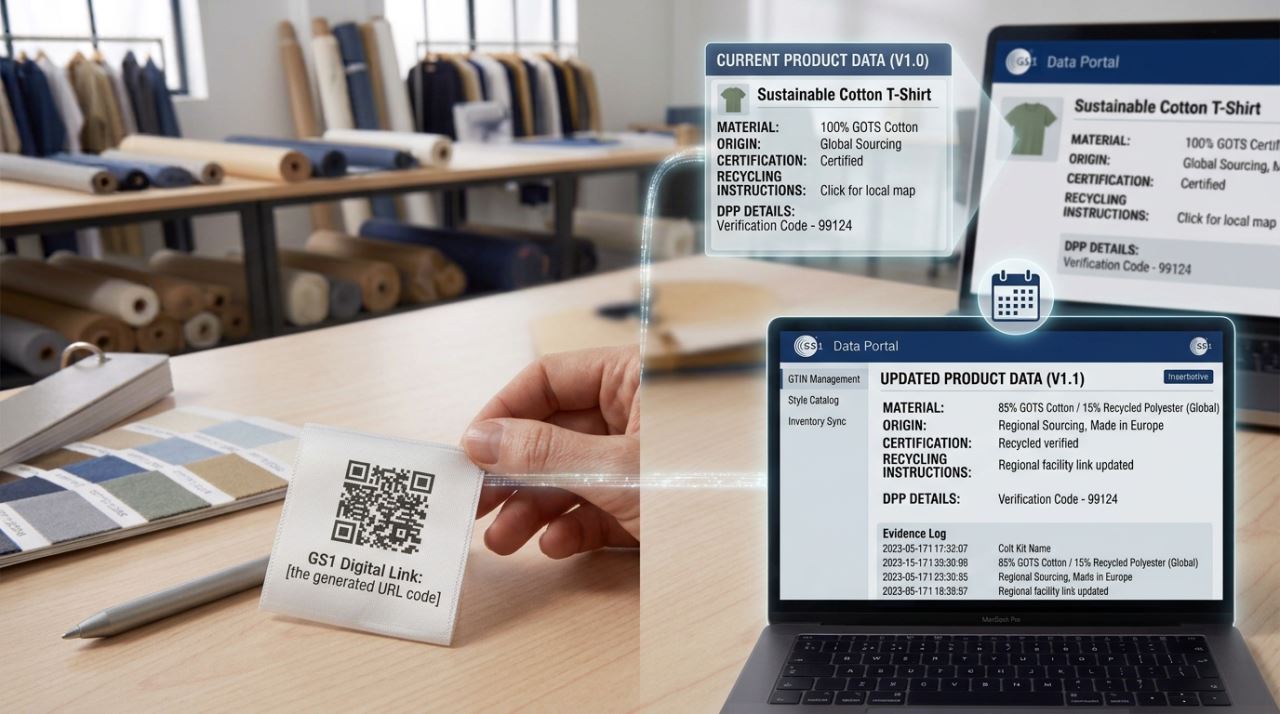
A garment may remain in use for years.
During that time:
the brand website may change
the DPP platform may evolve
new services may become available
repair information may be added
recycling information may change
A stable product identifier gives the digital ecosystem something consistent to work with.
The digital services around that identity can change without constantly reinventing the identity itself.
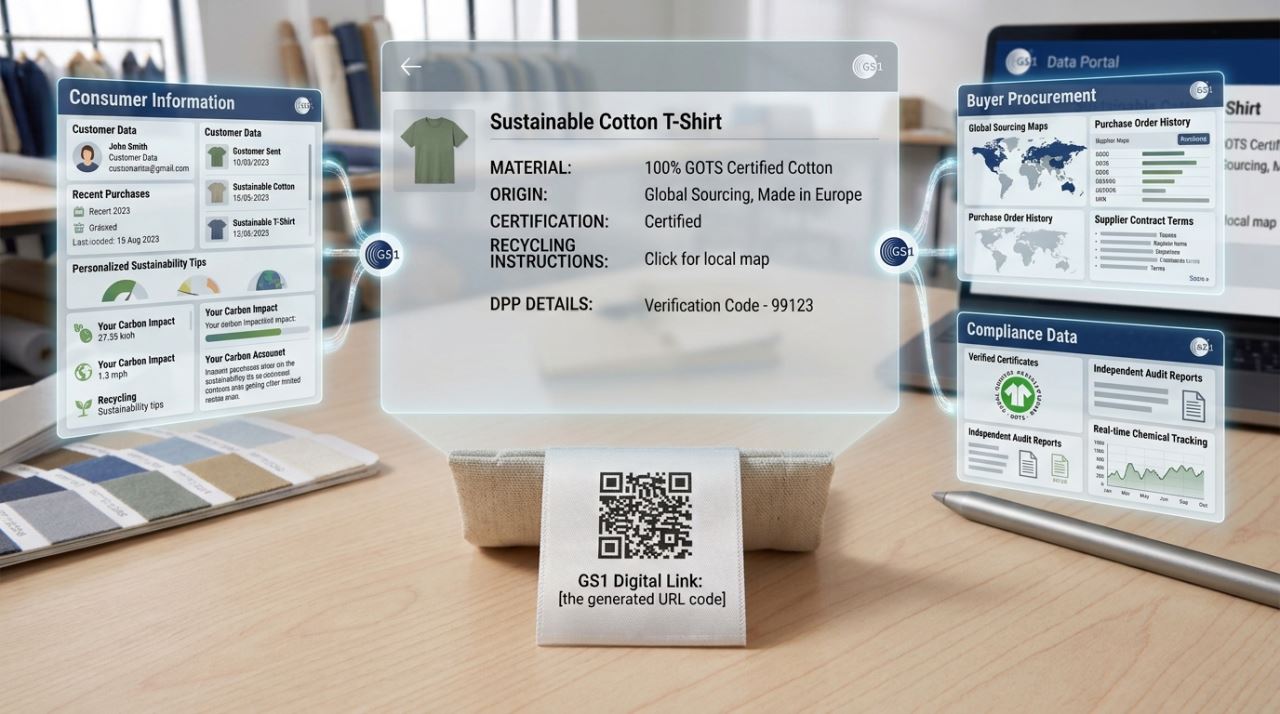
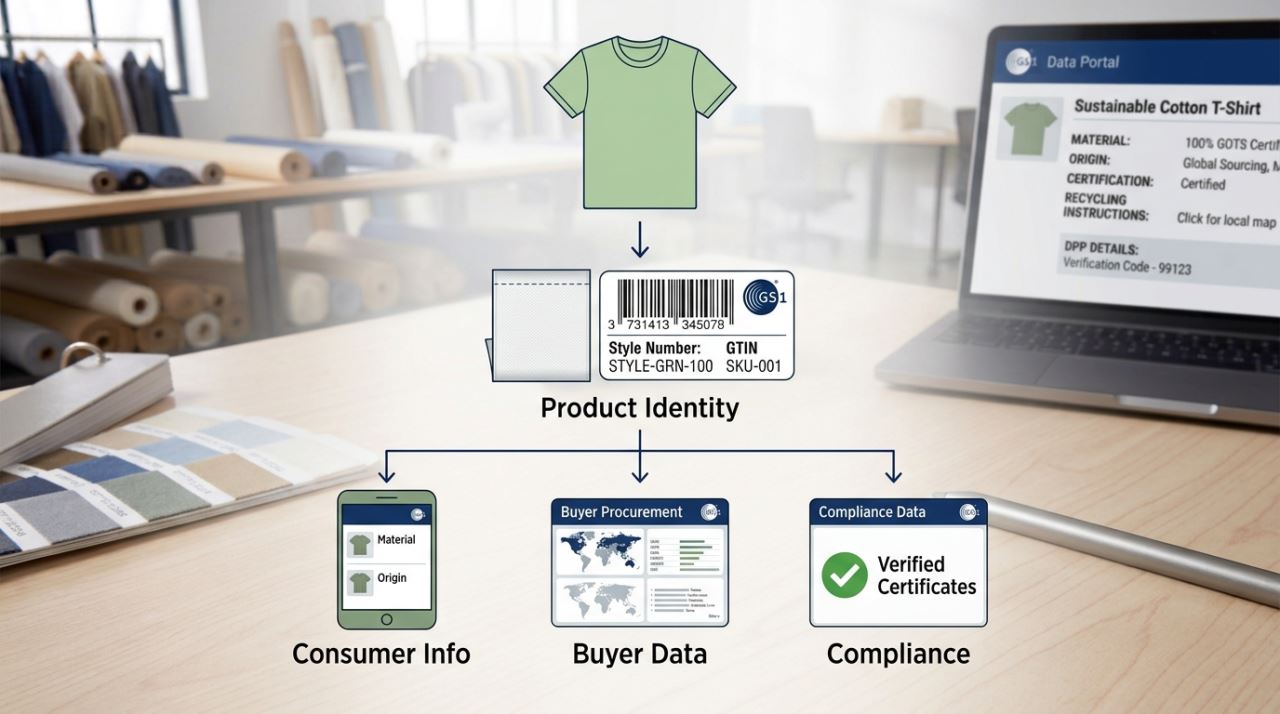
One identity can serve different purposes
A consumer scanning the garment may want:
- composition
• care guidance
• repair information
• recycling guidance
A buyer may want:
- compliance evidence
• supplier information
• product specifications
A business system may want:
- structured product data
• traceability information
• API access
A resolver can help direct a GS1-identified product toward one or more appropriate information services. GS1 describes resolver services as a way to connect identifiers to different sources of related information or services.
This does not mean every user automatically receives every piece of information.
Access control still matters.
Digital Link is not the whole DPP
It is important not to replace one oversimplification with another.
Just as a QR code is not the whole DPP, GS1 Digital Link is not the whole DPP either.
It helps with:
identification
web linkage
service discovery
interoperability
It does not automatically create:
material information
supplier evidence
certificate validity
environmental data
care instructions
permissions
governance
The passport platform still needs these capabilities.
Start by cleaning product identity
Before discussing resolver architecture, factories should look at their current product master.
Ask:
Does every product have a clear internal identity?
How does that identity relate to the buyer article?
Do we already use GTINs?
Who allocates them?
Are there duplicate identifiers?
How are color and size variants managed?
How is batch information linked?
A sophisticated digital-link implementation built on poor master data will still produce poor results.
 A practical pilot
Choose one product already carrying a recognized identifier.
Create a Digital Link.
Connect it to the product passport.
Set up one consumer view and one restricted business view.
Print the QR code.
Test it.
Then update the digital content without changing the product identity.
This demonstrates the practical value better than a technical presentation.
Key Ideas
- GS1 Digital Link connects GS1 product identity with online information and services.
• It extends existing GS1 identification rather than replacing it.
• Stable product identities make DPP systems easier to manage over time.
• One identity may connect to different digital services.
• Resolver technology can direct requests toward appropriate information.
• Digital Link does not replace product data, evidence or governance.
• Clean product master data should come first.
 Conclusion
DPP implementation needs both product information and a reliable way to reach it.
GS1 Digital Link provides a useful standards-based approach for connecting recognized product identifiers to digital services.
For textile exporters, this is particularly relevant because many international buyers already operate around GS1 identifiers.
At QUIVK, we see standards-based identification as an important part of building DPP systems that can work beyond one factory, one buyer or one software provider.
The identity should survive.
The services around it can evolve.






