

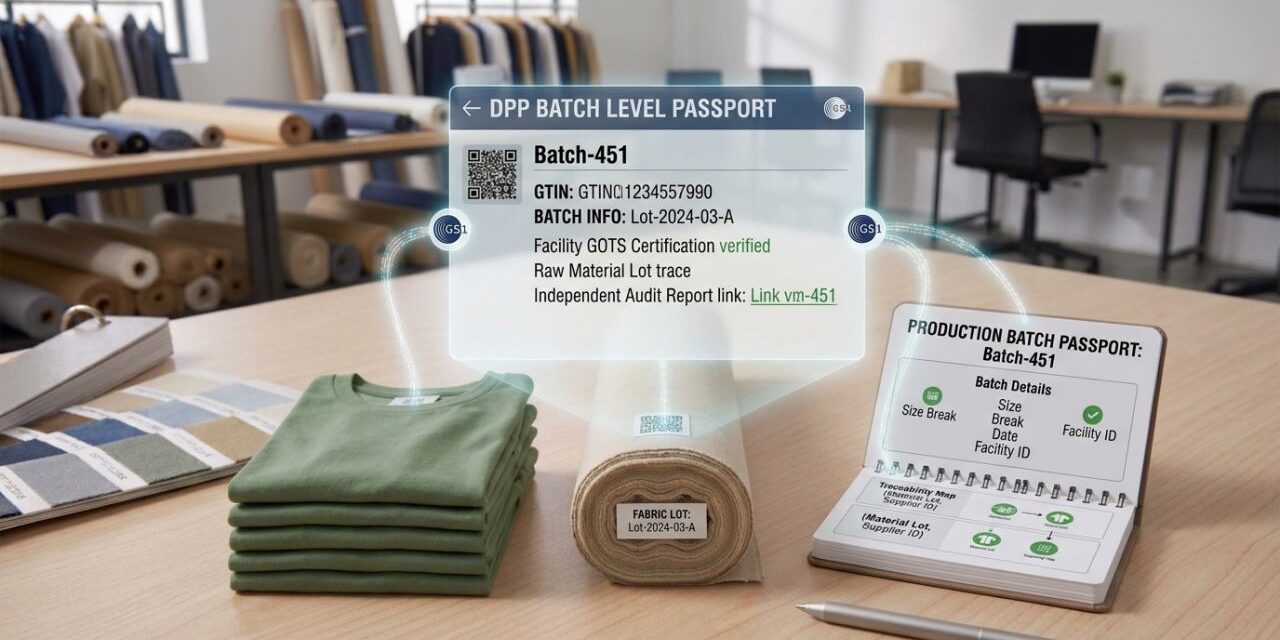
Why the level of product identification can change the entire DPP implementation
One question can completely change the complexity of a Digital Product Passport project:
Does the passport represent:
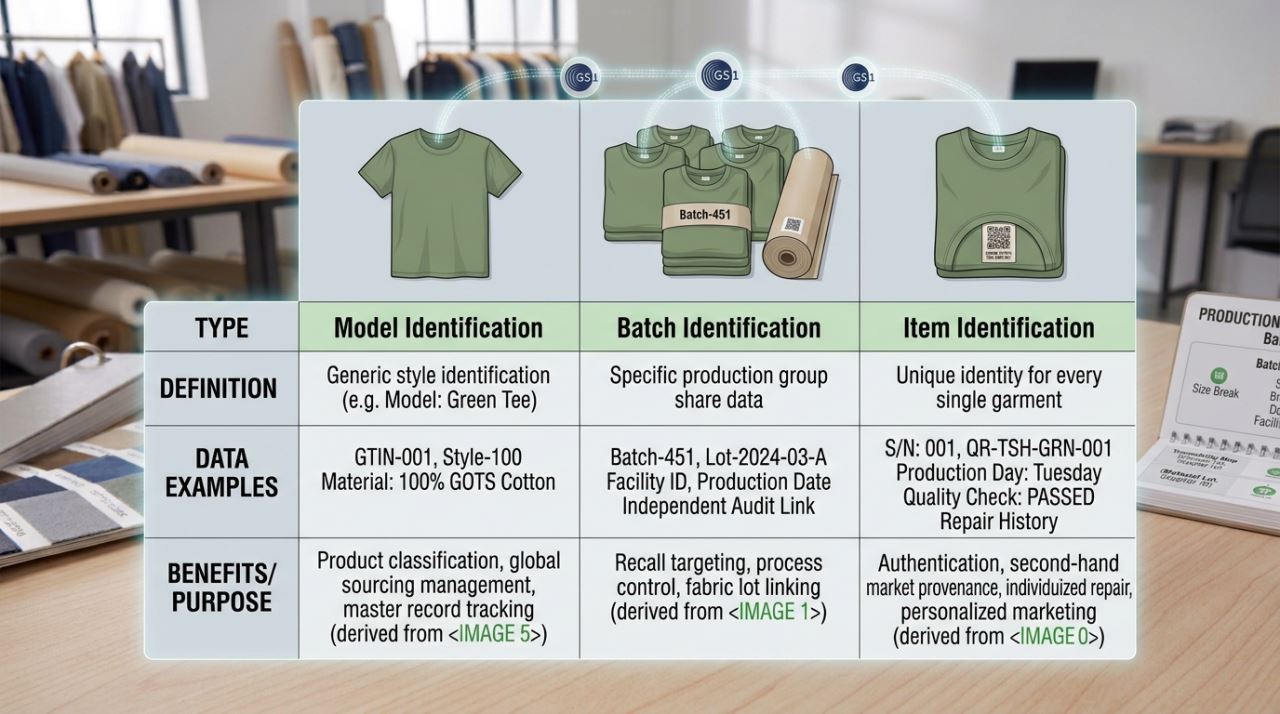
- one product model?
- one production batch?
- or one individual garment?
Under ESPR, the applicable product-specific delegated act will determine whether a DPP should operate at model, batch or item level.
The textile-specific decision is still being developed.
Factories can still benefit from understanding the difference today.
Because each level creates a very different operational requirement.
Model-level DPP
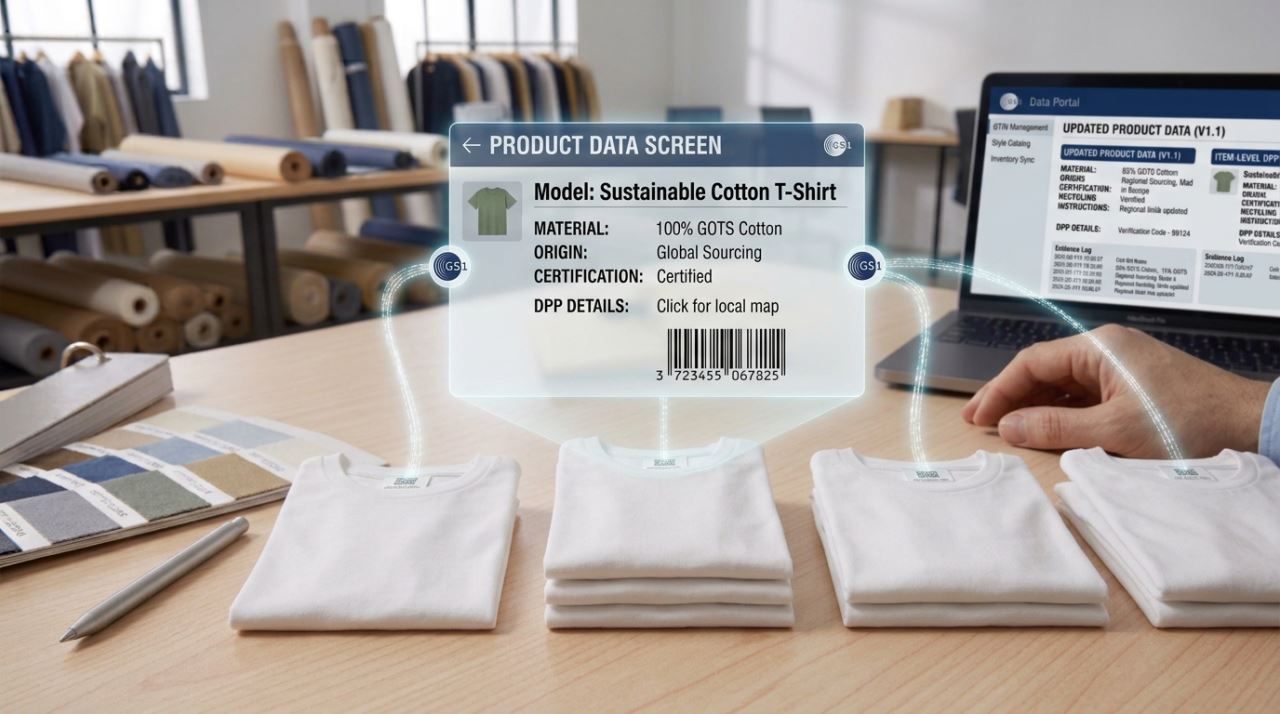
A model-level passport represents a product design or defined product type.
Imagine a basic polo shirt.
If every unit genuinely shares the same relevant information, one passport could potentially represent the product model.
This is the simplest approach operationally.
There are fewer digital records.
Printing is easier.
Data volumes are lower.
But model level becomes less useful when important information changes between production runs.
What if the fabric supplier changes?
What if one batch uses certified material and another does not?
What if production moves to another facility?
A model-level record may no longer describe every physical unit accurately.
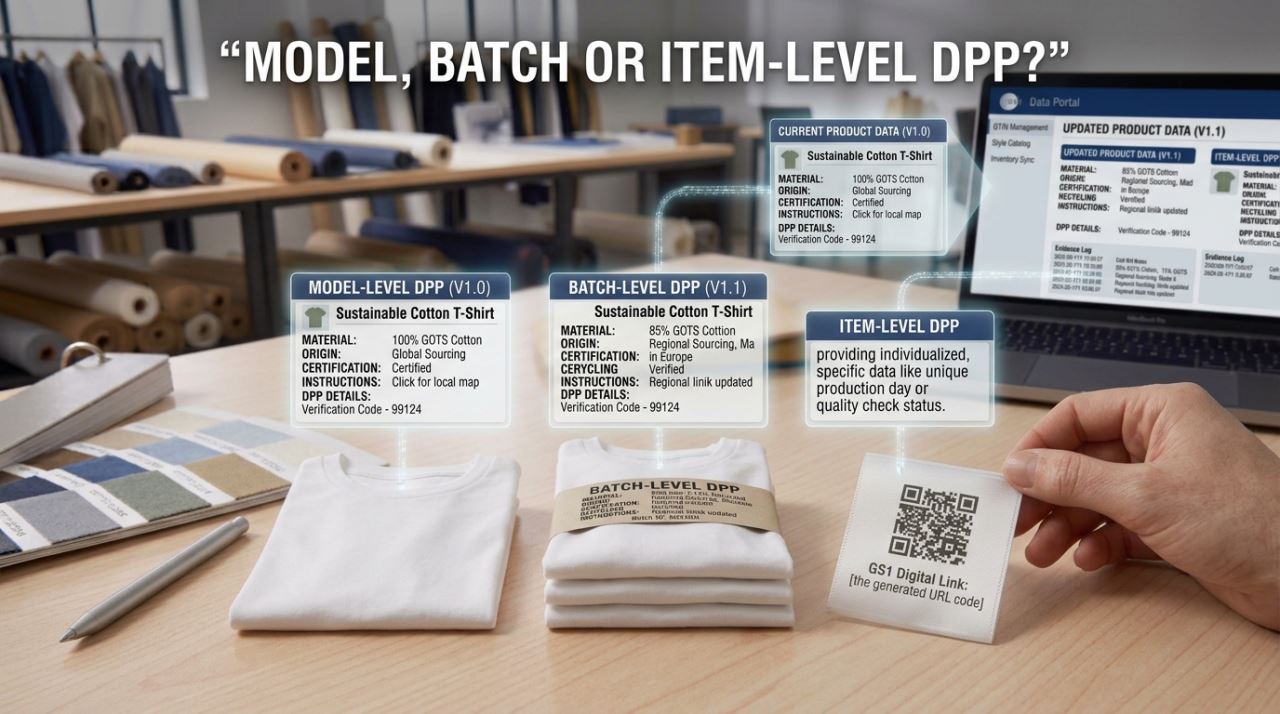 Batch-level DPP
Batch-level identification connects a passport to a defined production lot or manufacturing batch.
This creates stronger traceability.
The passport can reflect the actual material, supplier or production information for that batch.
For many textile exporters, batch level may feel familiar because production already operates around:
orders
lots
fabric batches
dye lots
production runs
shipment batches
The challenge is maintaining clear batch relationships.
If goods from several production runs are mixed, reworked or repacked, the system needs to preserve accurate relationships.
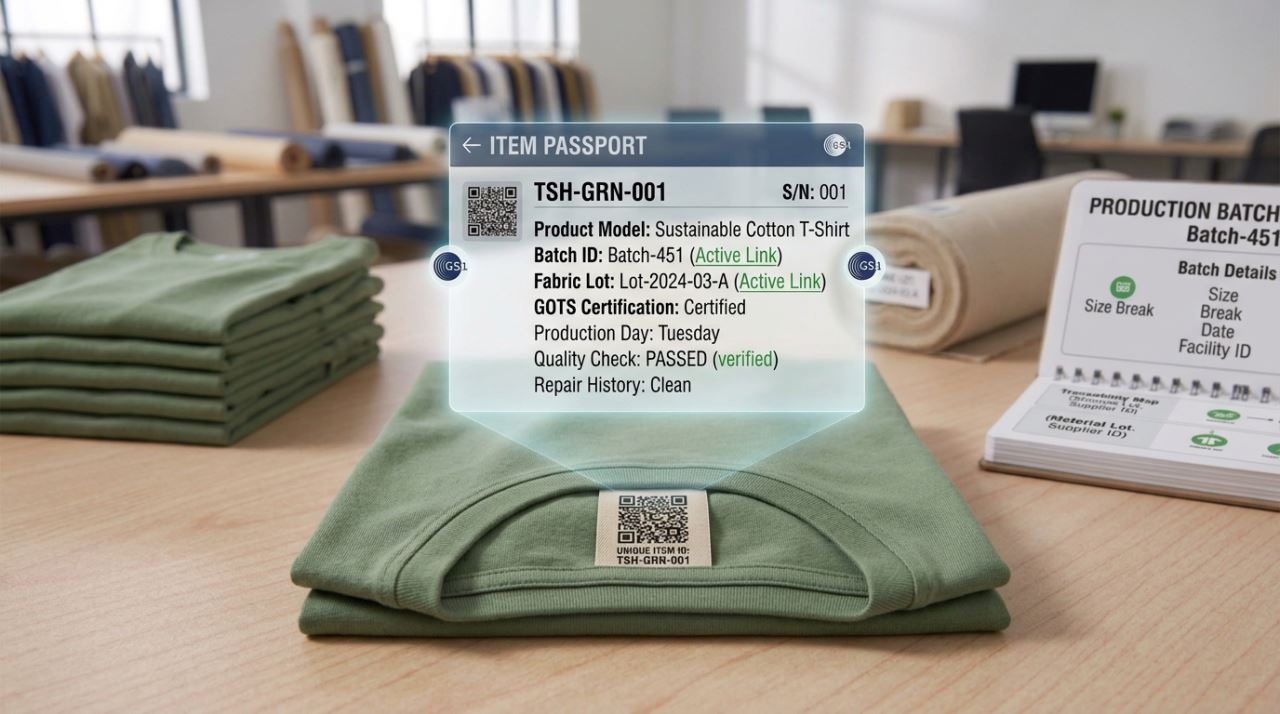
 Item-level DPP
Item level gives every physical garment its own unique identity.
This creates the highest level of granularity.
It can support use cases such as:
authentication
premium resale
repair history
individual returns
product-specific services
detailed traceability
But it also introduces much more operational complexity.
Every item may require a unique code.
Production lines need variable-data printing.
Codes may need verification.
Rejected codes need control.
Rework becomes more complicated.
The number of digital records increases significantly.
Item-level identification should therefore have a clear reason.
“More traceability” sounds attractive.
But more traceability also has a cost.
The correct answer depends on the product
A low-cost basic garment may not require the same identification strategy as a premium jacket designed for long-term repair and resale.
Factories should consider:
How much does relevant product information vary?
Does the buyer need production-level traceability?
Is individual authentication valuable?
Will resale be supported?
Will the product have repair history?
Can existing lines handle variable codes reliably?
What happens to rejected labels or garments?
How will returns be handled?
These questions determine the operational value.
Avoid overengineering the first pilot
Until the final textile rules establish the required level, an early pilot should not automatically choose the most complex architecture.
Use the level that best tests the intended business case.
If the goal is simply to organise product information, model level may be enough.
If the goal is supplier and production traceability, batch level may be more useful.
If the goal includes resale or authentication, item level may deserve testing.
Most importantly, build the system so it can evolve.
Key Ideas
- DPP can operate at model, batch or item level depending on product-specific requirements.
• Model level is simpler but offers less production-specific detail.
• Batch level can connect the passport to actual manufacturing and material information.
• Item level enables detailed traceability but increases operational complexity.
• More granularity is not automatically better.
• Identification level should match the regulatory and business use case.
• Early pilots should avoid unnecessary complexity.
 Conclusion
The level of identification is not a small technical detail.
It affects labels.
Data volumes.
Production lines.
Traceability.
Rework.
Returns.
Costs.
At QUIVK, we believe factories should choose the simplest architecture that genuinely supports their use case while preserving the ability to scale.
A DPP should be sophisticated where the product requires sophistication.
Not simply because the technology allows it.






