

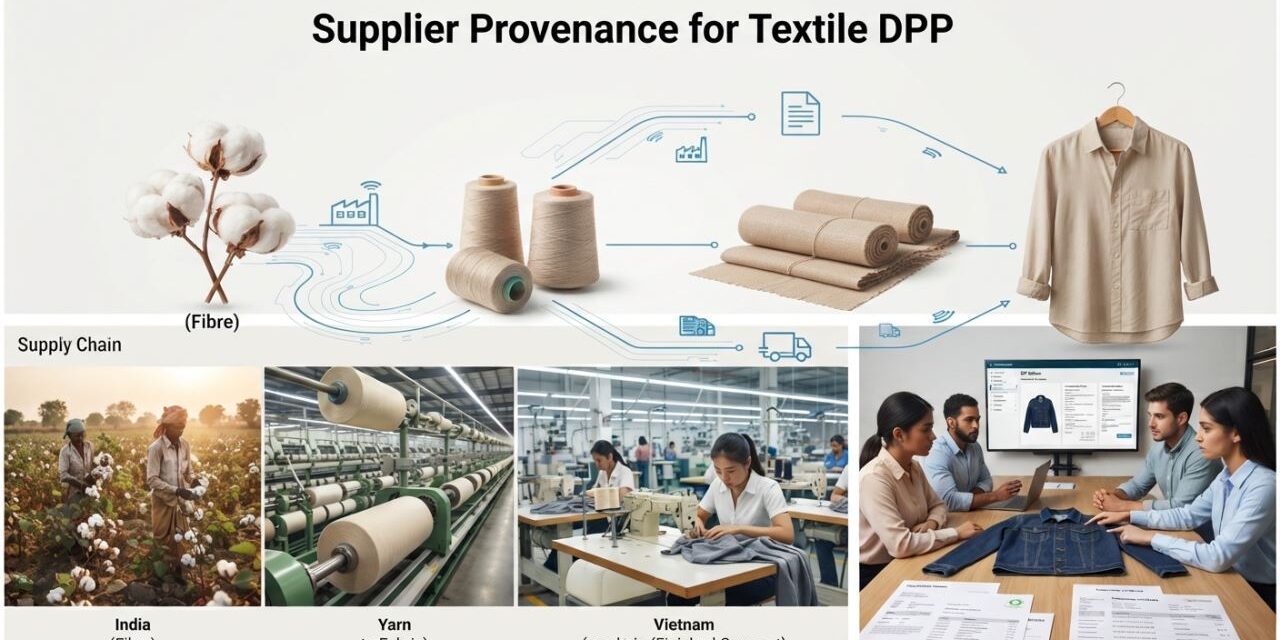
Why product transparency depends on cleaner supplier and facility information
A garment factory can control a great deal of information inside its own walls.
Production orders.
Quality records.
Packing data.
Finished-product specifications.
But many important facts about a garment originate outside the factory.
Where was the fiber sourced?
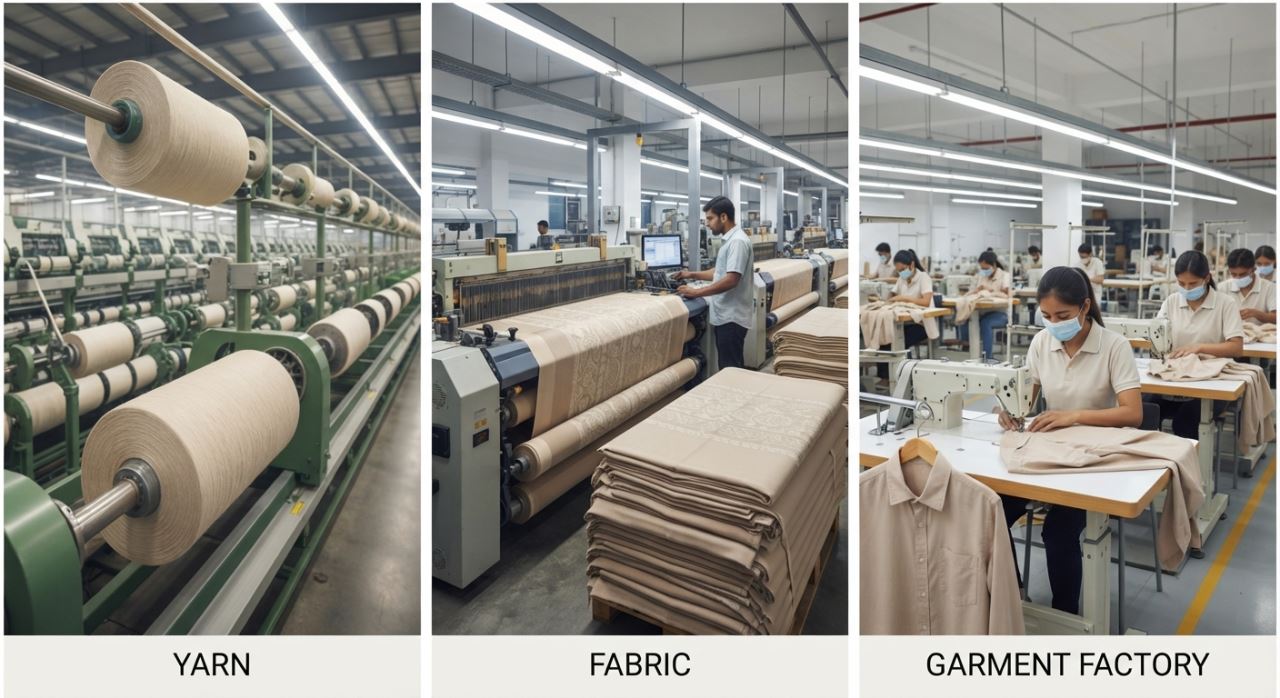
Who spun the yarn?
Which mill manufactured the fabric?
Where was the material dyed?
Which supplier provided the zipper?
Which facility printed the design?
This is why supplier provenance may become one of the more difficult parts of textile Digital Product Passport implementation.
The DPP can only communicate information that the value chain can actually provide.
 Supplier name is not enough
Factories often think they already know their suppliers.
Commercially, that may be true.
But traceability requires more precision.
A purchasing record may show:
“ABC Fabrics Ltd.”
That tells you who sold the material.
It may not tell you:
where the fabric was manufactured
where it was dyed
whether finishing was subcontracted
which facility is covered by the certificate
which batch was supplied
This difference becomes important when product-level claims depend on manufacturing or sourcing information.
Separate organizations from facilities
One company may operate several factories.
One factory may perform several processes.
A trader may supply material made somewhere else.
A subcontractor may perform finishing without appearing in the purchase order.
This means supplier master data should distinguish between the commercial organization and the physical facility.
ESPR itself recognizes unique operator identifiers and unique facility identifiers within the DPP framework, highlighting the importance of distinguishing actors from locations.
For exporters, this is a useful data principle even before textile-specific rules are final.
Clean the supplier master
Traceability projects often expose poor supplier master data.
The same organization may appear as:
ABC Textile
ABC Textiles
ABC Textile Ltd.
A.B.C. Textiles
ABC Textiles Pvt Ltd
Humans know these are probably the same company.
Systems may not.
Before building supplier provenance, standardize names and create clear supplier and facility records.
Add consistent identifiers where possible.
Record approved status.
Record country and address.
Record relevant processes.
This creates a much stronger foundation.
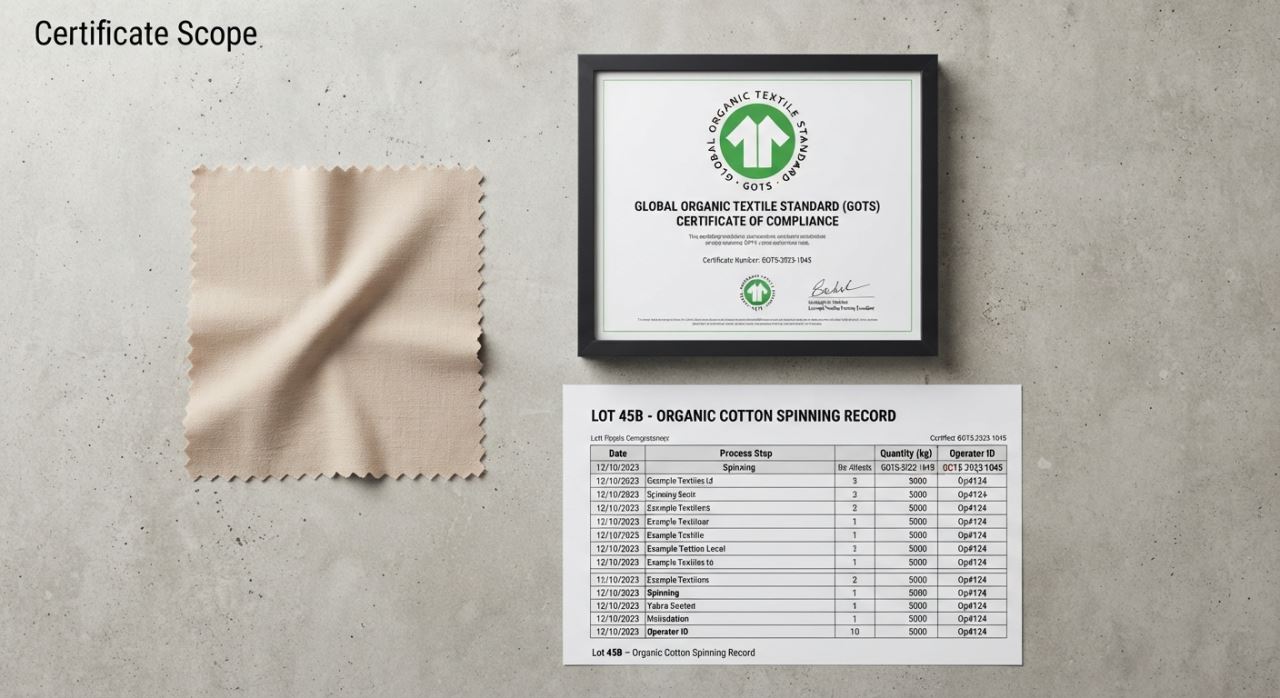
Certificates need to follow the same structure
A certificate should not simply be attached to “the supplier.”
It has a scope.
Maybe it applies to one facility.
Maybe one material.
Maybe one process.
Maybe one transaction.
Maybe it expires next month.
If the product passport makes a claim based on that certificate, the relationship must be defensible.
A good system should make it possible to answer:
Which evidence supports this product?
Which supplier or facility does it cover?
Was it valid when the material was supplied?
Does it apply to this batch?
This is where supplier data and compliance evidence meet.
Supplier onboarding will need to change
DPP readiness should eventually become part of supplier onboarding.
Instead of asking for information only when a buyer requests it urgently, factories can define standard expectations.
For example:
approved company name
manufacturing facility
country
process performed
material supplied
certification information
certificate expiry
subcontractor declaration
update responsibility
This does not need to become a massive supplier questionnaire immediately.
Start with the information that is important for your highest-priority products.
Confidentiality can still be protected
Some factories worry that DPP means exposing the entire supplier network publicly.
That does not need to be the case.
Different information can have different access rights.
Consumers may receive high-level origin information.
Buyers may receive greater supply-chain detail.
Regulators may receive required compliance information.
Commercially sensitive information can remain restricted where allowed.
The important point is that the data should exist and be controlled.
Test provenance on one product
Choose one garment.
Take the main fabric.
Trace it backwards.
Who sold it?
Who manufactured it?
Who dyed it?
Which certificates apply?
What production or transaction record connects the fabric to the garment?
Then repeat the exercise with one trim.
This is often enough to reveal major gaps.
 Key Ideas
- Important DPP information often originates outside the finished-goods factory.
• Commercial supplier and manufacturing facility are not always the same.
• Supplier master data needs standardization.
• Organizations and facilities should be clearly distinguished.
• Certificates must be connected to their actual scope.
• Supplier onboarding should gradually include structured product-data requirements.
• Confidentiality and transparency can coexist through controlled access.
Conclusion
A Digital Product Passport can only be as transparent as the supply chain behind it.
If supplier names are inconsistent, facilities are unclear and certificates cannot be linked to materials, the DPP will expose those weaknesses.
That is not necessarily bad.
It gives exporters a reason to improve.
At QUIVK, we believe supplier provenance should begin with simple, controlled questions.
Who supplied the material?
Where was it actually made?
What evidence supports it?
Can that information be connected to this product?
If the answer is clear, the factory has a strong starting point.






