

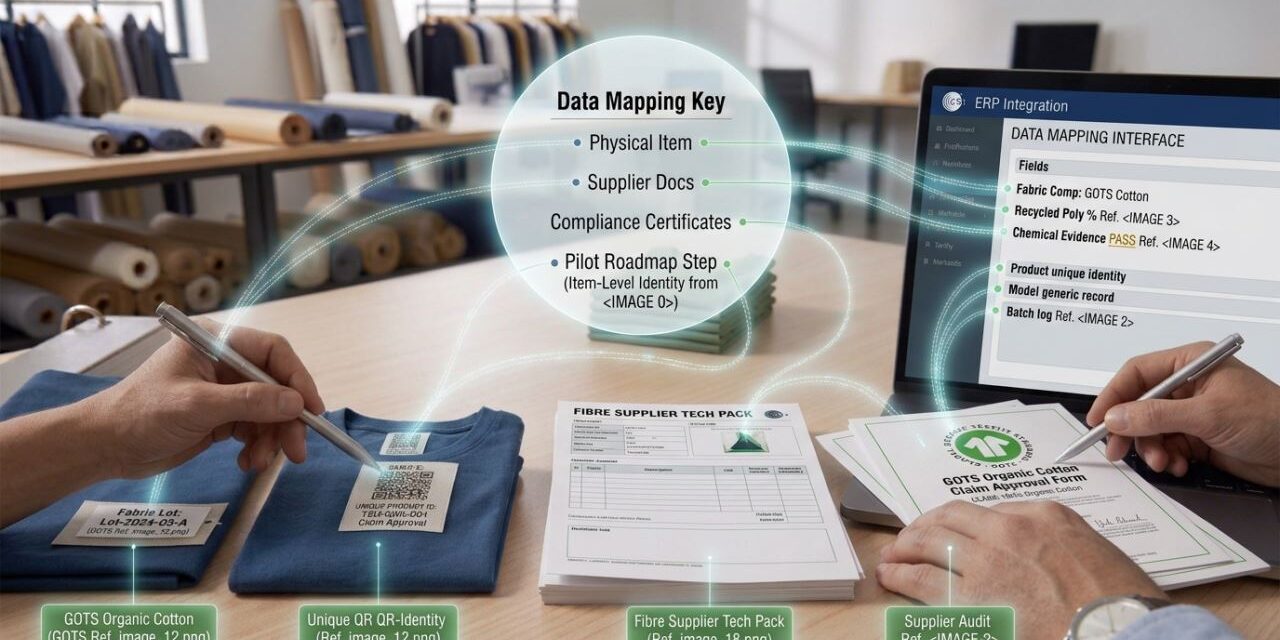
A practical 90-day approach for garment and textile exporters
Digital Product Passport projects can become large very quickly.
There are products to identify.
Suppliers to map.
Certificates to organize.
Systems to integrate.
QR codes to test.
Buyers to involve.
Regulations to understand.
When companies try to solve everything at once, the project can become difficult before it has created any value.
A better approach is to start small.
One buyer.
One product family.
Real data.
A focused pilot can teach the organization much more than months of theoretical planning.
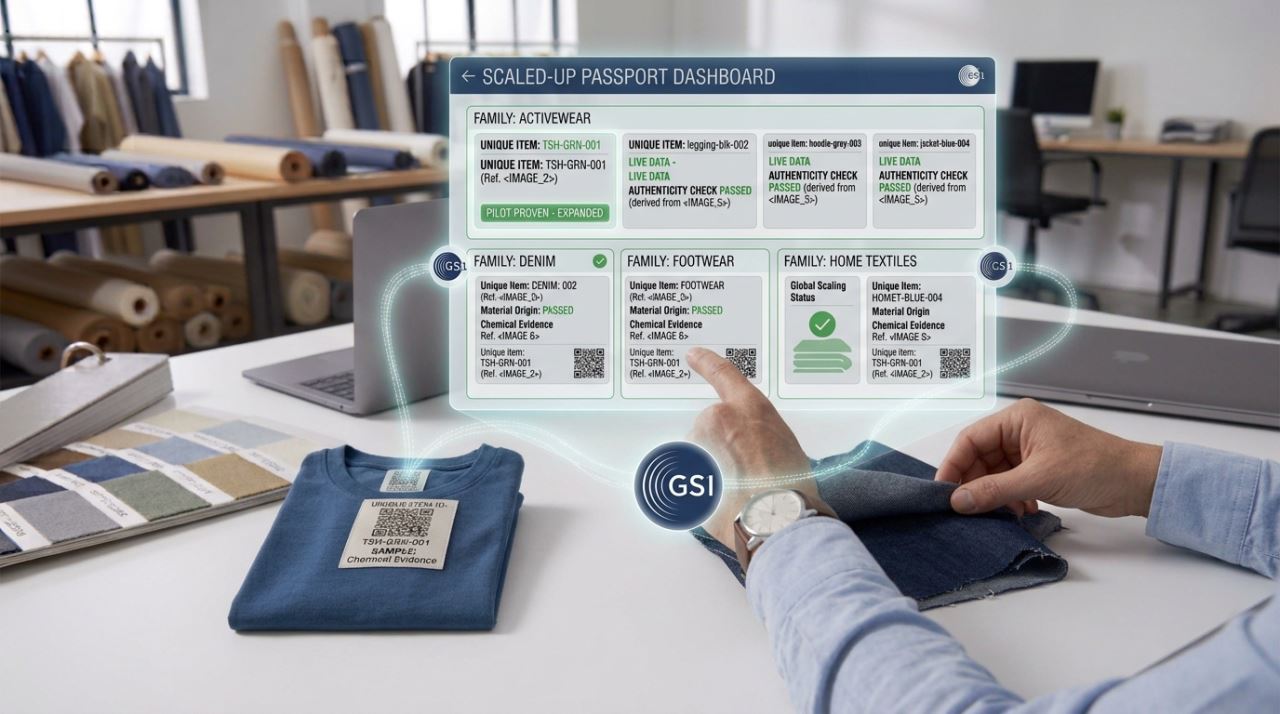
Days 1–30: understand the product
The first month should not be about technology.
It should be about the product.
Choose one product family relevant to the European market.
Avoid selecting the most complicated product in the factory.
Select something representative enough to be useful but controlled enough to understand.
Then map the information.
Product identity.
Material composition.
Important components.
Suppliers.
Facilities.
Certificates.
Care information.
Production references.
Sustainability claims.
For every information field, identify:
where it comes from
who owns it
whether it is verified
whether it can be shared
what is missing
At the end of the first month, management should understand the data gaps clearly.
That alone is valuable.
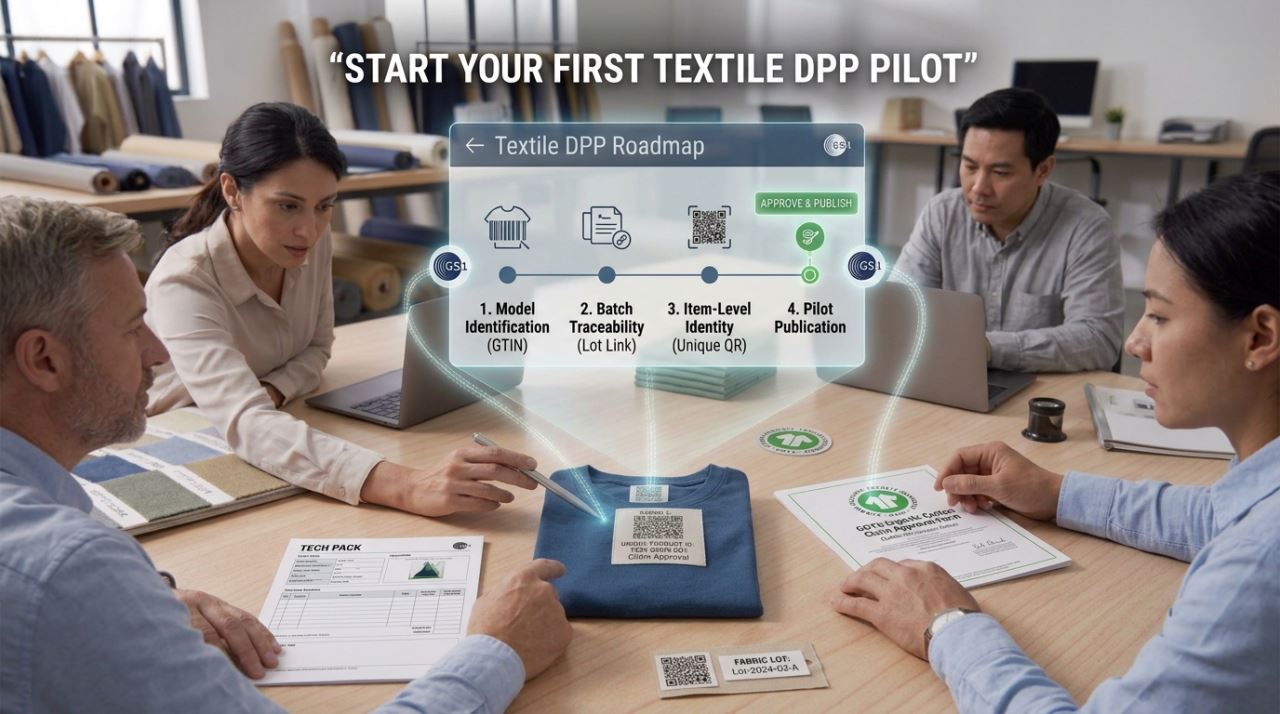
Days 31–60: build the passport
Now create the digital record.
Do not add every possible DPP field.
Use the information that is relevant to the pilot.
Connect real documents.
Set up public and restricted information.
Generate the physical code.
Print it on the intended label or packaging.
Then test it.
Scan with several phones.
Try poor lighting.
Try different distances.
Check whether the code remains readable on the actual material.
Ask a person who was not involved in the project to use the passport.
Can they understand it?
Days 61–90: test the process
A DPP should survive normal business operations.
Change a certificate.
Update one data field.
Add another product variant.
Change the supplier.
Run a second production batch.
Does the process still work?
This is where the organization learns whether the system is practical.
Also measure the internal workload.
If each passport requires hours of manual data entry, the model will not scale.
If employees need to copy information repeatedly from ERP into the DPP platform, integration may eventually be required.
The pilot should reveal where automation creates real value.
Involve the buyer carefully
A pilot becomes more useful when a selected buyer can provide feedback.
But do not present an early prototype as final compliance.
Explain that it is a readiness exercise.
Ask practical questions:
Which product information is useful?
What data would the buyer want restricted?
Which identifiers do they already use?
What evidence do they request today?
Would structured API access eventually be useful?
This turns the pilot into commercial learning.

Choose the platform based on the pilot
Software demonstrations can be impressive.
Real factory data is a better test.
During the pilot, evaluate whether the platform can:
manage product identifiers
support model, batch or item level if required
control user access
attach or reference evidence
record changes
export data
support APIs
integrate with existing systems
avoid vendor lock-in
ESPR requires DPP information to use open, interoperable formats and to remain transferable without vendor lock-in, so platform architecture matters.
The cheapest software is not necessarily the lowest-cost implementation.
A system that creates constant manual work may become expensive at scale.
What success looks like
A successful pilot does not mean the factory has solved every future EU requirement.
It means the organization has learned how to create and manage one trustworthy digital product record.
Management should know:
which data exists
which data is missing
who owns the information
how evidence is connected
how the physical product is identified
how users access the passport
what integration is required
what needs to improve before scale
That is a strong outcome.

Key Ideas
- DPP pilots should begin small and use real factory data.
• The first month should focus on understanding the product and data gaps.
• The second stage should create and test the actual passport and data carrier.
• The final stage should test updates, new batches and operational workload.
• Buyer feedback can improve the pilot.
• Platform selection should be based on real data and real workflows.
• Integration should solve proven manual problems rather than being added automatically.
• A pilot is a learning project, not a claim of final compliance.
Conclusion
Factories do not need to solve Digital Product Passport for every product today.
They need to learn.
The most effective way to learn is to take one real garment and build the information process around it.
At QUIVK, we believe the right first pilot should be small enough to manage but real enough to expose genuine problems.
One buyer.
One product family.
Real suppliers.
Real certificates.
Real product data.
Once that works, scale becomes much easier.






