
What the July 2026 milestone means — and does not mean — for textile exporters
The Digital Product Passport has moved one step closer from policy to practical infrastructure.
On 20 July 2026, the European Commission launched the Digital Product Passport Registry together with a testing environment.
This is an important milestone because the EU now has operational infrastructure for registering Digital Product Passports.
But it has also created some confusion.
Does the Registry going live mean textile exporters need to register every garment immediately?
No.
Textile-specific DPP obligations are still being developed. The European Commission currently indicates planned adoption of the textile ESPR delegated act in Q4 2027.
The Registry becoming operational should therefore be understood as a readiness signal rather than an immediate textile deadline.
What exactly is the DPP Registry?
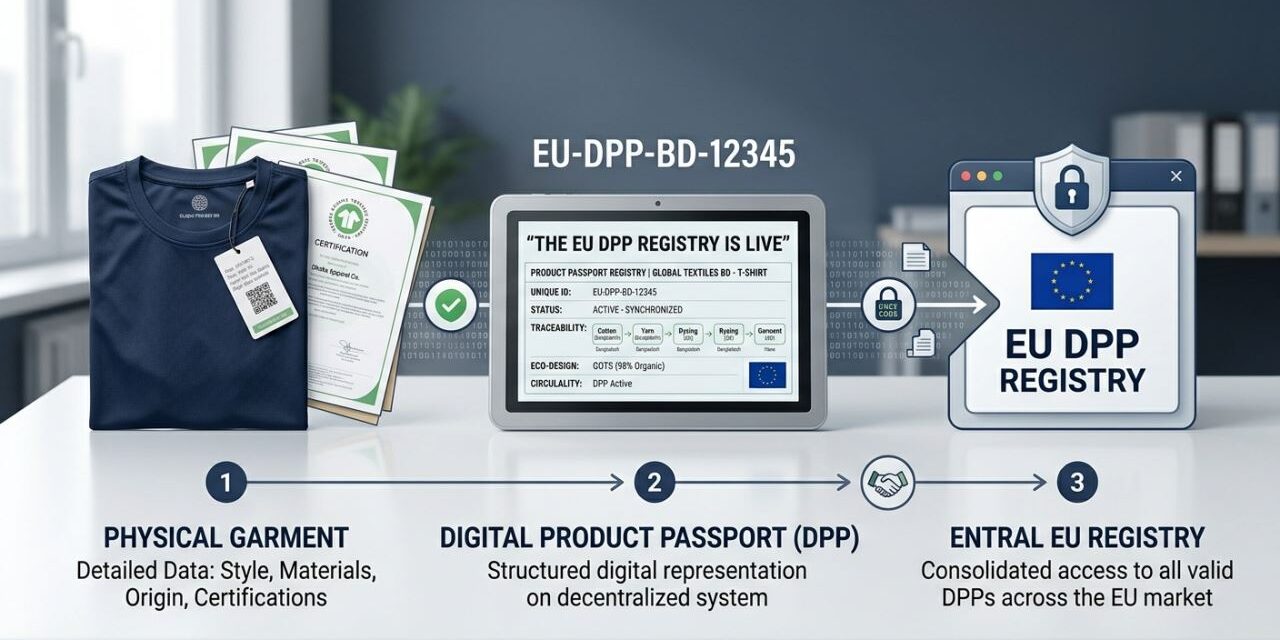
A useful way to understand the system is to separate the Digital Product Passport from the Registry.
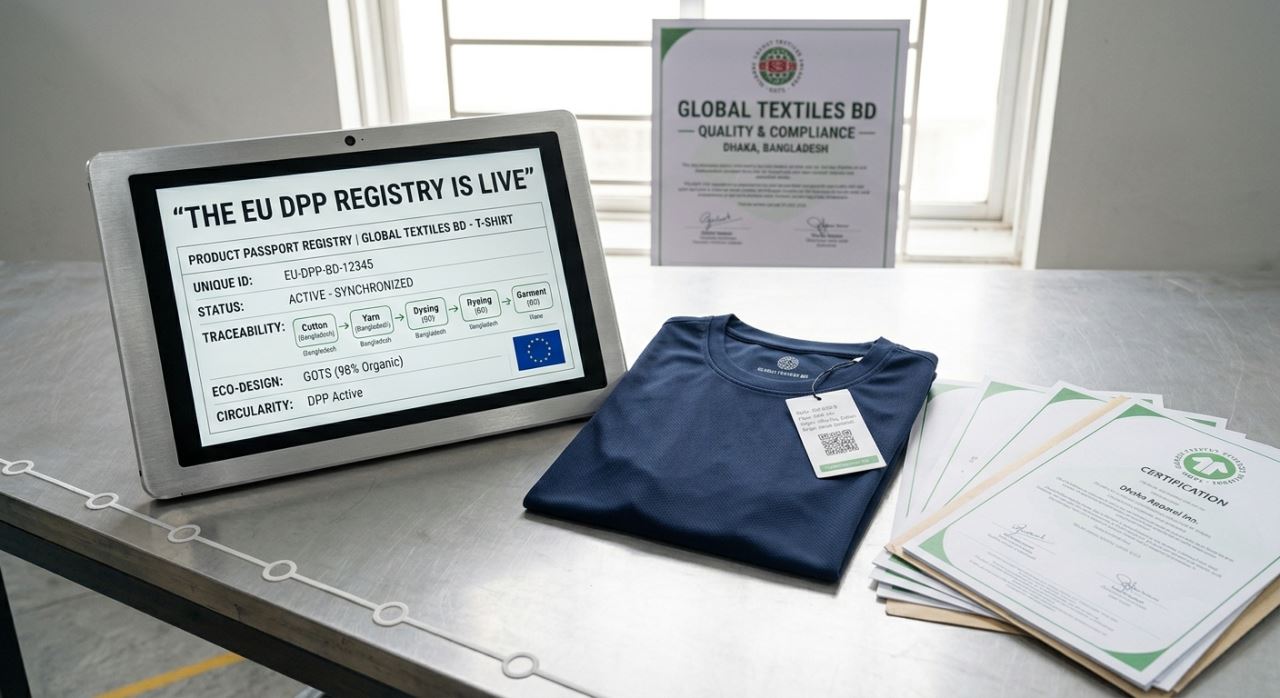
The passport contains or provides access to the relevant product information.
The Registry is the EU infrastructure used to register the passport and associated identifiers and metadata.
The European Commission explains that DPP product data remains decentralized, while economic operators register passports in the Registry using unique identifiers and associated metadata.
This distinction matters.
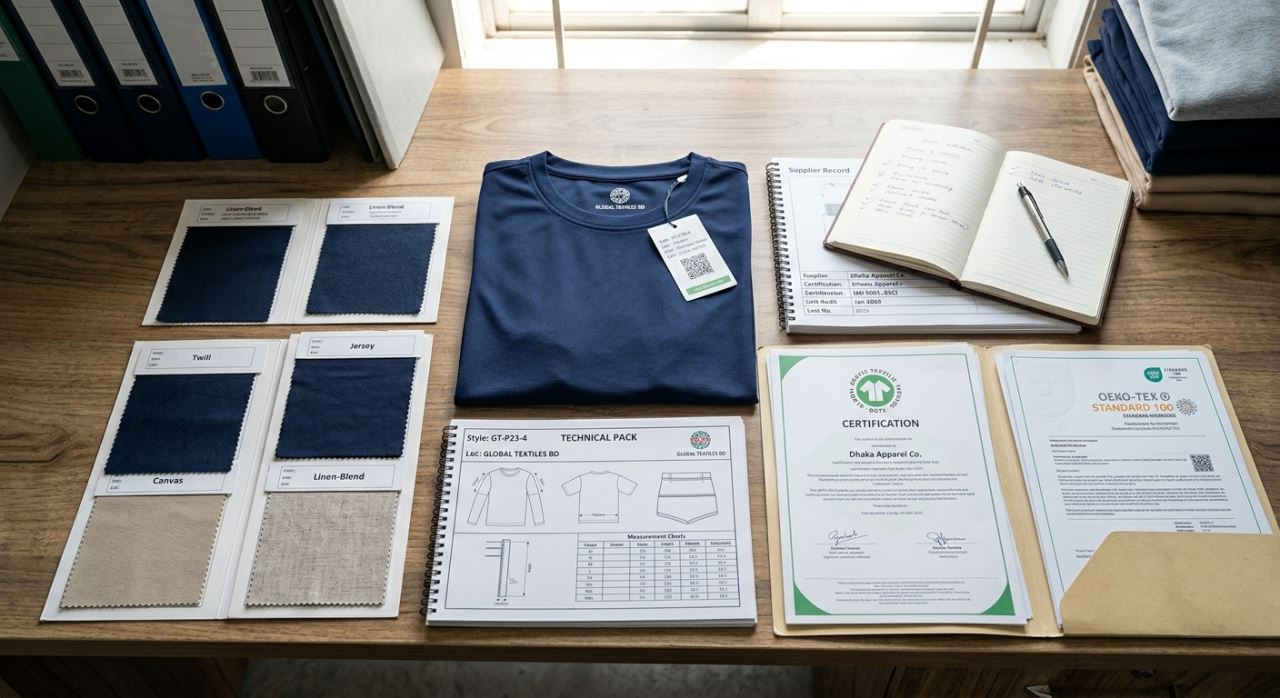
A textile exporter should not imagine that every technical pack, certificate, supplier record and care instruction will simply be uploaded into one giant European database.
The architecture is more distributed than that.
Product information can remain within authorized systems or DPP service providers, while the Registry provides an official registration layer.
 Why the Registry matters to exporters
For companies outside Europe, the Registry may initially appear to be the responsibility of the EU brand or importer.
In many cases, that may indeed be the organization that manages the formal registration obligation.
But the quality of the passport depends on the quality of information supplied by the value chain.
If an EU brand needs to register a product passport, it may need reliable data from the exporter about:
- product identity
• materials
• suppliers
• production facilities
• certifications
• compliance evidence
• care information
• other required product attributes
If that information cannot be supplied consistently, the registration process becomes difficult.
This is why exporters should not view the Registry as someone else’s problem.
Even if the factory does not directly register the passport, it may become a critical data provider.
The technical side is becoming real
The Registry launch is important for another reason.
It shows that DPP implementation is no longer being discussed only in broad policy language.
Technical infrastructure is being built.
The Commission reported that six DPP standards had already been published covering areas including unique identifiers, interoperability, data carriers, APIs, data exchange protocols and data storage.
This tells exporters something important.
Future DPP systems need to be interoperable.
The industry should be cautious about solutions that simply create a closed product webpage with no structured data, no export capability and no connection to external systems.
A passport may need to interact with brands, regulators, marketplaces, traceability systems and other services.
The architecture matters.
What should textile factories do now?
The right response is not to start registering every garment.
The right response is to use the current period for preparation.
First, understand who your EU-facing economic operator is.
For one selected buyer, ask:
Who places the product on the EU market?
Who would be responsible for creating or registering the passport?
What data would they expect from us?
Second, review product identifiers.
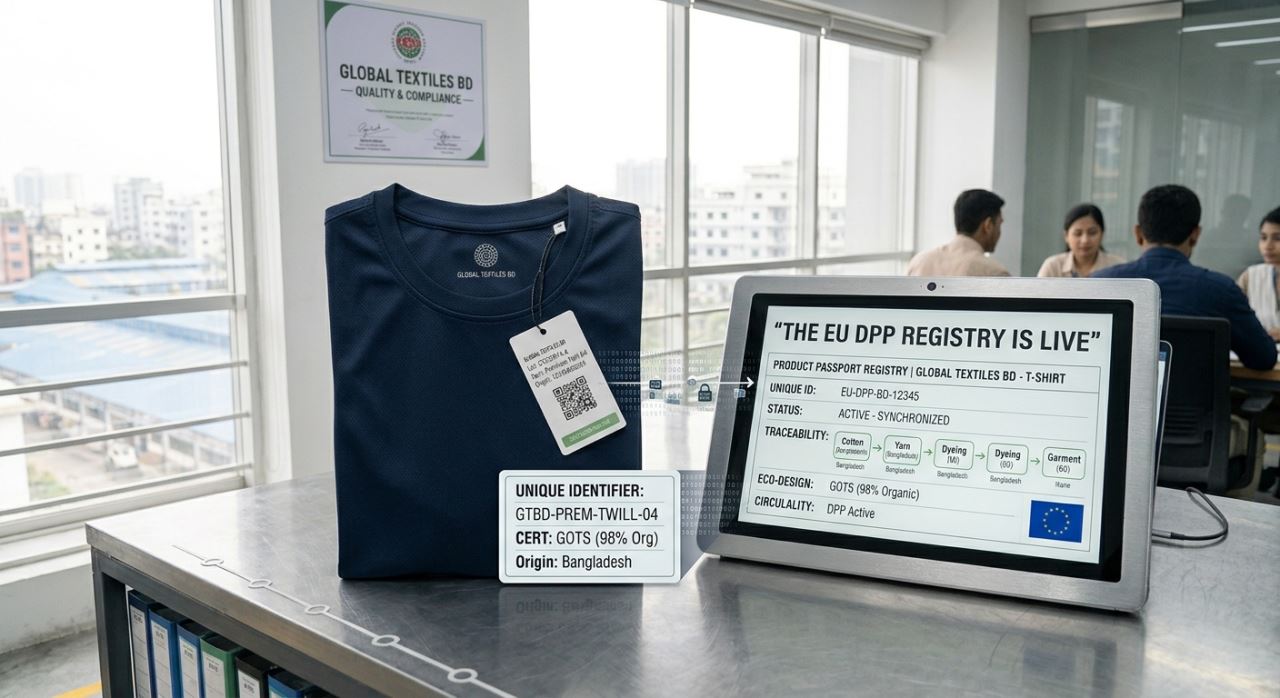
Can the buyer article, internal style, GTIN, batch and other references be connected reliably?
Third, review your ability to provide structured information.
If a buyer asks for product composition, supplier information and supporting evidence electronically, can the factory provide it without spending days searching through emails?
Fourth, understand your technology options.
A DPP platform should support integration, data export, access control and evolving technical standards.

The Registry is a useful warning against waiting
Regulatory programs often appear distant until infrastructure starts becoming operational.
The Registry is therefore a useful signal.
It does not mean textile DPP is mandatory today.
But it does show that the implementation environment is being created.
Factories that wait until the textile deadline is fully established may then face several projects simultaneously:
data cleanup
supplier onboarding
system integration
buyer testing
label changes
internal training
platform selection
Doing this under deadline pressure will be much more difficult than running controlled pilots now.
Key Ideas
- The EU DPP Registry launched on 20 July 2026.
• The Registry becoming operational does not make textile DPP mandatory immediately.
• Textile-specific requirements are still under development.
• Product data remains decentralized while the Registry supports registration and identifiers.
• EU brands and importers may depend heavily on exporters for upstream product data.
• DPP technical standards and infrastructure are becoming increasingly real.
• Exporters should use the current period for preparation and testing.
 Conclusion
The launch of the DPP Registry is an important moment.
It shows that Europe is moving beyond the concept of Digital Product Passports and building the infrastructure required to operate them.
For textile exporters, the response should be measured.
Do not panic.
Do not claim that textile DPP is already mandatory.
But do not ignore the direction either.
At QUIVK, we believe this is the right time for factories to understand their role, clean their product data and begin controlled DPP pilots.
The best time to discover data gaps is before the buyer depends on that data.