

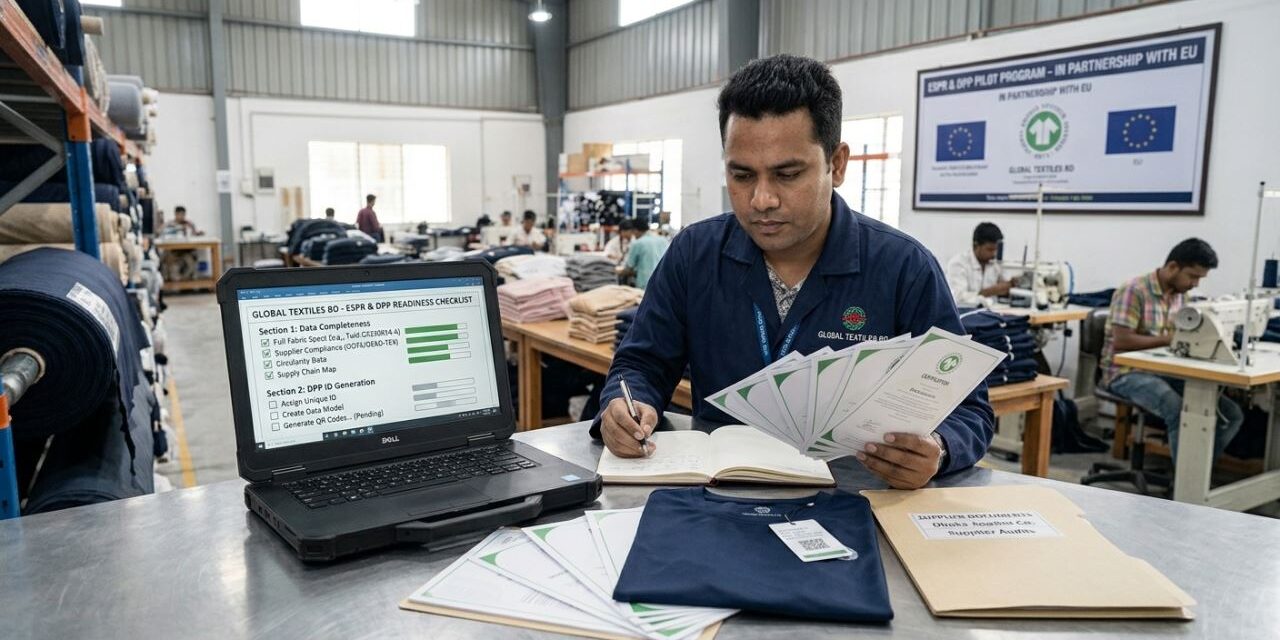
Why a European sustainability regulation matters to garment factories in Pakistan and ASEAN
For many textile exporters, European regulation can feel distant from day-to-day factory operations. A production team in Lahore, Faisalabad, Dhaka, Ho Chi Minh City or Phnom Penh is focused on fabric approvals, production planning, quality, shipment dates and buyer requirements.
Yet if the finished product is placed on the European market, decisions made in Brussels can eventually change what information the factory is expected to provide.
One of the most important developments is the Ecodesign for Sustainable Products Regulation, commonly known as ESPR.
ESPR creates the framework through which the EU can introduce sustainability and information requirements for different product groups. It also provides the legal foundation for the Digital Product Passport.
Textile apparel has been identified as a priority product group. The European Commission currently indicates Q4 2027 as the planned adoption period for the textile-specific delegated act, while also stating that implementation timelines may evolve.
For exporters, the important point is not to predict every future data field today.
It is to understand the direction in which product compliance is moving.
From factory compliance to product-level information
Textile factories are already familiar with compliance.
They deal with chemical restrictions, buyer codes of conduct, quality standards, testing requirements, certificates and social or environmental audits.
Much of this information, however, is traditionally managed at factory or supplier level.
The Digital Product Passport introduces a stronger product-level perspective.
Instead of only asking:
“Is this factory certified?”
the future information environment may also ask:
“What information applies to this particular product?”
That could involve the materials used, relevant manufacturing information, care instructions, environmental information, repair guidance or end-of-life information.
This changes the way exporters should think about data.
A sustainability report covering an entire factory is useful.
But it does not automatically tell a buyer what is true about one particular polo shirt, jacket, pair of trousers or fabric article.
The product record must eventually connect the right information to the right product identity.
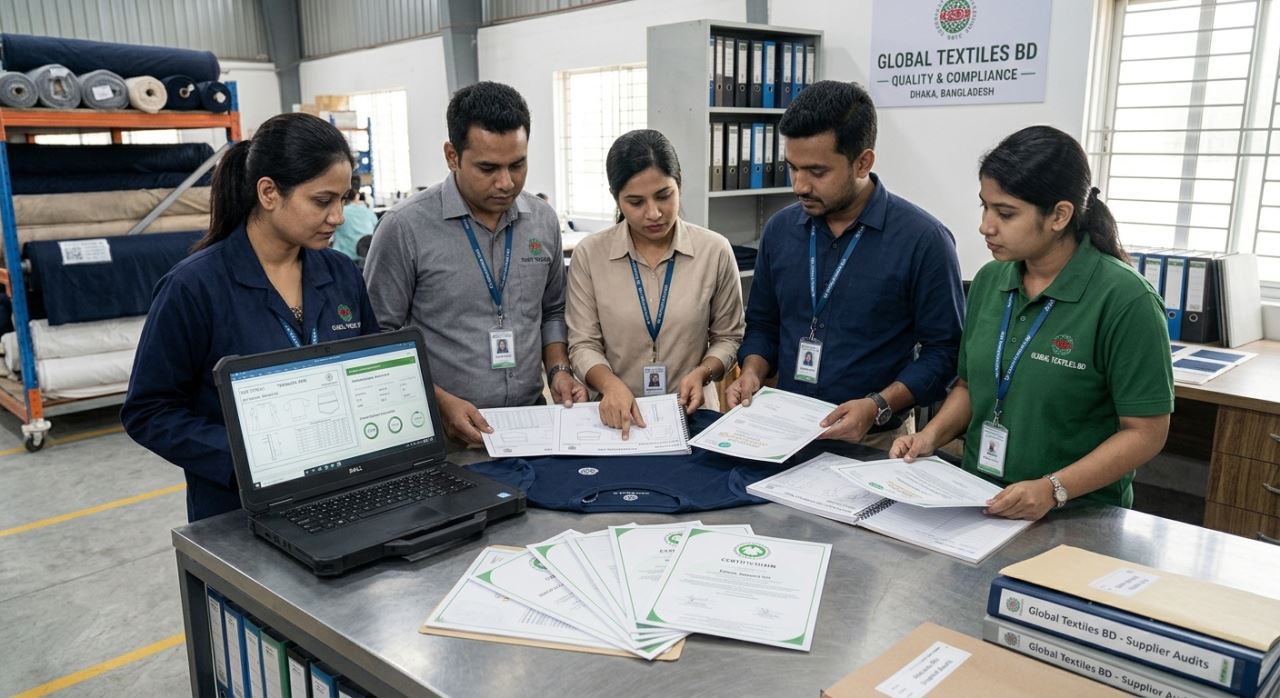 Why exporters outside Europe need to care
ESPR applies to products placed on the EU market.
That means a product can be manufactured thousands of kilometers away and still become part of the compliance chain.
The EU importer, brand or other responsible economic operator may hold the formal market responsibility, but much of the information needed to support that responsibility originates upstream.
A buyer may therefore need to obtain information from:
- fiber suppliers
• spinning mills
• weaving or knitting mills
• dyeing and finishing facilities
• garment factories
• trim suppliers
• testing laboratories
• certification bodies
This is how regulatory pressure travels through supply chains.
The buyer may not wait until the final legal deadline before asking suppliers to prepare.
Large brands often need time to update systems, supplier manuals, product specifications and onboarding processes.
For exporters, the commercial requirement may therefore arrive before the final regulatory deadline.
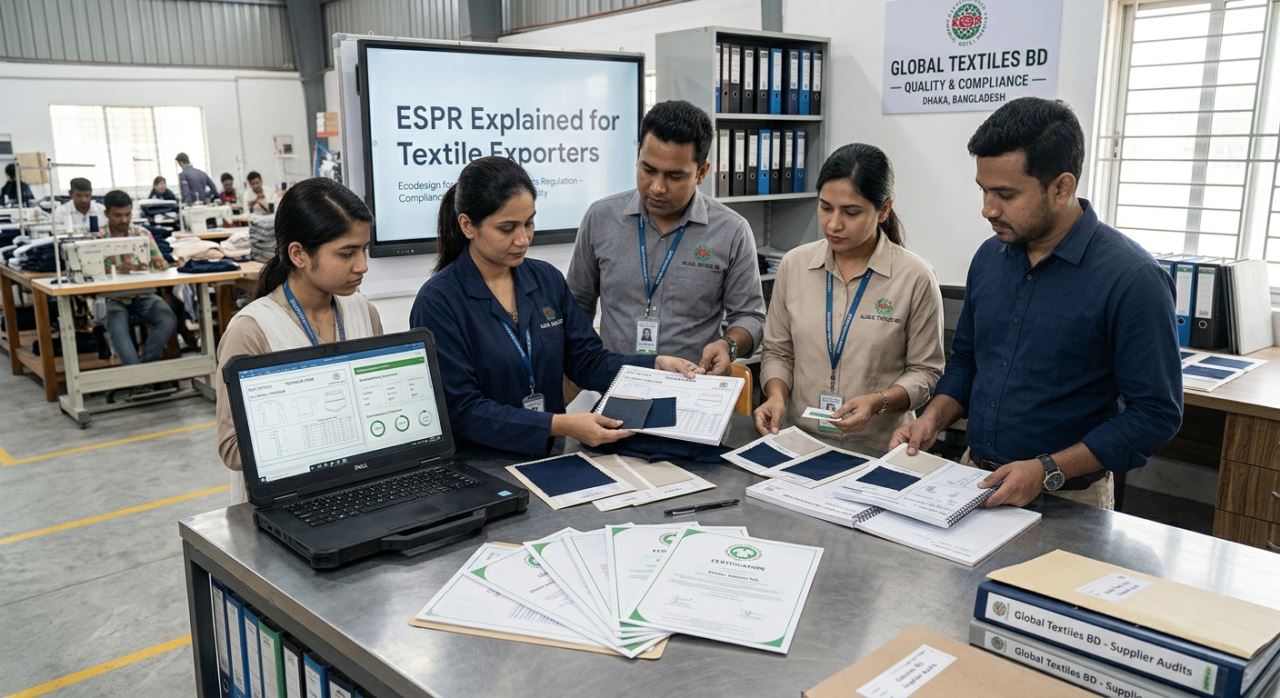
Sustainability data will become operational data
One of the most important changes is organisational.
In many factories, sustainability information is still managed separately from mainstream product operations.
The sustainability team may hold environmental data.
The compliance team holds certificates.
Merchandising holds material specifications.
Sourcing knows the suppliers.
Production knows the actual manufacturing order.
IT manages product codes.
A Digital Product Passport needs these areas to connect.
This is why DPP readiness cannot belong only to sustainability or IT.
It is a cross-functional product-data project.
A factory should be able to answer questions such as:
Which material was used in this style?
Which supplier provided it?
Which evidence supports the claim?
Which facility processed the material?
Which certificate is still valid?
What information can be shared publicly?
Who approved the information?
These are operational questions.
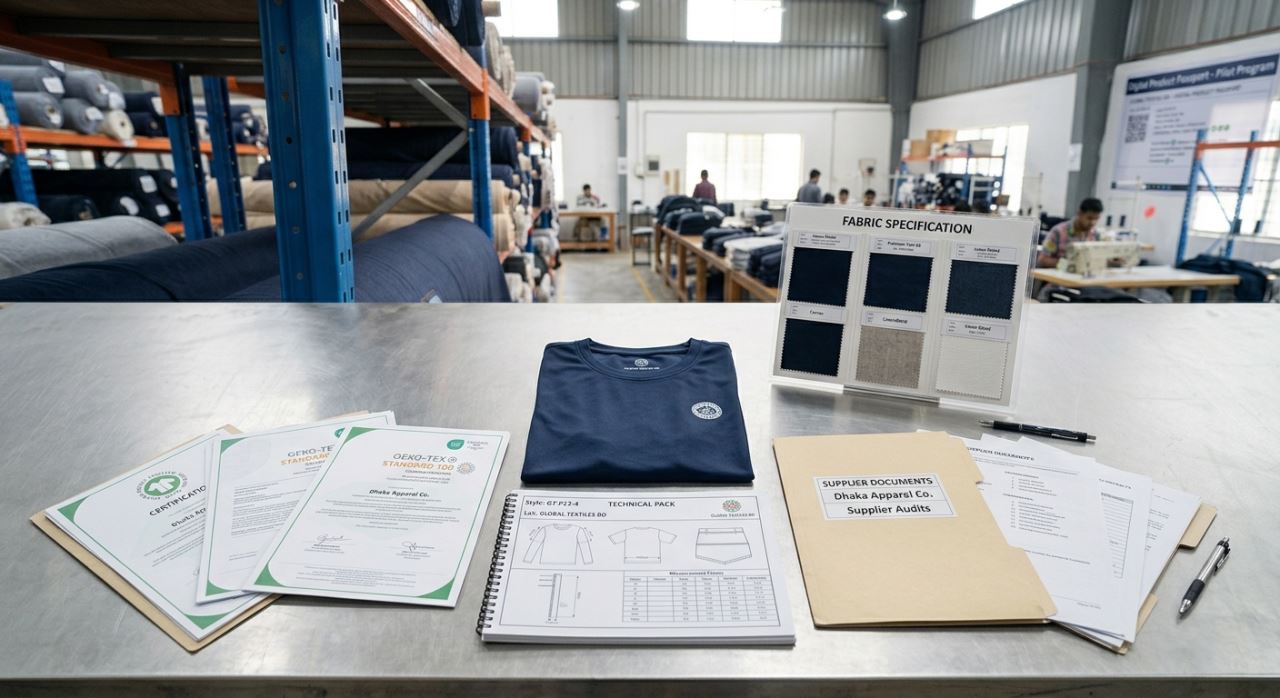
What factories can prepare without waiting for the final rules
Exporters do not need to guess the final textile delegated act.
They can improve the quality of information they already manage.
Start with product master data.
Make sure style numbers, buyer article numbers, SKUs and GTINs are consistent.
Then review material records.
Check whether composition, supplier and certification information is available for important fabrics and components.
Clean supplier records.
The same supplier should not appear under several different names across ERP, Excel and compliance systems.
Review certificate management.
A certificate should have a known scope, issue date, expiry date and relationship to the relevant material or facility.
Finally, assign ownership.
If nobody knows who is responsible for a data field, the information will eventually become outdated.
None of these activities is wasted work.
They improve buyer responsiveness, compliance management and traceability even before DPP becomes mandatory.
The danger of treating ESPR as an IT project
A common mistake will be to assume that buying a DPP platform solves ESPR readiness.
Software is necessary.
But software cannot correct an unknown supplier.
It cannot verify an unsupported sustainability claim.
It cannot decide which factory actually processed a fabric.
It cannot determine whether a certificate applies to the product unless the organisation provides the relationship.
Technology organises and distributes information.
The factory still needs to understand the product.
At QUIVK, this is why we see DPP readiness as a combination of data, process and technology.
 Key Ideas
- ESPR creates the EU framework for future product sustainability and information requirements.
• Textile apparel is a priority product group.
• Detailed textile requirements are still being developed.
• EU buyers will depend on upstream suppliers for product information.
• Sustainability information is becoming part of mainstream product data.
• DPP readiness requires merchandising, sourcing, compliance, sustainability, production and IT to work together.
• Factories can improve product and supplier data before final requirements are published.
Conclusion
ESPR should not be viewed as a distant European policy issue.
For textile exporters, it signals a gradual change in what buyers may expect from their supply chains.
The future competitive factory will not only manufacture a compliant garment.
It will also be able to explain the product digitally.
What it contains.
Where relevant information came from.
Which evidence supports it.
And how that information remains connected to the product.
At QUIVK, we believe exporters should use the current preparation period wisely.
Not by trying to predict every final requirement.
But by getting their product data in order.