
Why garment manufacturers in Pakistan and ASEAN should start organizing product data before DPP becomes a buyer requirement
The Digital Product Passport is often introduced as a new European compliance requirement. For textile exporters, however, it is more useful to think of it as a change in how product information will be collected, managed and shared.
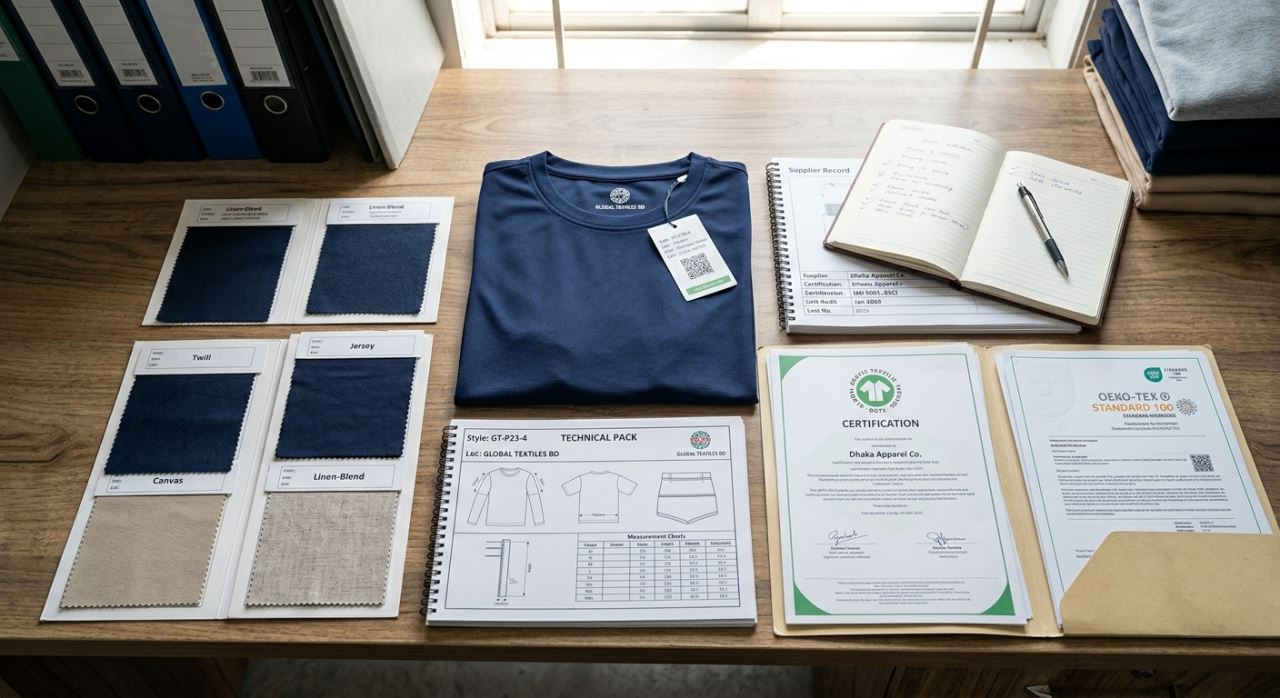
Today, much of the information about a garment already exists. Material composition may sit inside a technical pack. Supplier information may sit in an ERP system. Certificates may be stored by compliance teams. Chemical test reports may be held by quality teams. Care instructions may be controlled by merchandising, while sustainability information may be managed separately.
The Digital Product Passport brings these pieces closer together.
Instead of product information remaining scattered across departments, documents and systems, the idea is to create a structured digital record connected to the physical product.
For exporters serving the European market, this is important because textile apparel is among the product groups being prepared for future Digital Product Passport requirements under the EU Eco design for Sustainable Products Regulation, or ESPR.
The exact textile-specific requirements are still being developed. That means exporters should be careful not to treat every proposed data field as already mandatory.
But it does not mean factories should wait.
The difficult part of DPP implementation is not printing a QR code. The difficult part is building reliable product data behind it.
A Digital Product Passport is more than a digital label
At first glance, DPP can look simple.
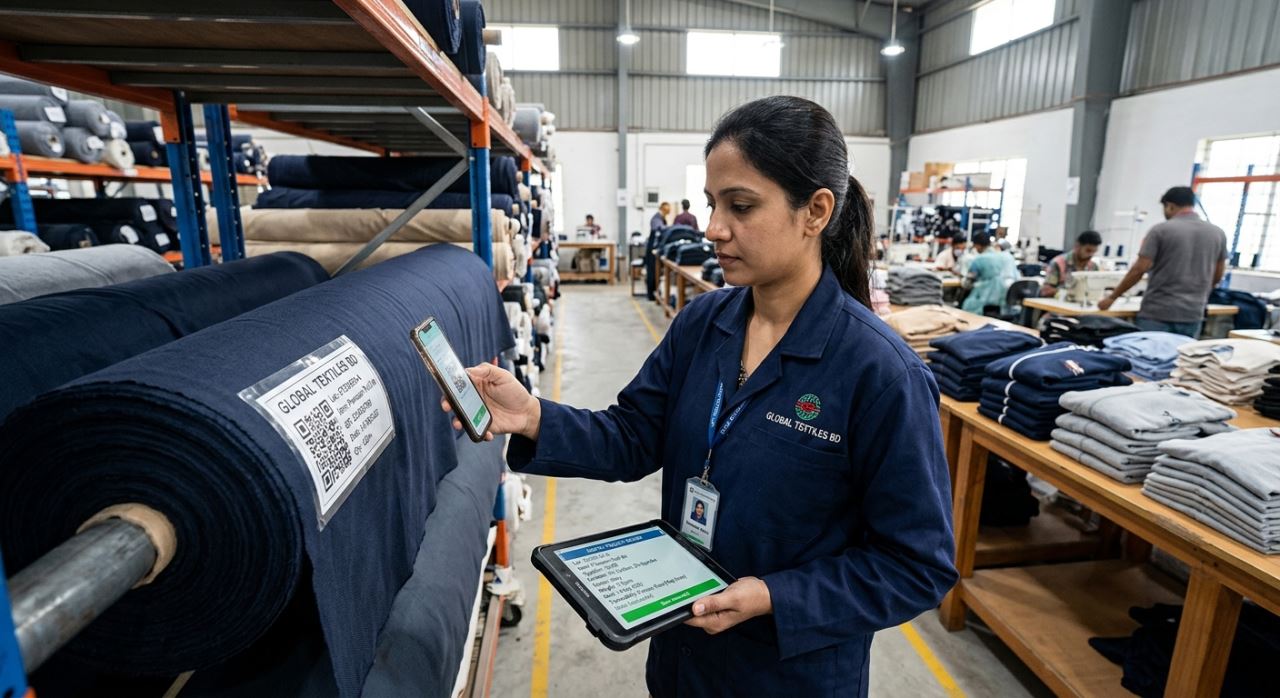
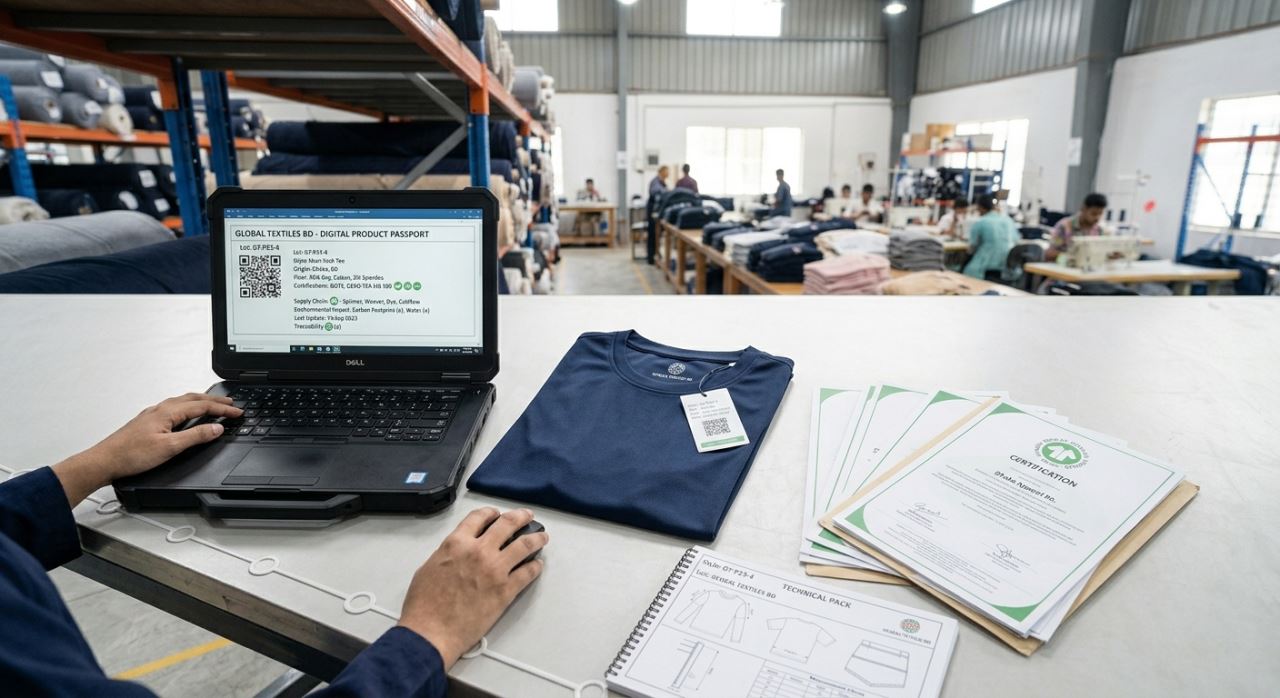
A garment carries a QR code. Someone scans it. A product page opens.
But that is only the visible layer.
A proper product passport needs to know exactly which product the user has scanned and which information belongs to it.
That information may eventually include areas such as product identity, fibre composition, materials, manufacturing information, supplier records, compliance documents, care guidance, repair information and end-of-life instructions.
Different users may also need different views.
A consumer may only need to know what the garment is made from, how to care for it and how it can be repaired or recycled.
A buyer may need deeper material, supplier and certification information.
A regulator may need access to specific compliance information.
The factory itself may need a much more detailed internal record.
This is why a DPP should not be confused with a normal marketing webpage.
The QR code is simply a way to access the information.
The real value sits in the data structure behind it.
Why textile exporters will find DPP challenging
Textile manufacturing is highly interconnected.
Consider something as simple as a cotton polo shirt.
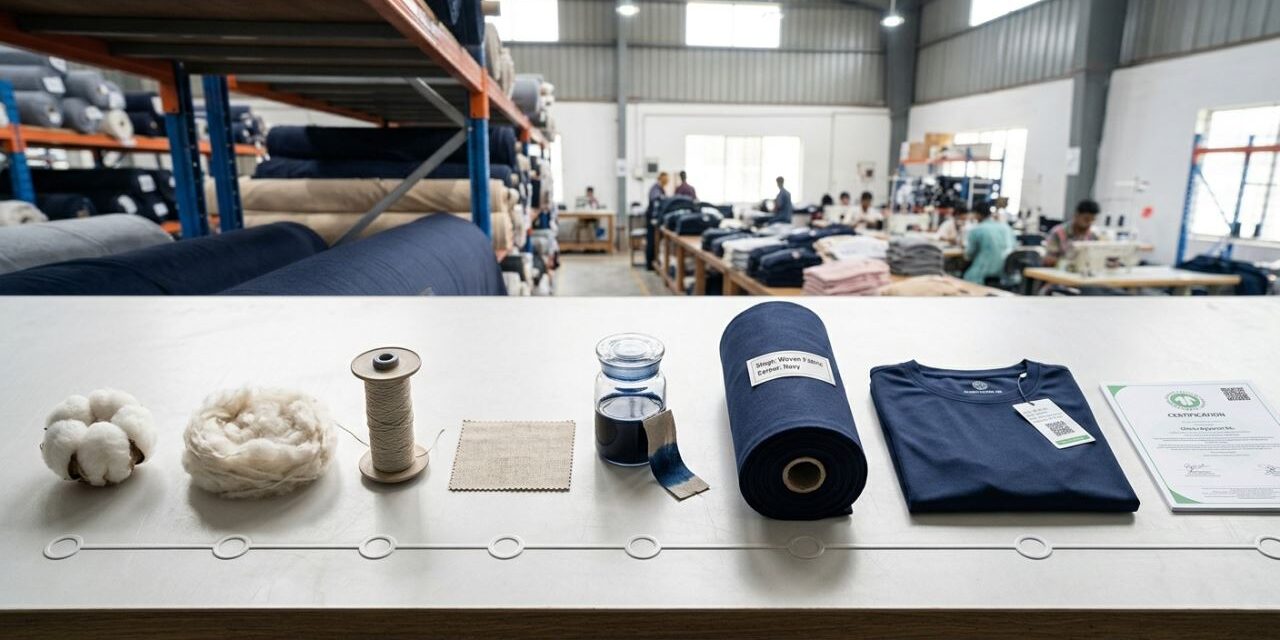
The cotton may come from one supplier. Yarn may be spun somewhere else. Fabric may be knitted by another mill. Dyeing and finishing may happen at another facility. Buttons, thread and labels may come from different suppliers. The garment factory performs cutting and sewing, while testing may be completed by an external laboratory.
By the time the finished shirt is exported, dozens of pieces of information may exist across several companies.
This is where DPP becomes difficult.
If a buyer asks for the origin of a material, the exporter needs to know which supplier provided it.
If a recycled-content claim is made, there should be evidence behind that claim.
If a certificate is referenced, the factory should know which material, facility or transaction the certificate actually covers.
If a product is manufactured from different fabric batches during the year, the company may need to understand whether product information changes between those batches.
These are operational questions, not simply technology questions.
That is why DPP preparation needs involvement from merchandising, sourcing, compliance, sustainability, production, quality and IT.
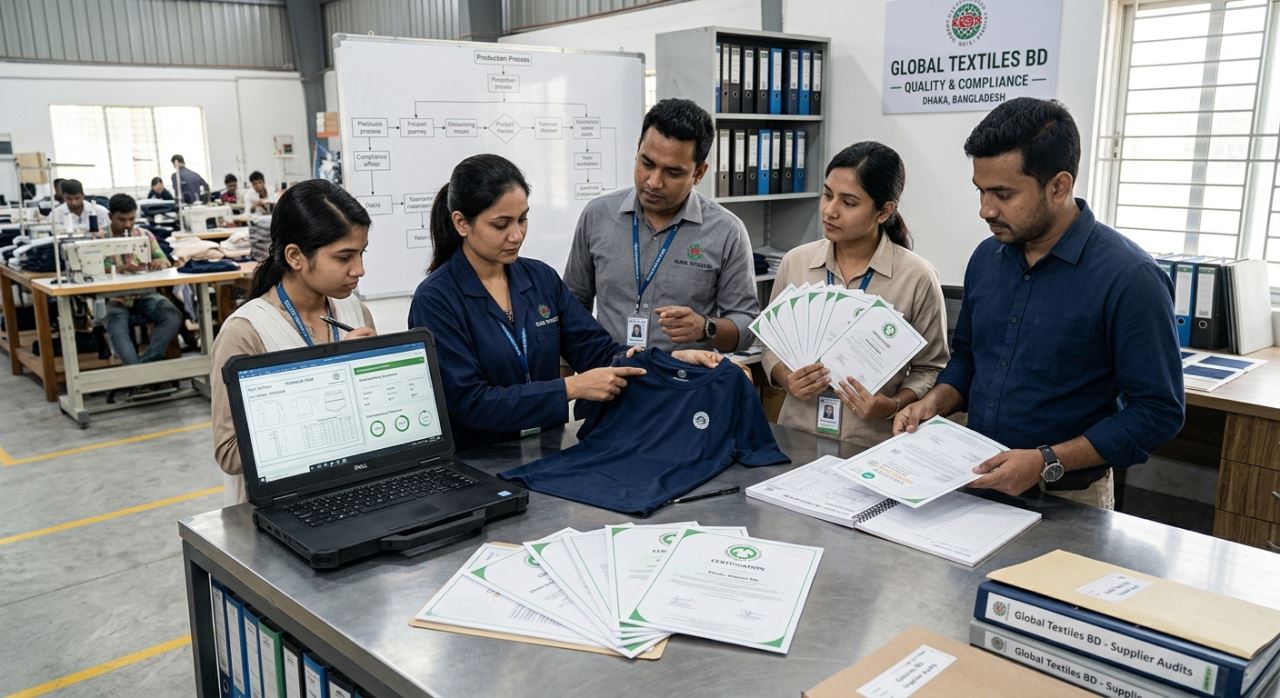
What information should factories start organizing?
Factories do not need to predict every future EU data field.
They can begin with the information they already use every day.
The first area is product identity.
Each garment should have a clear relationship between the buyer article number, internal style number, SKU, color, size, production order and any global identifier such as a GTIN.
If different departments use different references for the same product, the DPP project will immediately become difficult.
The second area is material information.
Factories should understand not only the main fabric but also important components such as lining, interlining, thread, buttons, zippers, elastic, labels, coatings, trims and packaging.
The third area is supplier and facility information.
It is useful to know the difference between the company that sold a material and the facility that actually manufactured or processed it.
A fabric trader, for example, may not be the fabric mill.
A garment exporter may purchase through an agent while the actual dyeing or finishing takes place at another facility.
This difference matters when traceability becomes more detailed.
The fourth area is evidence.
Certificates, laboratory reports and sustainability documents should not simply exist in a shared folder.
The company should know what each document covers, when it expires and which product or material it supports.
Finally, factories should begin organizing product-use and circularity information.
This may include washing instructions, maintenance guidance, repair information, product durability, material separation and recycling guidance.
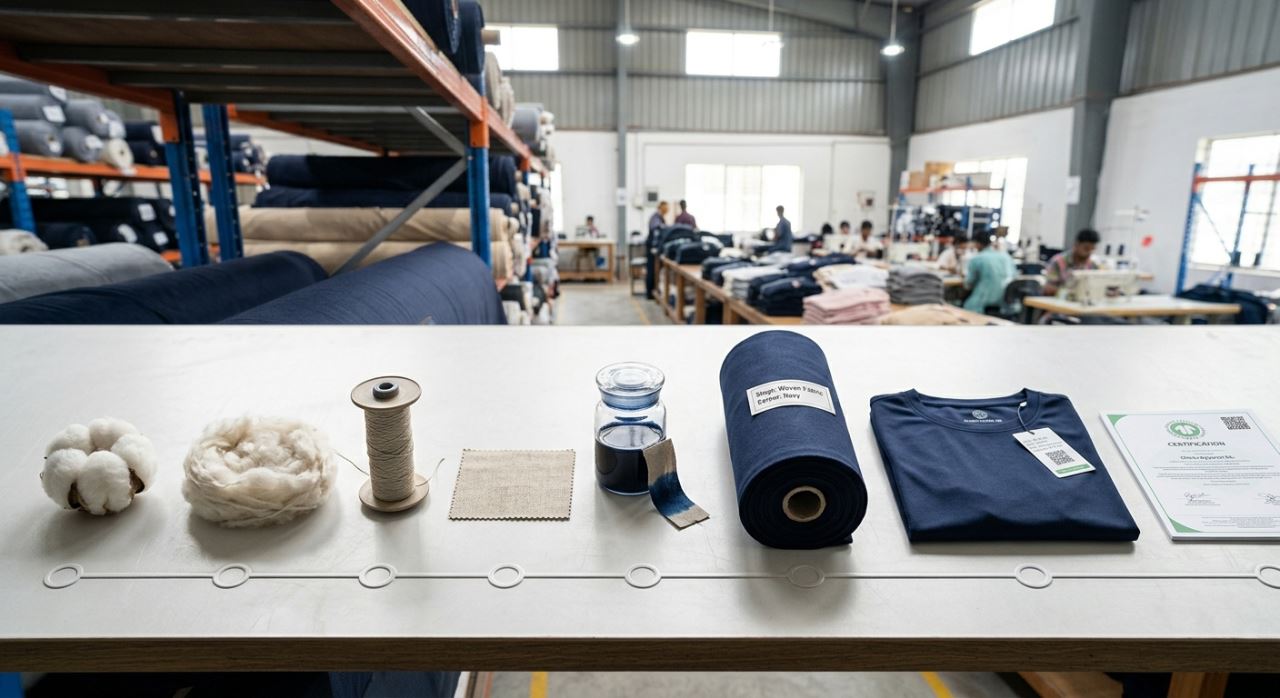 The biggest risk is fragmented data
Most established garment factories already hold significant amounts of product information.
The problem is fragmentation.
A sustainability manager may know the environmental claim.
A merchandiser may know the fabric.
A compliance officer may hold the certificate.
A production manager may know the batch.
An ERP system may contain the product code.
A supplier may hold the upstream information.
If these pieces cannot be connected, the factory does not yet have a usable product passport.
The first stage of DPP readiness should therefore be a data-mapping exercise.
Choose one real product and ask:
Where is the product identity stored?
Where is the material composition stored?
Who knows the supplier?
Where is the certificate?
Who verifies the claim?
How is the production batch identified?
What information could be shown publicly?
What information should remain restricted?
What data is missing?
This exercise usually reveals more about DPP readiness than a software demonstration.
Start with one product, not the whole factory
Companies sometimes make digital projects unnecessarily large.
A better DPP starting point is one controlled pilot.
Select one EU buyer, one product family and a small number of styles.
Use real data.
Connect the product identity to real material information, real suppliers and real documents.
Then create a QR-linked digital record and test it.
Can the product be identified correctly?
Can the evidence be retrieved quickly?
Can different users receive different information?
Can the data be updated?
Can the factory explain who owns each field?
If the answer is yes, the company has started building a repeatable DPP process.
If the answer is no, the pilot identifies the gaps before the same problems appear across thousands of products.
What textile exporters should do now
The practical starting point is straightforward.
Review your product master data and remove inconsistent product references.
Map important materials and components.
Clean supplier and facility records.
Organize certificates by scope and validity.
Identify the owner of every important product-data field.
Review current buyer sustainability requests.
Select one suitable export product for a DPP pilot.
Most importantly, avoid treating DPP as an IT-only project.
The software can connect information.
It cannot create reliable information that the factory does not already understand.
 Key Ideas
- Digital Product Passport is primarily a product-data challenge, not a QR-code challenge.
• Textile exporters already hold much of the required information, but it is often fragmented.
• Product identity, materials, suppliers and evidence must connect to the same product record.
• Different users may need different levels of access.
• Factories do not need to wait for every final textile requirement before improving their data.
• A small pilot is more useful than trying to digitize every product at once.
Conclusion
Digital Product Passport will introduce a new level of product transparency for textile supply chains.
For exporters, the companies that adapt most easily will probably not be those that wait for the final deadline.
They will be the companies that already understand their product information.
They know what data they have.
They know where it comes from.
They know who owns it.
And they can connect the evidence to the product.
At QUIVK, our focus is helping garment and textile exporters move from scattered product records toward structured, practical Digital Product Passports that can support future EU requirements and buyer expectations.
The right first step is not complicated.
Start with one product.
Understand its data.
Then build from there.