


Why long-term availability and continuity should be considered before the first passport is launched
A garment can remain in use for many years.
A technology vendor may not.
A brand may close.
A distributor may change.
A software platform may be acquired.
A subscription may end.
This creates one of the least glamorous—but most important—Digital Product Passport questions:
Who keeps the passport available over time?
Under ESPR, the passport must remain available for the period specified in the applicable delegated act, and that period must correspond to at least the expected lifetime of the relevant product. The regulation also addresses continued availability after insolvency, liquidation or cessation of activity and requires a backup copy through a DPP service provider when the product is placed on the market.
For textile exporters and brands, continuity therefore needs to be part of system design.

A webpage is not a continuity strategy
Imagine a QR code points directly to:
brandwebsite.com/product/123
Five years later, the brand redesigns the website.
The page disappears.
The garment still exists.
The QR code is now useless.
DPP architecture should reduce this risk.
Stable identifiers and properly managed resolution can help separate the product identity from the current location of information.
GS1’s resolver model, for example, allows one Digital Link identity to connect to multiple sources of related information rather than forcing all resources into one permanent webpage.
Data portability matters
Before selecting a DPP platform, companies should ask:
Can we export all our product data?
In what format?
Can identifiers remain valid?
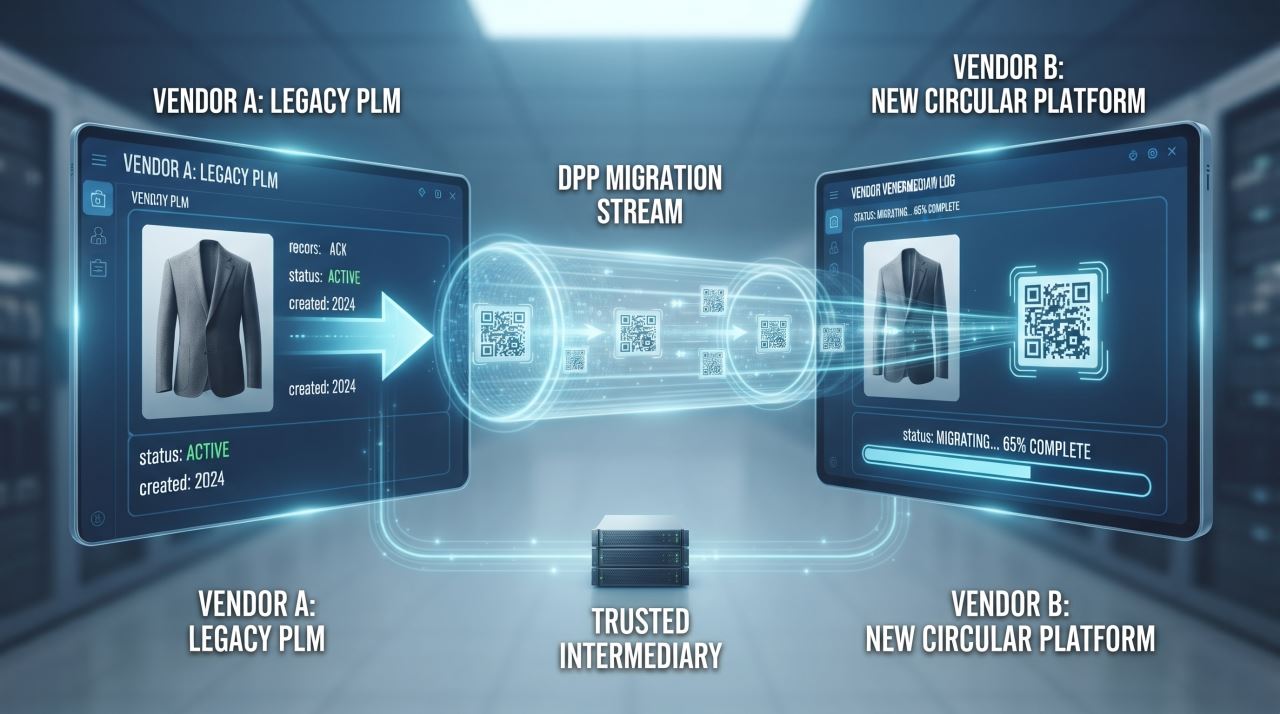
Can another provider take over?
Can evidence links be migrated?
What happens to QR codes already in the market?
A supplier should not discover the answers only when a contract ends.

Backups are different from exports
A spreadsheet export is useful.
But continuity can require more.
The system may need:
database backups
document backups
identifier records
relationships
access-right configurations
change history
service continuity
A full recovery strategy should preserve the meaning of the product record, not simply a list of fields.
Define contractual responsibility
Technology contracts should address:
data ownership
backup responsibilities
retention
termination
migration support
service availability
security incidents
provider failure
The commercial agreement should support the lifecycle expectations of the product.
Factories should also retain critical source data
Even where an EU brand controls the final passport, exporters should maintain their own approved evidence according to applicable legal, contractual and quality requirements.
The factory should not depend entirely on a buyer’s portal to remember what was true about the product when it was manufactured.
Internal product history remains valuable.
Key Ideas
- Products can outlive websites, brands and software contracts.
• ESPR requires DPP availability for the period specified for the product group, linked to expected product lifetime.
• Stable identifiers can help separate product identity from the current webpage location.
• Data portability should be tested before committing to a platform.
• Backups need to preserve relationships and evidence, not only individual fields.
• Contracts should address continuity and exit planning.
• Exporters should retain controlled internal product history.
 Conclusion
Long-term availability is easy to ignore during a pilot.
Everything works today.
The real question is:
Will it still work years from now?
At QUIVK, we believe continuity should be designed before the first QR code reaches the market.
Because a permanent product identity deserves a durable digital strategy.