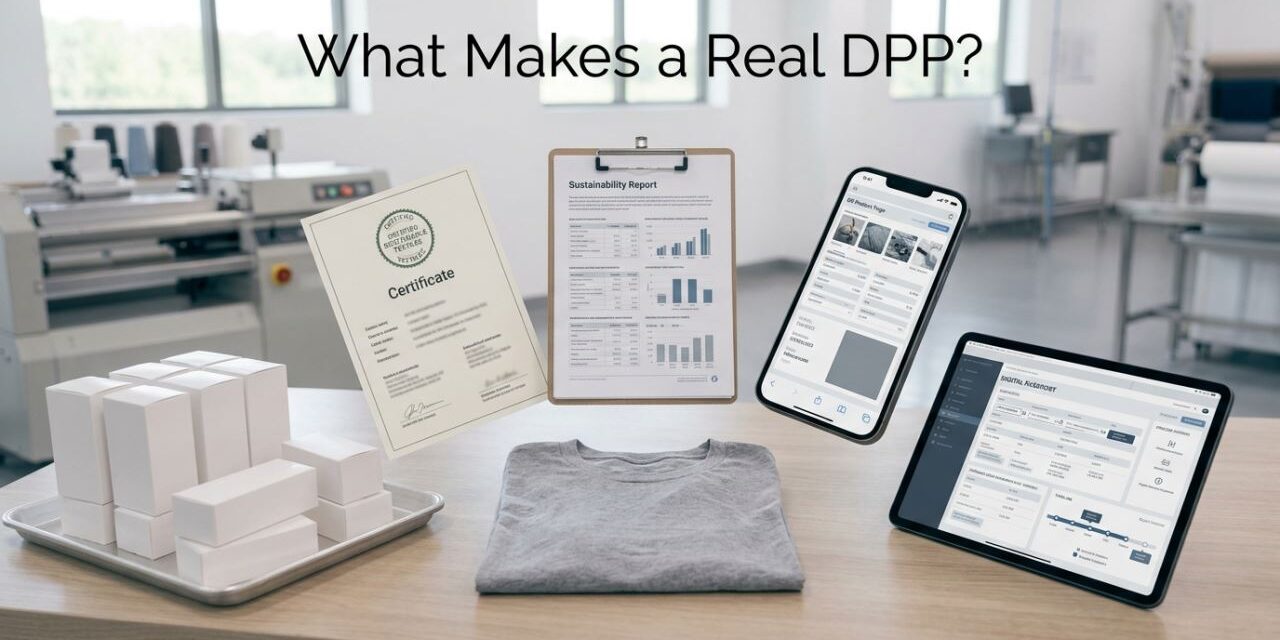
Understanding the difference between certificates, product pages, sustainability reports and a real DPP
Textile companies already produce a large amount of documentation.
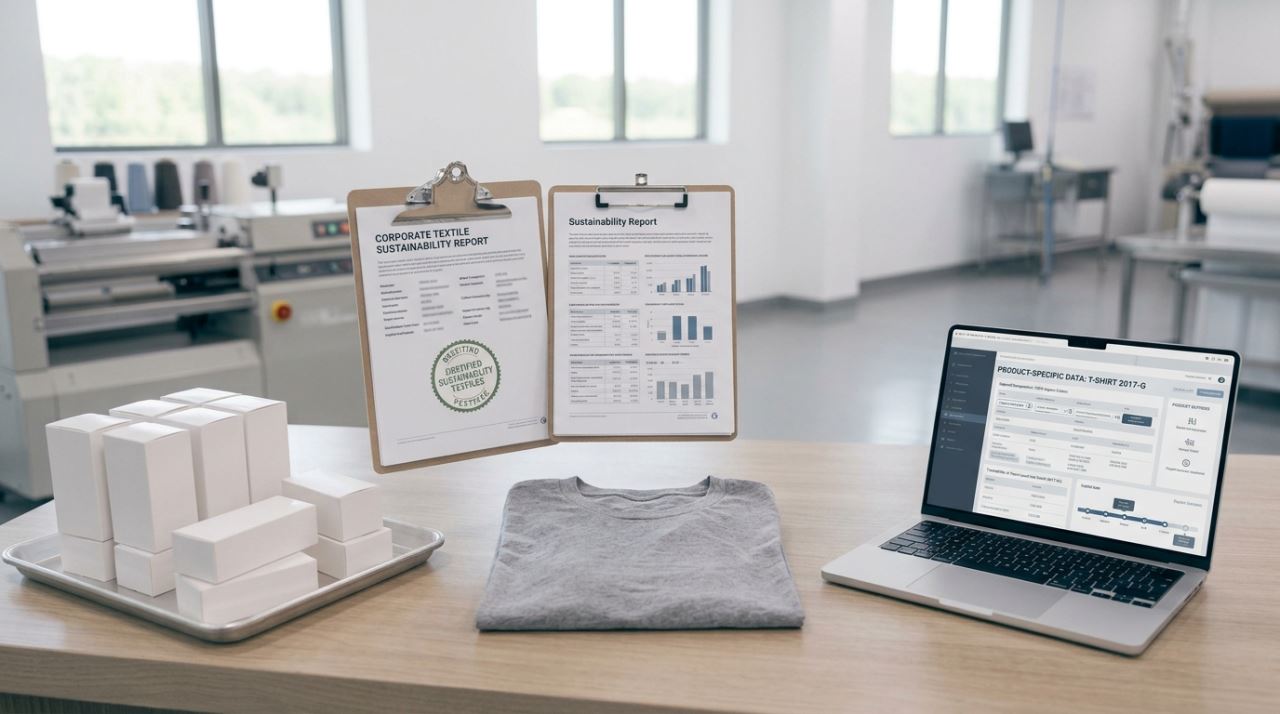
A factory may have sustainability reports, environmental certifications, laboratory reports, technical data sheets, buyer portals, traceability systems and QR-linked product pages.
When Digital Product Passports are introduced, it is therefore natural to ask:
Do we already have most of this?
In many cases, the answer is yes.
But having the information is different from having a Digital Product Passport.
A DPP does not necessarily replace these existing systems. Its role is to connect relevant product information around a persistent product identity and make that information available to authorized users in a structured digital form.
For exporters, understanding this distinction can prevent unnecessary duplication and poor technology decisions.
A sustainability report describes the organization
A sustainability report normally communicates what a company or group is doing across its operations.
It may include:
- energy consumption
• renewable energy
• greenhouse-gas emissions
• water usage
• waste management
• social programs
• sustainability targets
• environmental initiatives
This information is important.
But it normally operates at company, group or facility level.
A Digital Product Passport is different because its information relates to a defined product model, batch or item, depending on the applicable product rules.
If a sustainability report says that 30% of a factory’s electricity comes from renewable sources, that does not automatically tell us the sustainability characteristics of one particular jacket.
The levels of information are different.
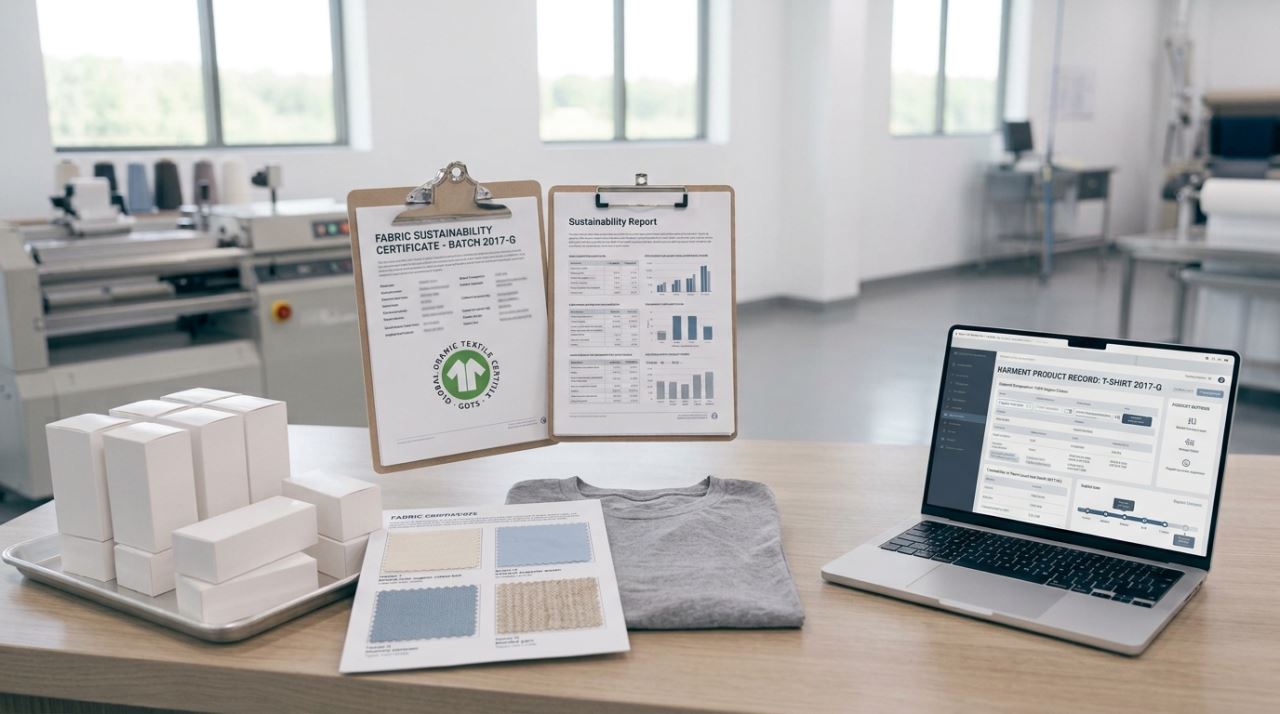
A certificate proves something within a defined scope
Certificates are another important source of DPP information.
But a certificate is not itself a passport.
A certificate may prove that:
a facility meets a particular standard
a material has specific certification
a management system has been audited
a transaction qualifies under a certification program
The key word is:
scope
A certificate should only support claims that fall within its scope.
A DPP may reference or provide access to certificate information, but the passport should also connect that evidence to the correct product, material, supplier or facility.
This relationship is what turns a document into useful product evidence.
A QR product page can look like a DPP
Many brands already use QR codes on garments.
A scan may open a page showing:
product photographs
brand story
fabric composition
factory information
care instructions
sustainability claims
This may provide excellent consumer engagement.
But a good product page and a DPP are not automatically the same thing.
A regulatory-grade DPP framework also needs to consider:
persistent product identity
structured information
access rights
data integrity
updates
interoperability
availability over the required period
connection to applicable product requirements
Under ESPR, DPP information must be based on open standards, be interoperable and, as appropriate, machine-readable, structured, searchable and transferable without vendor lock-in.
That is a stronger requirement than simply maintaining a webpage.
A traceability platform solves another part of the problem
Traceability systems can be extremely useful for DPP.
They may record:
supplier relationships
material movements
production batches
shipment events
parent-child relationships
chain-of-custody information
However, a traceability platform may not contain consumer care instructions, repair guidance or every piece of compliance information required for a DPP.
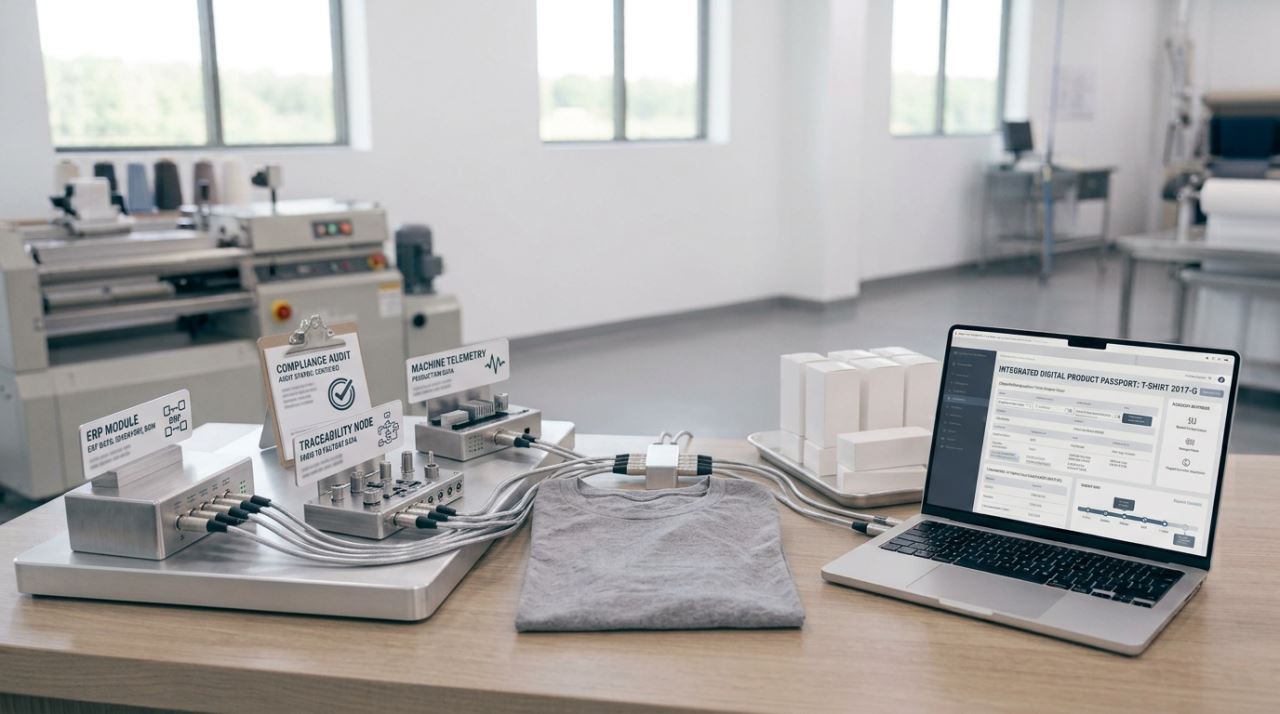
The best architecture may therefore connect several existing systems.
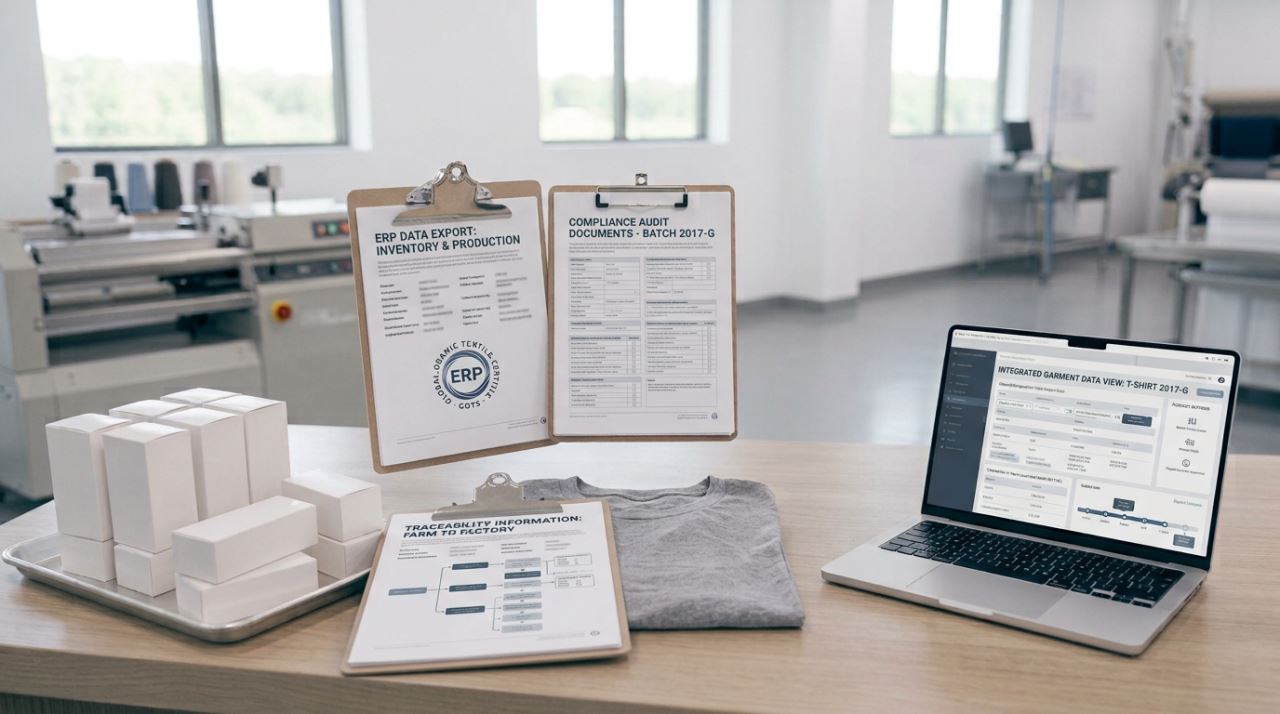
ERP provides product master data.
PLM or technical packs provide specifications.
Compliance systems provide evidence.
Traceability systems provide supply-chain relationships.
The DPP platform creates the product-facing structure and controls access.
The objective should be connection, not duplication.
Avoid relabeling everything as DPP
As interest in DPP grows, many existing technologies are being repositioned as Digital Product Passport solutions.
Factories should ask a simple question:
Which DPP functions does this system actually provide?
Does it manage persistent identity?
Can it structure data?
Can it support access rights?
Does it keep audit history?
Can information be exported?
Can it integrate with other systems?
Can evidence be linked to specific products?
Will the data remain portable?
If not, the technology may still be useful.
It simply should not be treated as the complete DPP.
Key Ideas
- Sustainability reports usually describe organizations or facilities rather than individual products.
• Certificates support specific claims within a defined scope.
• A QR product page can provide useful consumer information without being a complete DPP.
• Traceability platforms may provide important DPP data but do not automatically perform every passport function.
• A good DPP architecture should connect existing systems rather than duplicate everything.
• Exporters should evaluate technology by function, not by the label “DPP”.
Conclusion
Most textile exporters are not starting from zero.
They already have systems and documents containing important pieces of the future product passport.
The challenge is connecting them correctly.
At QUIVK, we believe DPP implementation should build on information a factory already trusts.
Do not replace a good compliance system simply because DPP has arrived.
Do not copy data unnecessarily.
Instead, create a product-centered digital layer that brings the right information together.
That is more practical.
And far more scalable.