

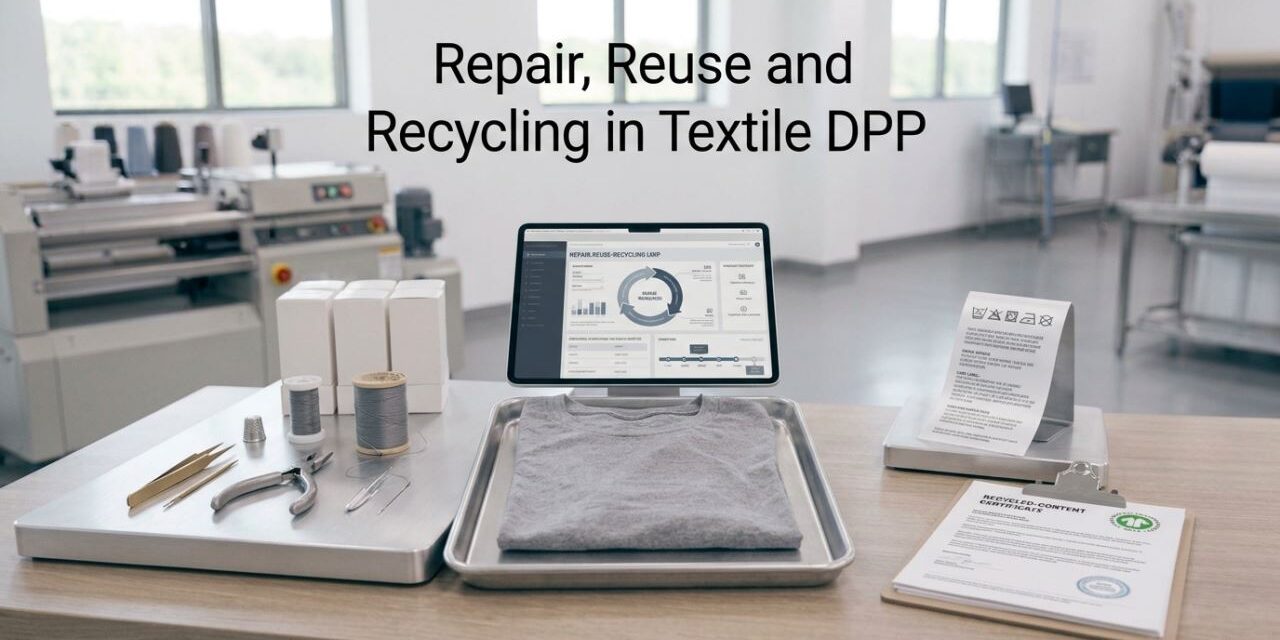
Turning circularity from broad sustainability language into useful product information
Circularity has become one of the most repeated words in the textile industry.
Products are described as recyclable.
Brands discuss repair.
Resale is growing.
Take-back programs are expanding.
But when this information becomes part of a Digital Product Passport, broad statements may no longer be enough.
A user needs practical information.
Can this garment actually be repaired?
Which parts can be replaced?
How should it be maintained?
Can the materials be separated?
What should happen when the product reaches the end of its useful life?
The DPP creates an opportunity to make circularity much more useful.
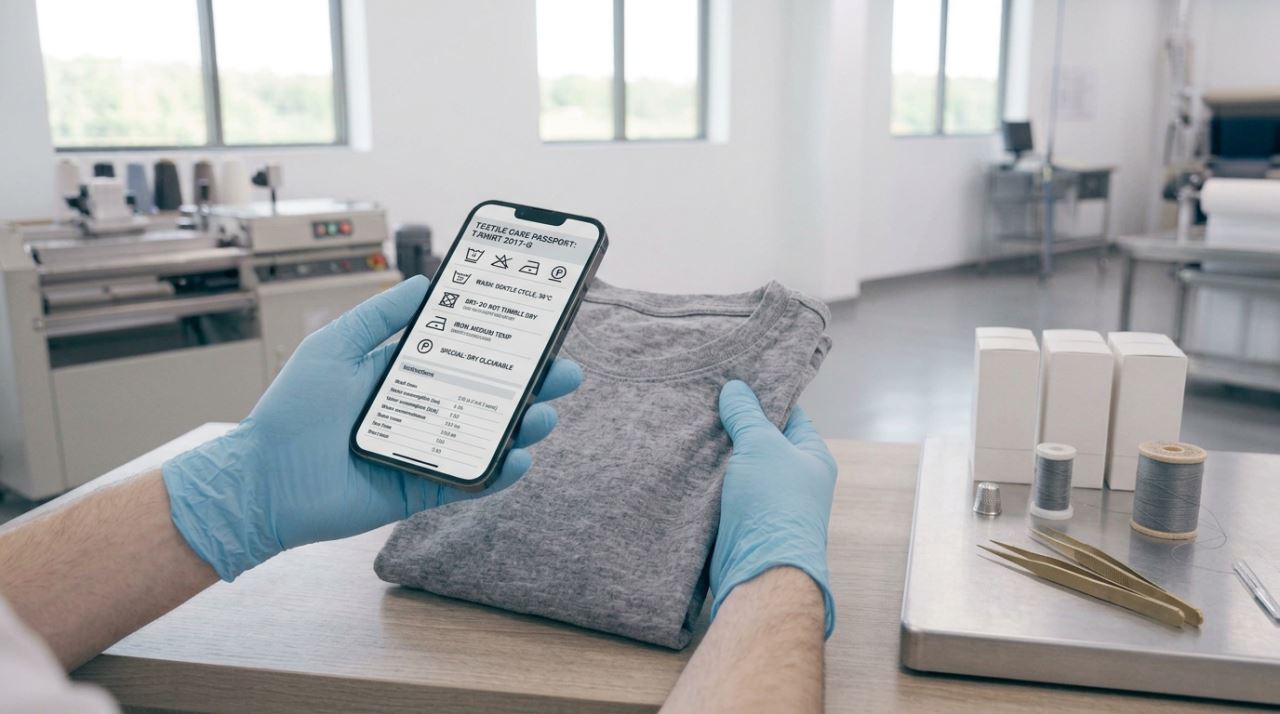
Product life starts with good care
One of the easiest ways to extend the life of a garment is to use it correctly.
Care instructions are therefore more important than they may appear.
Traditional garment labels have limited space.
A digital passport can potentially provide richer guidance.
For example:
recommended washing temperature
drying method
ironing guidance
special cleaning precautions
color-care advice
storage instructions
ways to reduce unnecessary washing
A consumer who takes better care of the product may use it for longer.
That is already a circularity benefit.
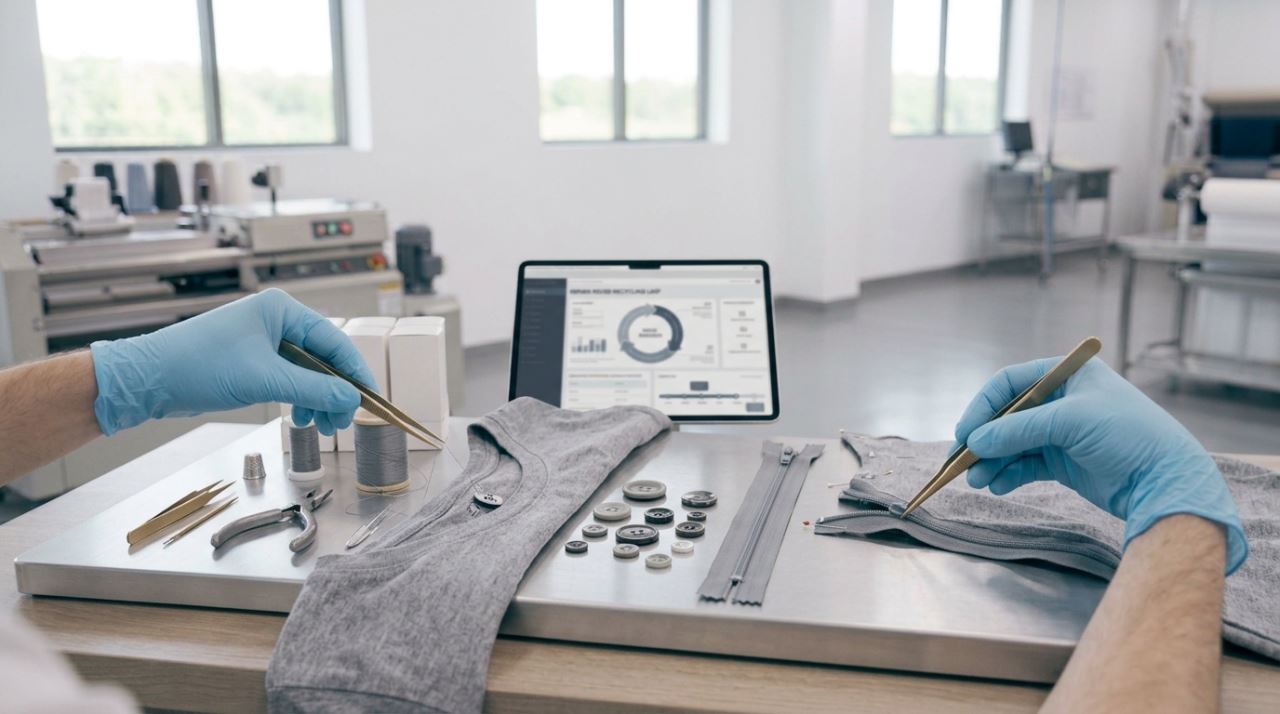
Repair guidance should be realistic
Not every garment needs an extensive repair manual.
But many products have common failure points.
A jacket may need a zipper replacement.
A shirt may lose a button.
Sportswear may develop stitching damage.
Workwear may need patching.
A passport could provide useful guidance about:
replacement components
recommended repair techniques
professional repair options
original construction information where appropriate
The important point is that repair information should be realistic for the product.
“Designed for repair” means little if no practical repair information exists.
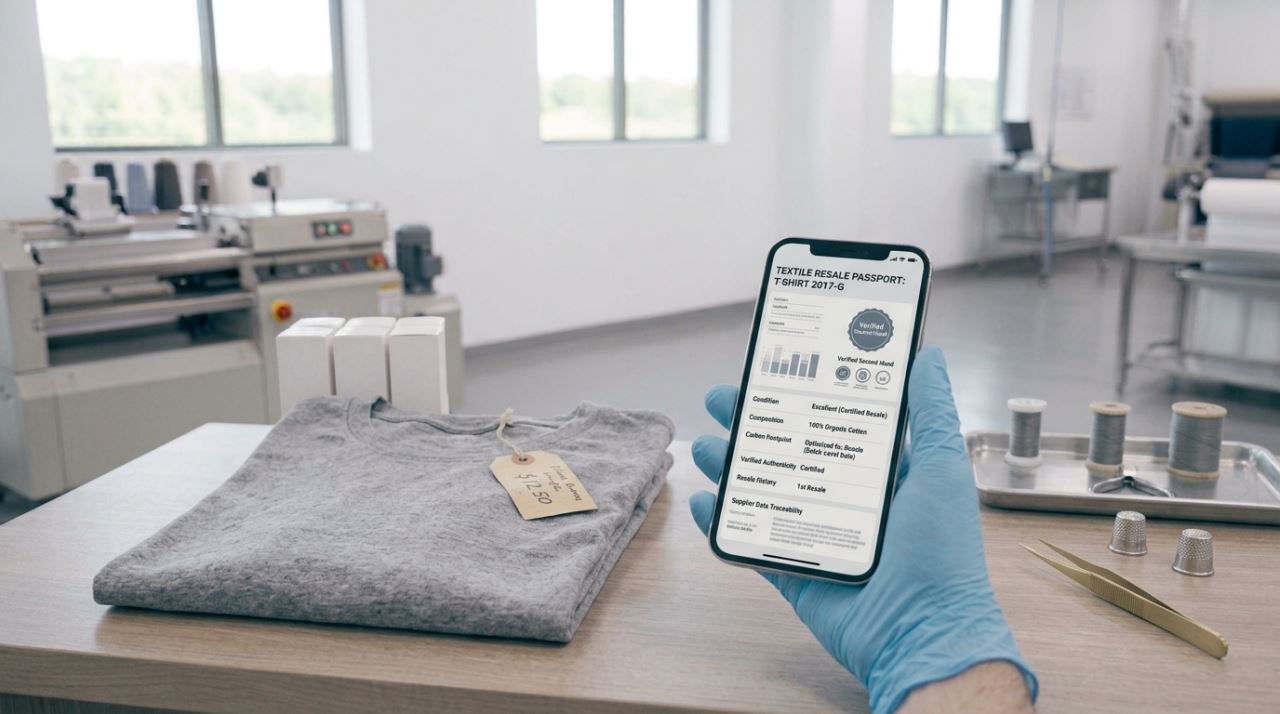
Reuse and resale need product confidence
Digital identity can also support reuse and resale.
A second owner may want to know:
what the garment is made from
how it should be cared for
whether it is authentic
how old the product is
whether repair information exists
Premium products may eventually connect repair or service history to an individual item.
For lower-value garments, model or batch-level information may be enough.
The value of this data depends on the use case.
Recycling information is more complicated than it sounds
A common sustainability claim is:
recyclable
But textile recycling is complex.
A garment may contain:
cotton and polyester blend
elastane
plastic zipper
metal button
polyester thread
printed labels
coatings
adhesives
Different recycling technologies may handle these combinations differently.
This is why exporters should be cautious about broad recycling claims.
A useful passport may instead explain the actual product construction.
For example:
Main fabric: 100% cotton
Thread: polyester
Buttons: metal
Label: polyester
This information may help future sorting and recycling systems make better decisions.
Design teams can learn from DPP data
DPP should not only communicate information outward.
It can also help companies see their own products more clearly.
If product records repeatedly show complex material combinations that are difficult to separate, design teams may reconsider those choices.
If one trim prevents an otherwise recyclable product from being processed efficiently, that information can influence future development.
Circularity therefore becomes part of product design.
Not only marketing.
Do not promise what the market cannot deliver
A garment may theoretically be recyclable.
But if there is no practical recycling system available in the target market, the consumer may still have no realistic recycling option.
Factories and brands should therefore distinguish between:
technical recyclability
available recycling pathways
local collection infrastructure
take-back services
This creates more useful communication.
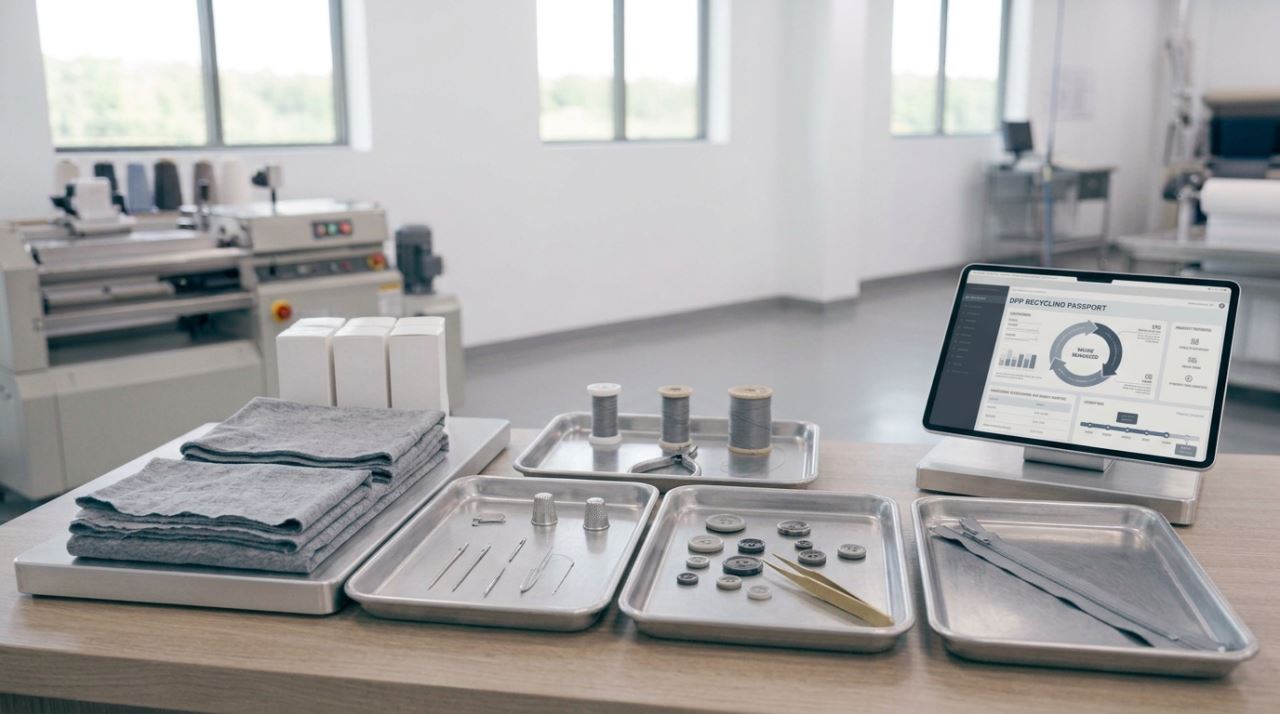
Key Ideas
- Care information can help extend garment life.
• Repair guidance should reflect real product construction and likely failure points.
• Digital identity may support reuse and resale.
• Recycling claims should consider the complete garment, including trims and mixed materials.
• Product composition can help future sorting and recycling systems.
• DPP data can also help designers improve future product circularity.
• Circularity information should be practical rather than promotional.
Conclusion
A good Digital Product Passport should not simply tell consumers that a garment is circular.
It should help them understand what they can actually do with the product.
Care for it.
Repair it.
Reuse it.
Resell it.
Or dispose of it responsibly when its useful life ends.
At QUIVK, we believe circularity data becomes valuable when it moves from ambition to instruction.
The more practical the information, the more useful the passport becomes.






