

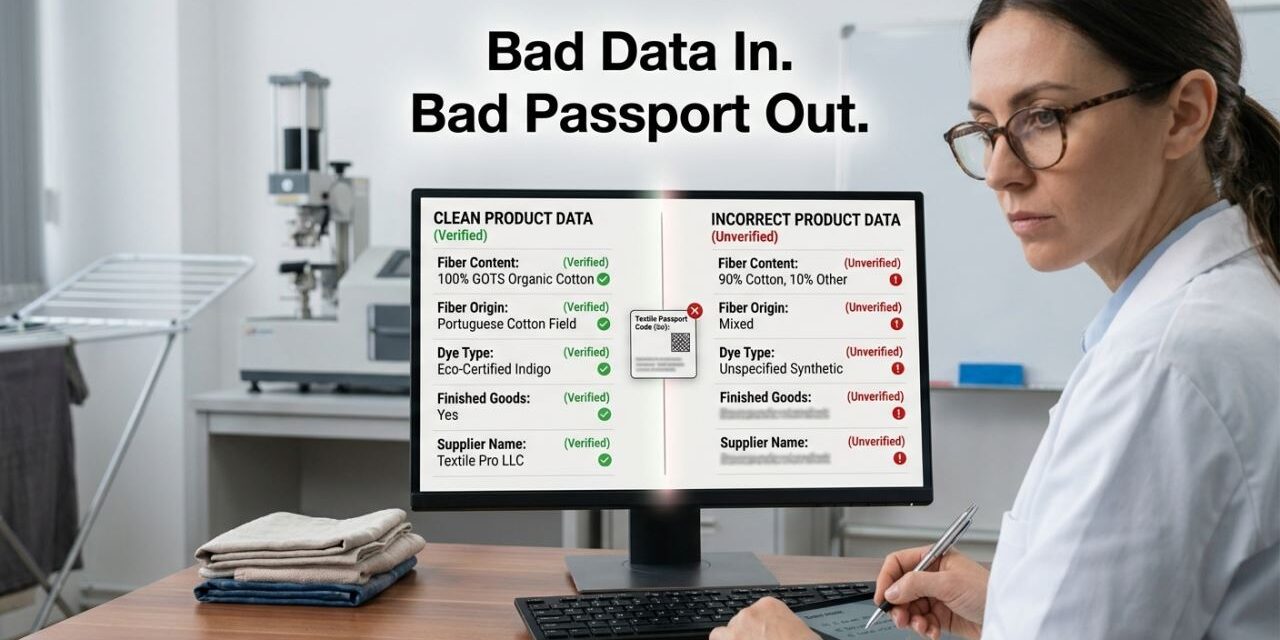
Digital Product Passport technology cannot fix inaccurate textile product information
A Digital Product Passport can look impressive.
A clean interface.
A QR code.
A professional product page.
Multiple data fields.
But none of that matters if the information is wrong.
DPP creates visibility.

And visibility can make poor data more obvious.
That is why textile exporters should treat data quality as one of the foundations of DPP implementation.
Product information also changes more often than many companies realize.
A style may remain visually the same while the fabric supplier changes.
A trim changes.
The fiber blend changes slightly.
Production moves to another facility.
A certificate expires.
The buyer changes care instructions.
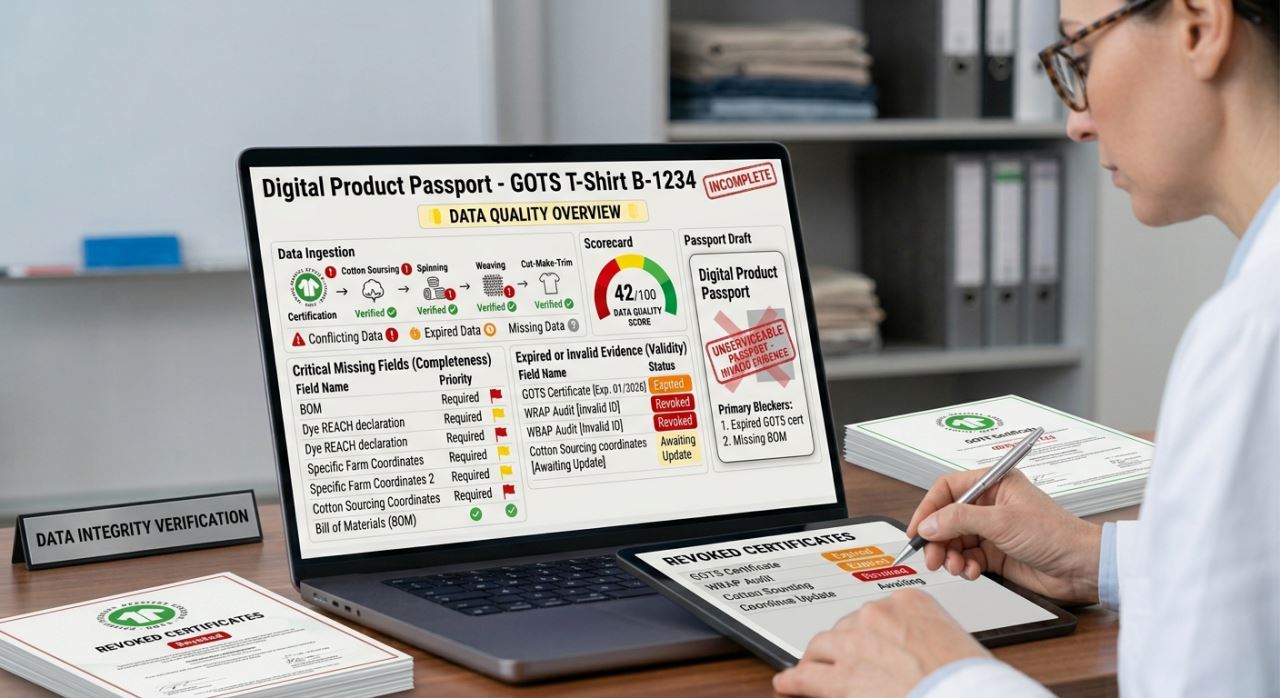
If the DPP is not updated accordingly, it may describe an earlier version of the product rather than the one actually shipped.
Completeness is also not the same as quality.
A factory can fill every field in a spreadsheet and still have poor data.
For example:
Supplier: Unknown
Material origin: N/A
Recyclability: Yes
Certificate: Available
Technically, the fields are filled.
But they provide little trustworthy information.
Good DPP data should be specific, current, consistent, supported where necessary and traceable to an approved source.
Technology can help through validation.
Composition percentages can be checked to total 100%.
Expiry dates can be validated.
GTIN structures can be checked.
Required fields can be enforced.
Supplier names can be selected from an approved supplier master.
These controls reduce manual errors.
But software cannot replace judgement.
A system may know that a certificate exists.
It may not know whether that certificate actually supports the product claim being made.
Factories also need to solve conflicts between systems.
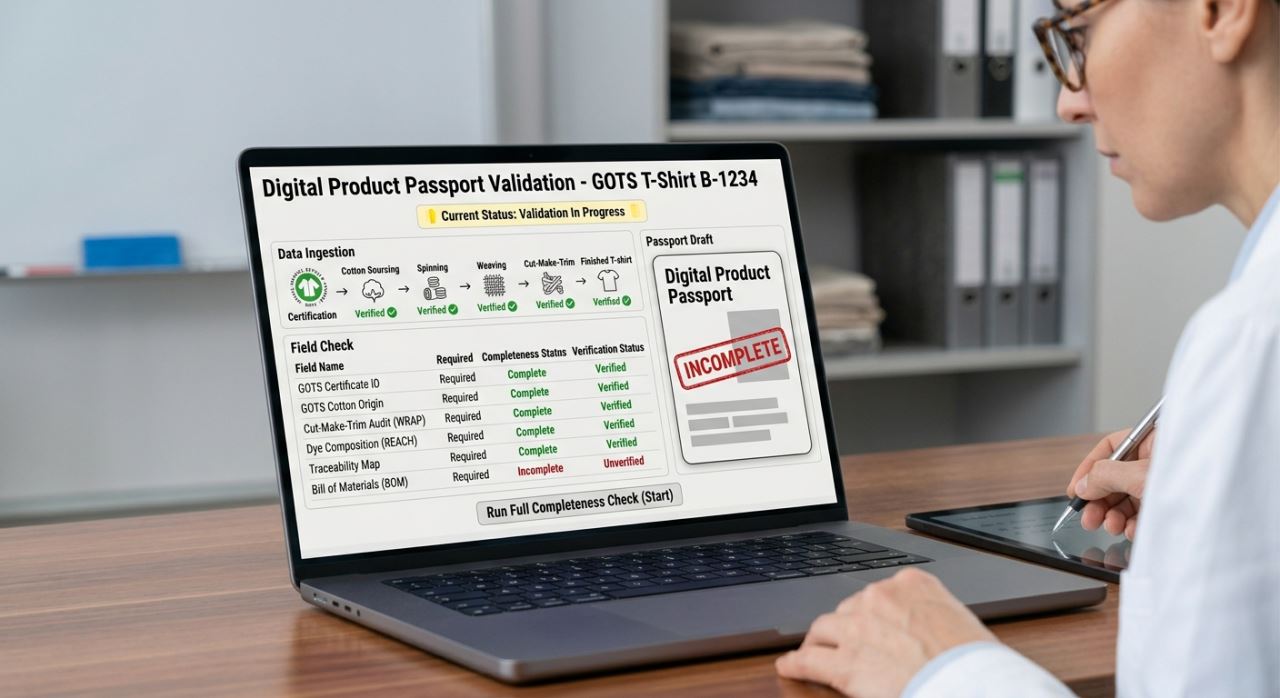
ERP may say one composition.
The technical pack may show another.
The buyer portal contains a third version.
The certificate refers to something slightly different.
DPP implementation often exposes these inconsistencies.
The solution is to decide which system or department is authoritative for each field.
For example:
ERP may own the product code.
Technical may own final composition.
Compliance may own certification status.
Production may own batch identity.
Once this hierarchy is clear, data becomes easier to govern.
Factories should also measure data quality.
Useful indicators may include:
percentage of complete passports
missing fields
expired evidence
duplicate suppliers
unverified claims
products with conflicting information
average time required to update a record
What gets measured becomes easier to improve.
 Key Ideas
- A visually attractive DPP can still contain poor information.
• Product data changes throughout the product lifecycle.
• Complete fields are not necessarily reliable fields.
• Validation rules can reduce common errors.
• Factories should define an authoritative source for each data category.
• Data quality should be measured through practical KPIs.
• Real pilot products are useful for finding data exceptions.
Conclusion
Digital Product Passport creates an uncomfortable but useful reality.
Bad product data becomes more visible.
That is good for the industry.
It encourages factories to improve the information already supporting purchasing, compliance and production.
At QUIVK, we believe a trustworthy passport begins long before the QR code.
It begins with reliable data.






