

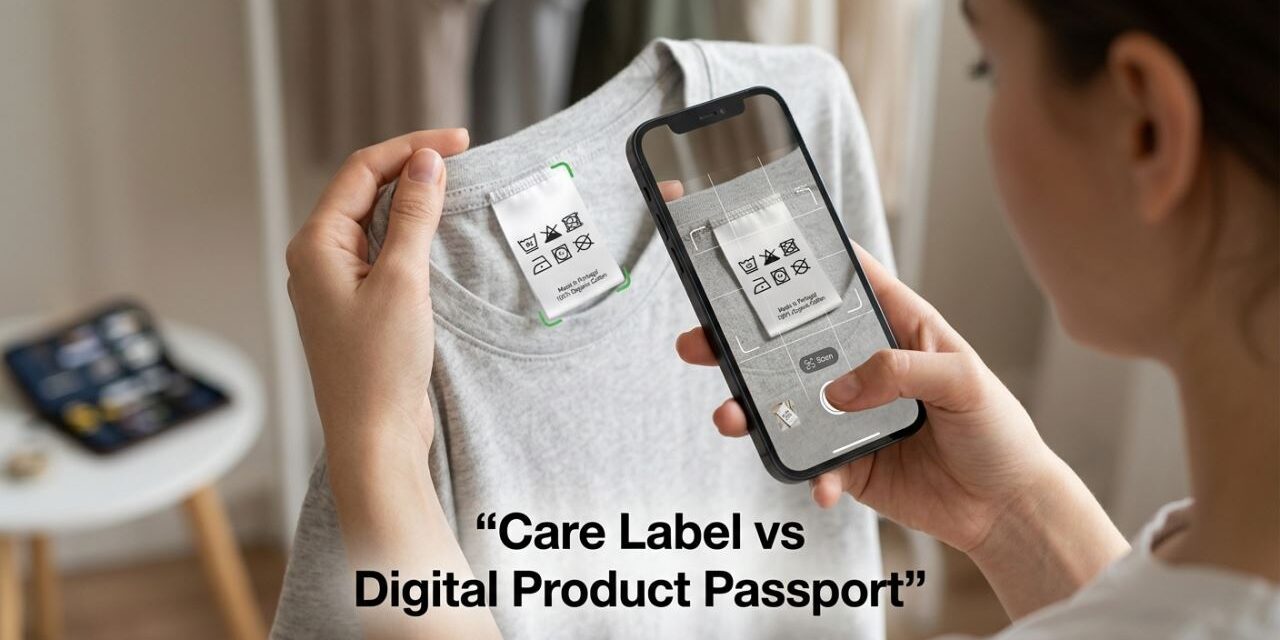
Why the familiar garment label will remain important even as product information becomes digital
For decades, the care label has been one of the most important information carriers on a garment.
It tells the user what the product is made from, how to wash it, how to dry it and how to care for it.
For exporters, care-label approval is already part of normal product development.
The Digital Product Passport introduces a new layer.
Instead of trying to fit every useful piece of information onto a small physical label, some product information can be accessed digitally through a data carrier linked to the product.
This does not necessarily mean the care label disappears.
It means the relationship between physical and digital information becomes more important.
A garment label has very little space.
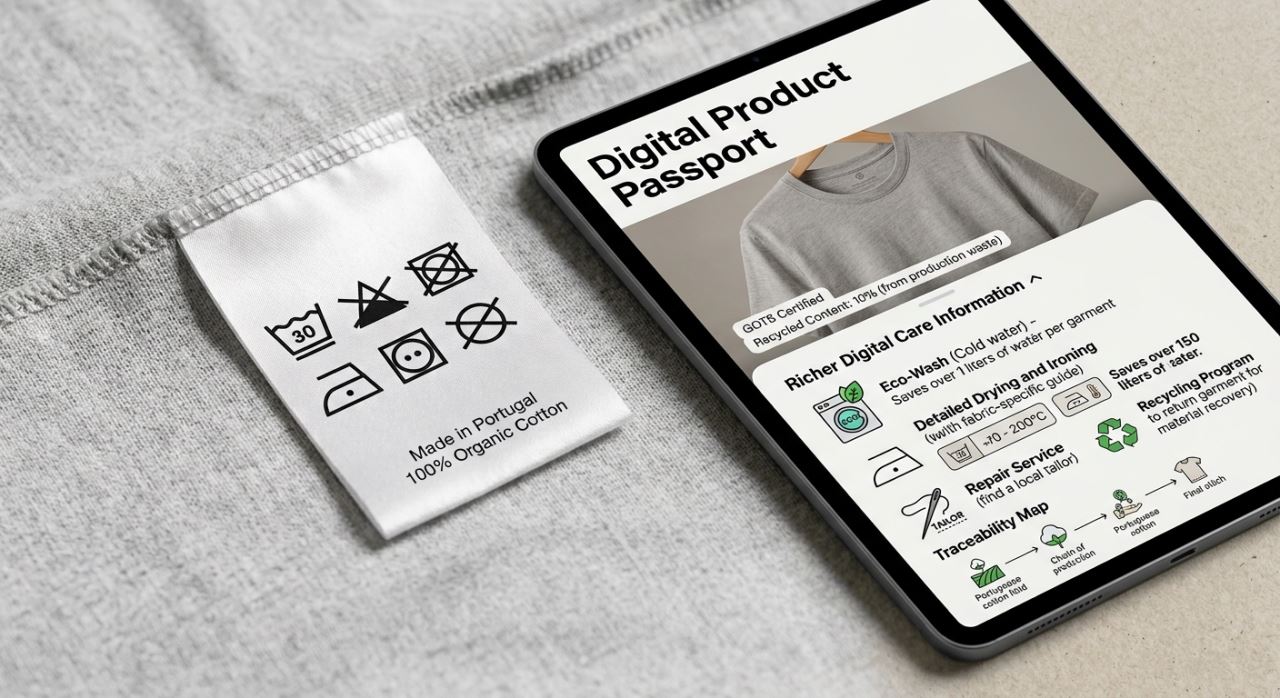
Factories need to accommodate information such as fiber composition, care symbols, country information where required, size, brand information, product identifiers and buyer-required text.
Adding more information eventually makes the label longer, harder to read and less comfortable for the wearer.
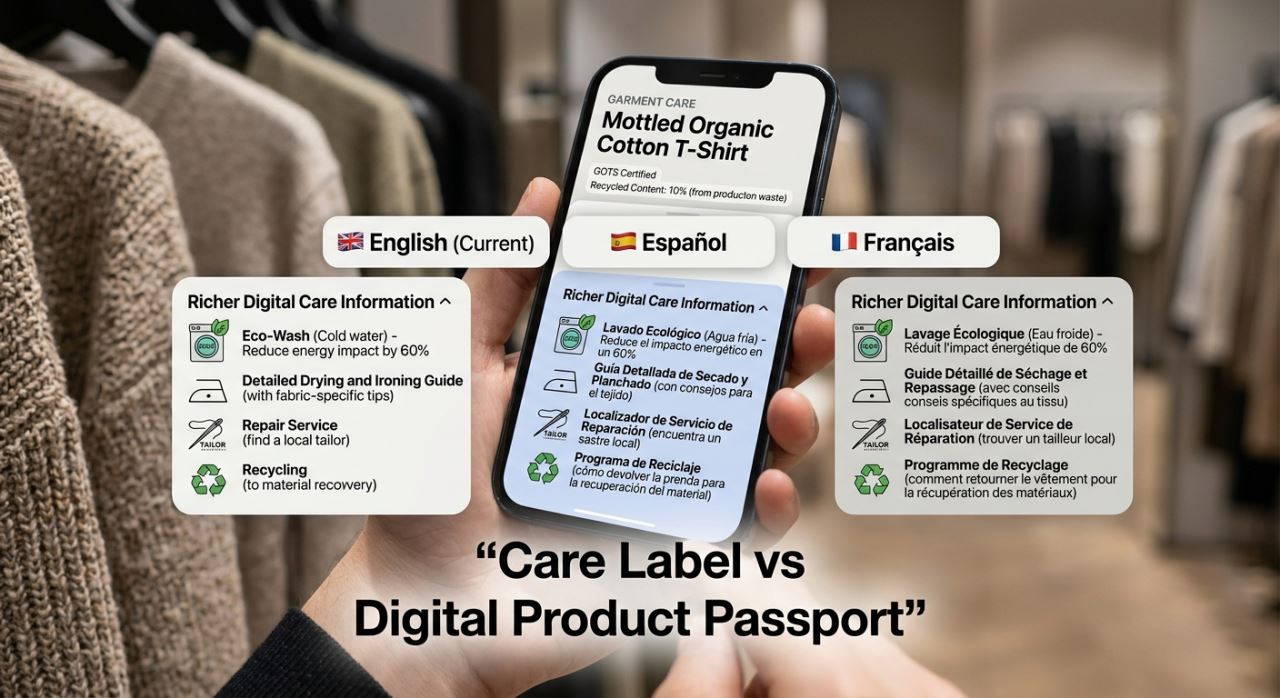
A digital passport can potentially provide deeper information without turning the physical label into a booklet.
For example, a user could access detailed washing advice, repair guidance, material explanations, recycling information, certificate information and additional languages.
The physical label can remain concise while the digital layer provides depth.
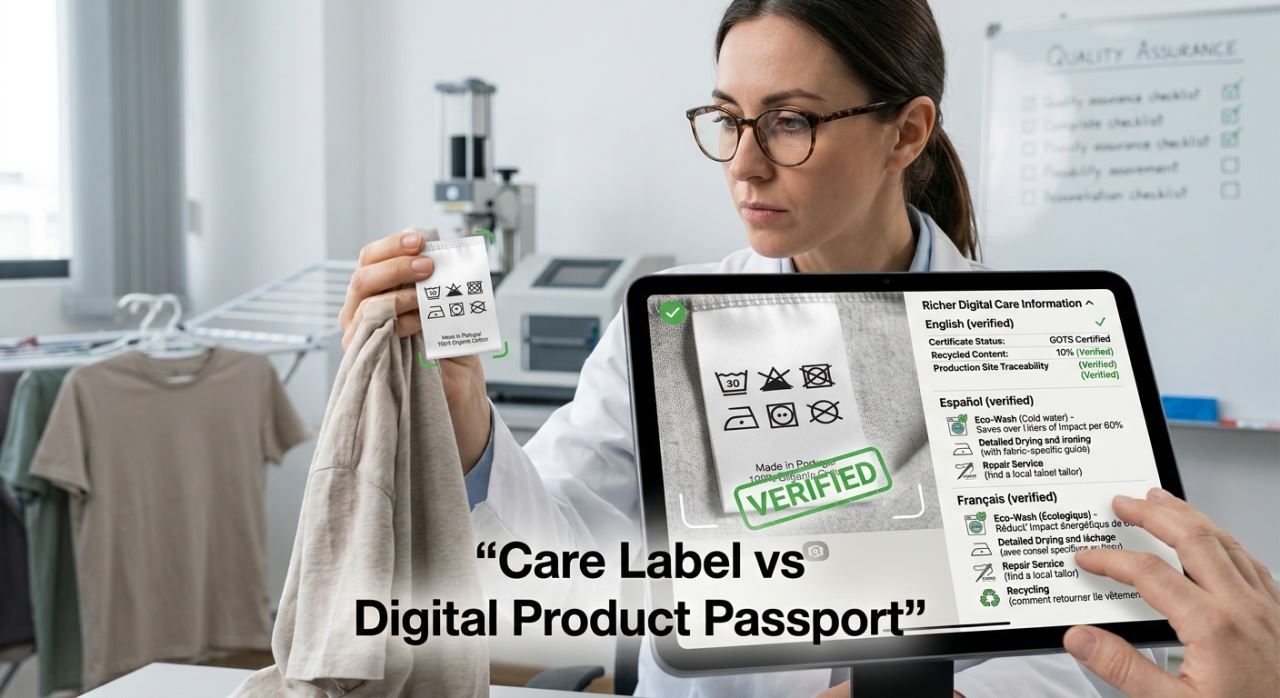
The challenge is that both sources must agree.
Suppose the sewn-in label says:
100% cotton
but the Digital Product Passport says:
95% cotton, 5% elastane.
 Which one is correct?
A mismatch like this can damage buyer confidence and create compliance concerns.
Factories should therefore ensure that the care label, technical pack, ERP record, buyer specification and DPP all refer to the same approved product information.
The DPP should not become another independent data source.
It should use controlled information from the same approved product master.
Care guidance is a good example of where digital information can become more useful.
A traditional label may simply show:
wash at 30°C
do not bleach
line dry
A digital passport could potentially explain why certain care is recommended.
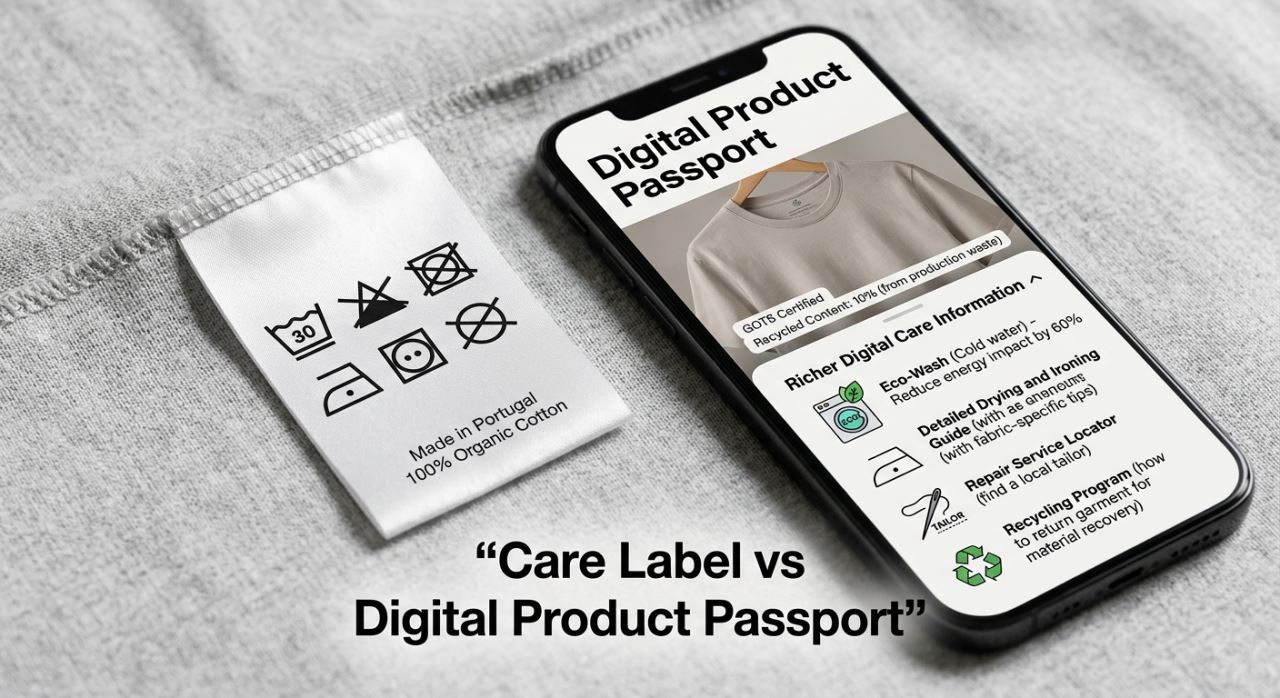
It could provide tips for reducing energy use, advice for preserving colour, stain-removal guidance, repair recommendations and product-specific maintenance.
This can improve the usefulness of product information without overcrowding the garment.
Digital information can also support multiple languages more easily than a physical label.
But translation should still be controlled.
Regulatory or safety-related information should not be changed casually simply because it is digital.
The master meaning should remain consistent across languages.
Factories should therefore review how label information is created today.
Who owns fiber composition?
Who approves care instructions?
Where is the final approved information stored?
How are buyer changes controlled?
Can the DPP use the same approved source?
The closer physical and digital workflows are connected, the lower the risk of inconsistency.
Key Ideas
- Physical garment labels will remain important even as digital information expands.
• A DPP can provide more detail than can fit on a sewn-in label.
• Physical and digital product information must remain consistent.
• Care guidance can become more useful through digital access.
• Multilingual information becomes easier to manage digitally.
• DPP data should connect to approved label and product-master data.
Conclusion
The Digital Product Passport should not compete with the garment label.
The two should work together.
The physical label provides immediate essential information.
The digital passport provides depth.
At QUIVK, we believe the best approach is one controlled source of product truth feeding both physical and digital channels.
That reduces duplication.
And reduces mistakes.






