

Why digital product information can be easier to localize than physical labels
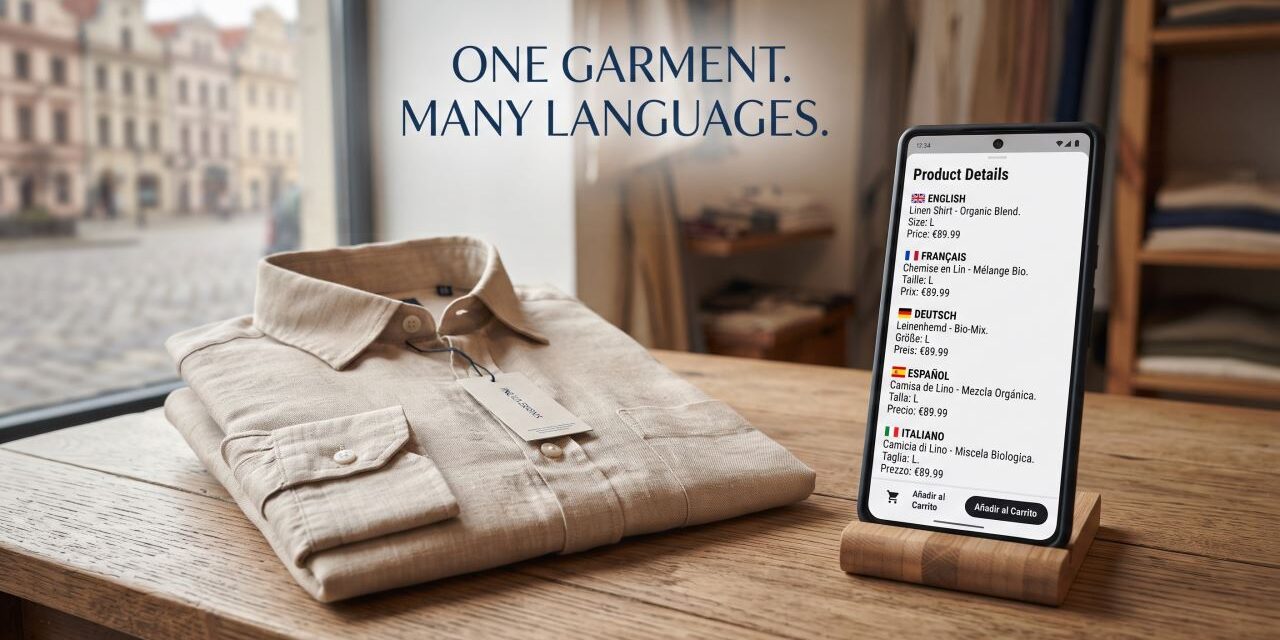
A garment made in Pakistan may be sold in Germany, France, Italy, Spain, the Netherlands or several markets at the same time.
That creates a familiar information challenge.
Different customers speak different languages.
Physical packaging and labels have limited space.
Digital Product Passports can make multilingual product information easier to manage.

But translation creates its own governance risks.
The objective should not simply be to produce more languages.
It should be to provide consistent meaning across languages.
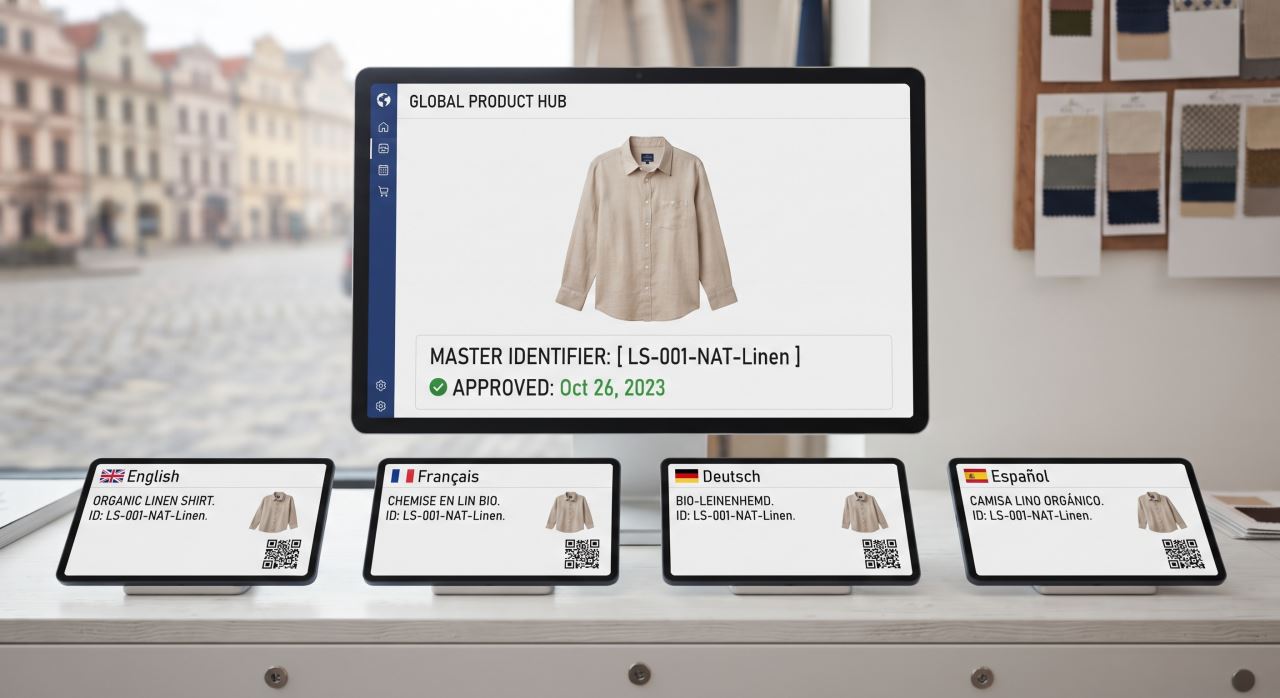
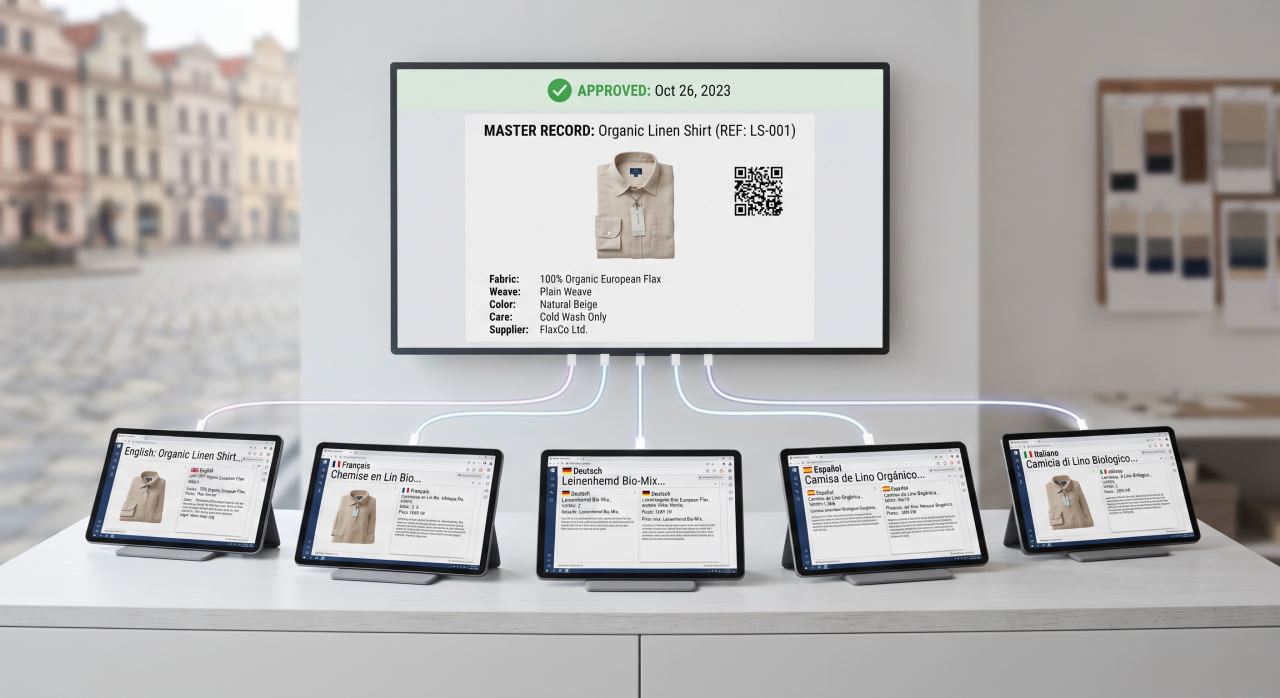
The safest approach is to define one approved master version of the product information.
This could include material descriptions, care guidance, repair instructions, product features, recycling information and sustainability explanations.
That source then becomes the basis for translation.
Without a controlled master, different countries may accidentally receive different meanings.
Some content is easier to translate than others.
Marketing descriptions are relatively flexible.
Technical and compliance information is not.
For example, translating:
“soft everyday comfort”
allows some interpretation.
Translating:
“shell: 95% cotton, 5% elastane”
does not.
Likewise, safety or compliance-related instructions require accuracy.
Factories and brands should classify information according to translation risk.
Digital information also has an advantage over printed information because content can be updated centrally.
If repair guidance changes, the master record can be updated.
If a translation error is found, it can be corrected.
If another market is added, another language can be created.
The product identity can remain stable while the digital information around it evolves.

Language selection can also become more user friendly.
A DPP interface can potentially use device language, browser settings or user choice.
But users should always be able to change language manually.
A traveler scanning a garment in another country may prefer a different language.
Translation also needs version control.
Suppose the English care guidance changes.
The French, German and Italian versions may still contain the old instruction.
The system should show which language versions are current and which require review.
Some information should never be translated at all.
GTINs.
Batch numbers.
Certificate numbers.
Facility identifiers.
These should remain stable globally.
Human-readable descriptions can change language.
Identifiers should not.
Key Ideas
- Digital product information can support many languages more easily than physical labels.
• Translation should begin from one controlled master version.
• Technical and compliance content needs stronger translation control than marketing copy.
• Digital content can be corrected centrally.
• Language versions need version control.
• Product identifiers should remain stable across languages.
Conclusion
Multilingual product information is one area where DPP can create immediate practical value.
The same garment can provide useful information to consumers across several markets without forcing every detail onto the physical label.
At QUIVK, we believe the principle should be simple:
Many languages.
One approved meaning.
One product identity.






