

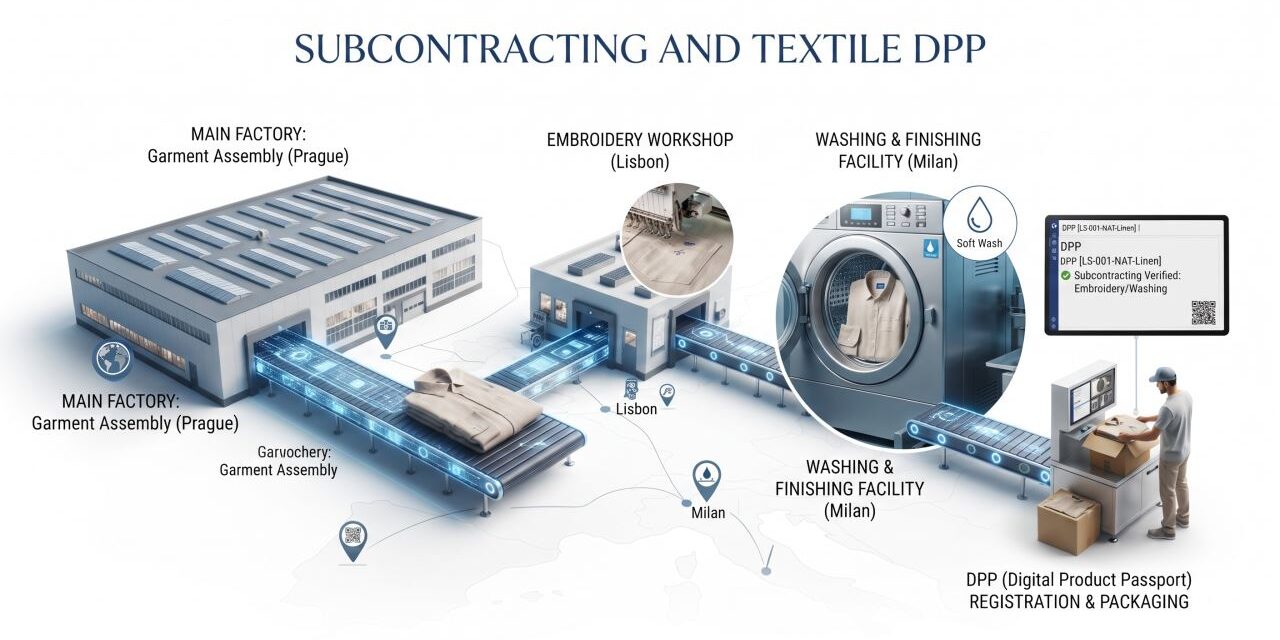
Why printing, washing, embroidery and outsourced processing need better visibility
Textile supply chains are rarely limited to the main factory.
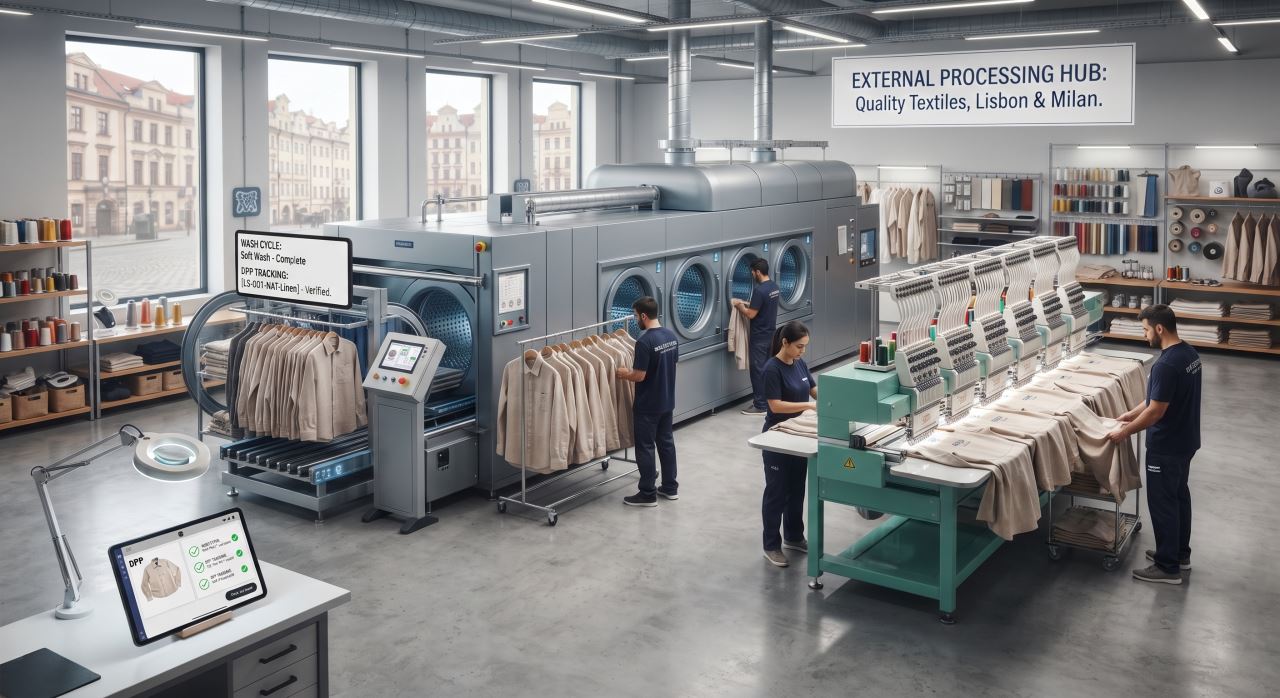
A garment may leave the facility for printing, embroidery, washing, special finishing, dyeing, coating, packaging or another outsourced process.
Operationally, subcontracting can be completely normal.
From a traceability perspective, however, it creates another layer of complexity.
If a Digital Product Passport eventually depends on manufacturing or facility information, exporters need to understand which processes happened where.
Purchase records may not tell the full story.

A purchase order may tell us who the main supplier is.
It may not reveal every facility that touched the product.
For example, a garment factory may send denim to an external washing unit.
A fabric supplier may subcontract finishing.
A printing supplier may use another facility during peak season.
If these changes are not recorded, the digital record may present an incomplete supply-chain picture.
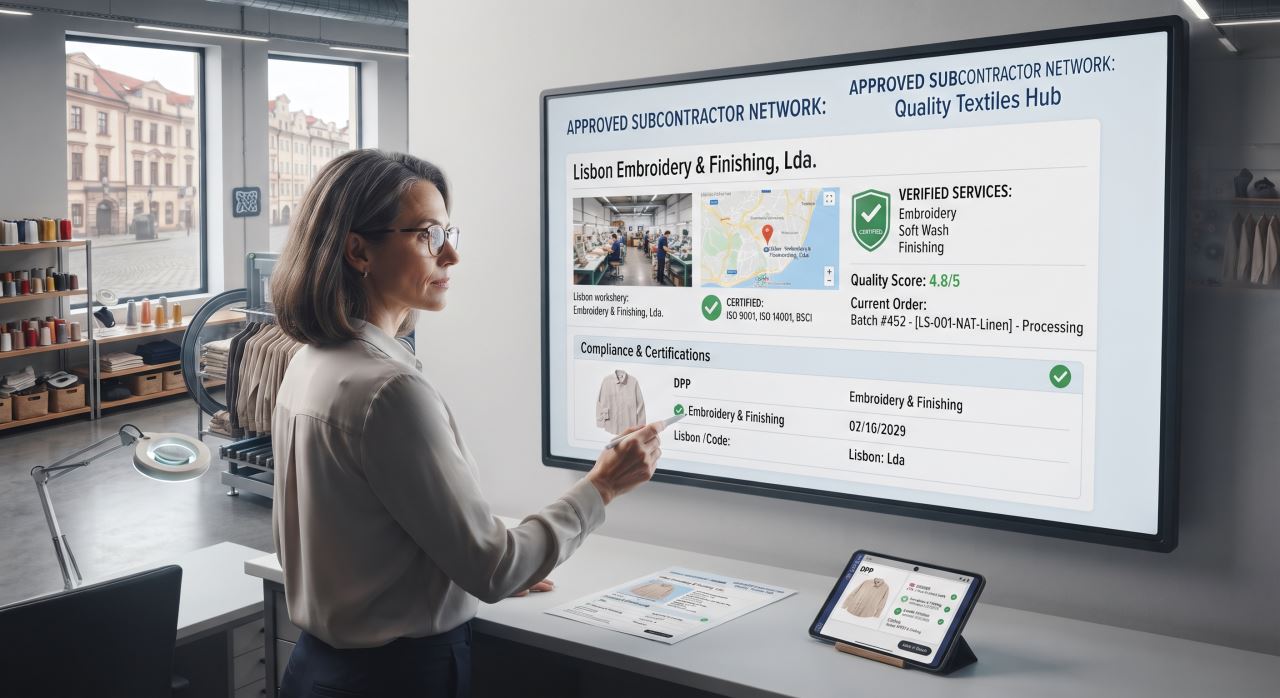
Factories therefore need clean records for relevant subcontractors.
This can include:
legal organization
physical facility
address
process performed
approval status
relevant certifications
relationship to products or orders
The objective is not bureaucracy.
It is knowing where important product processes actually occurred.
A major risk appears when an approved supplier changes the actual production site without informing the exporter.
From a commercial perspective, the material may look identical.
From a compliance or sustainability perspective, it may not be.
The new site may have different certifications, chemical controls, process capabilities or audit status.
Factories should therefore define when facility changes require notification and approval.
DPP data should also reflect what actually happened.
Not only what was planned.
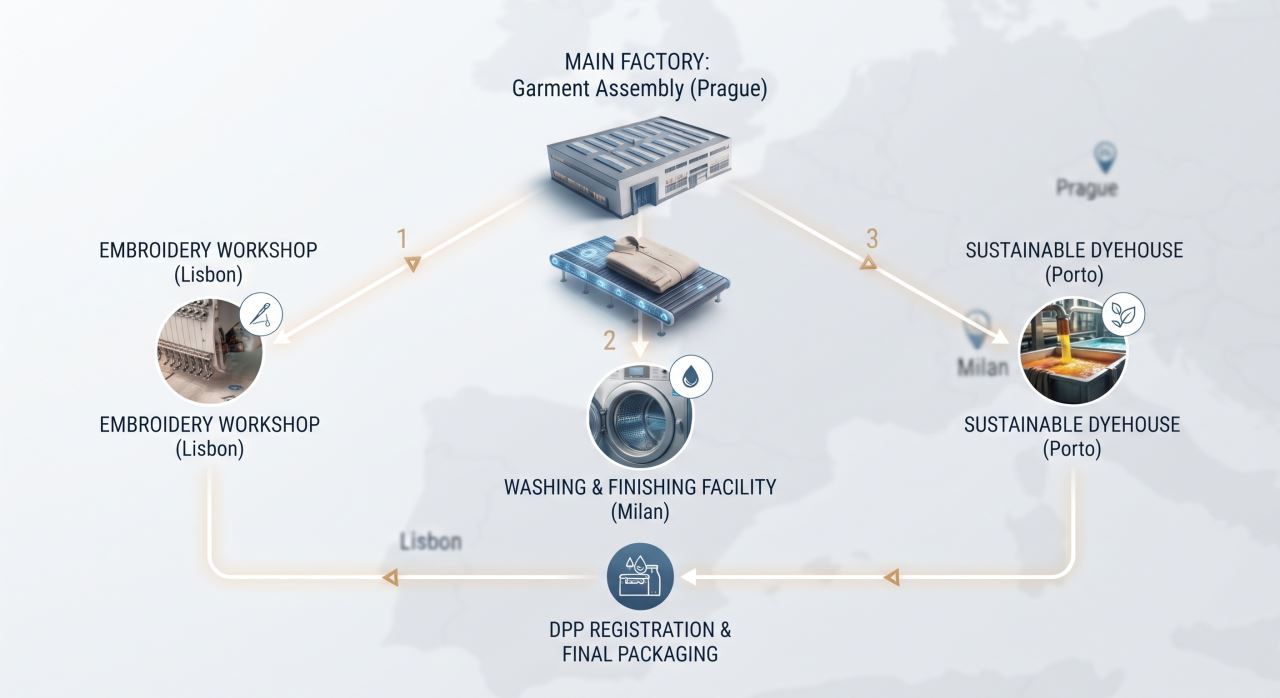
If an embroidery operation was originally scheduled internally but later moved outside because of capacity constraints, the final product record should reflect the real process where relevant.
This creates a stronger connection between production execution and product data.
Subcontracting data does not necessarily need to be public.
Access rights matter.
Internal teams may require full visibility.
Buyers may receive relevant supply-chain detail.
Authorities may receive information required by regulation.
Consumers may see only high-level information.
The first practical exercise is simple.
Choose one product.
Map every important external process.
Then ask:
Do we know the facility?
Is it approved?
Do we have current evidence?
Is the relationship captured in the system?
Would we know if it changed?
 Key Ideas
- Outsourced processes can create gaps between planned and actual product history.
• Commercial supplier records may not identify every processing facility.
• Important subcontractors should have clean organization and facility records.
• Facility changes should be controlled where they affect claims or compliance.
• DPP data should reflect actual production, not only the original plan.
• Access controls can protect sensitive subcontracting information.
Conclusion
Subcontracting is not a problem.
Invisible subcontracting is.
The more product information becomes digital and traceable, the more important it becomes to understand where key processes actually occurred.
At QUIVK, we believe exporters should treat subcontractor visibility as part of normal product-data discipline.
Know the process.
Know the facility.
Know when it changes.






