

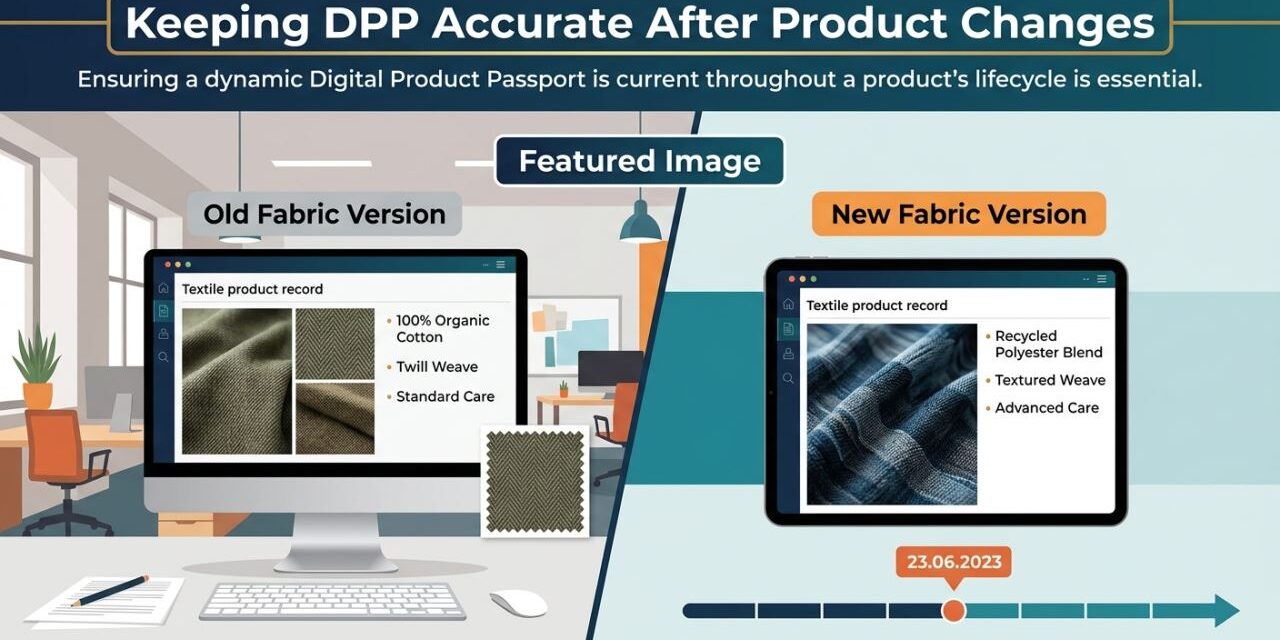
Why version control matters when fabrics, suppliers and specifications change
A garment can be approved months before the final production run.
Between development and shipment, many things can change.
A supplier becomes unavailable.
The buyer approves another fabric.
A trim is replaced.
A certificate expires.
The care instruction changes.
Production moves to another facility.
The style number may remain exactly the same.
But the underlying product information may not.
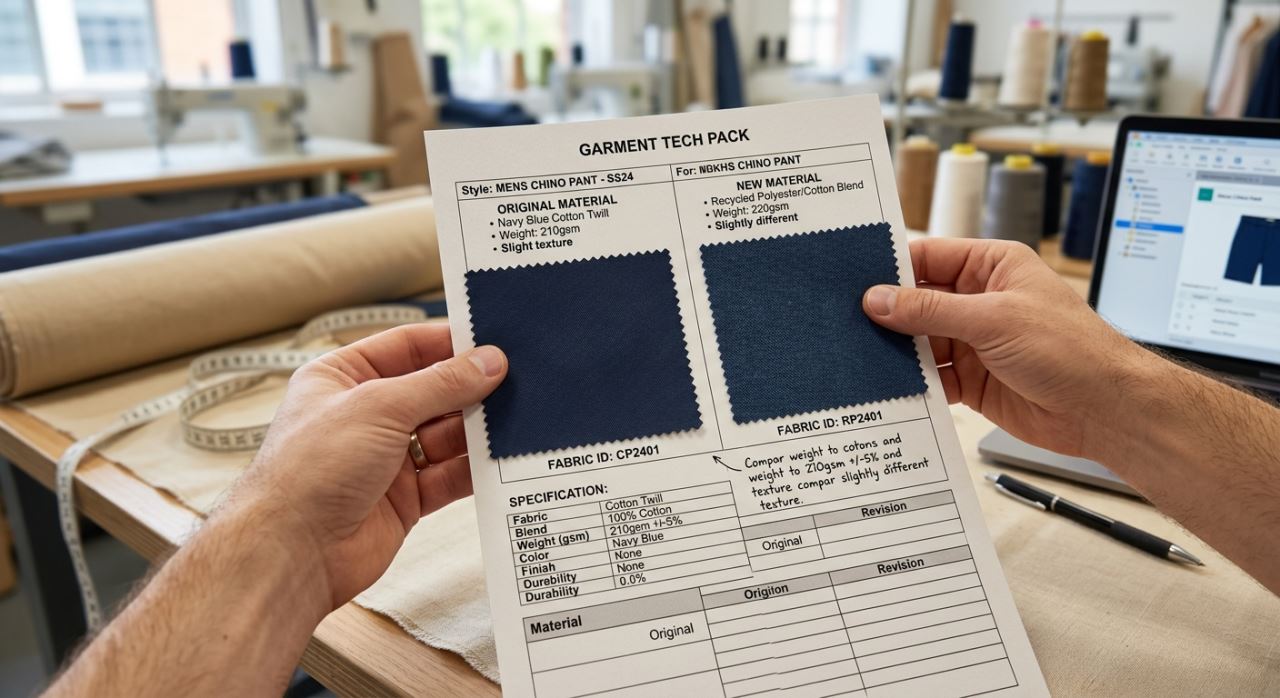
This creates an important DPP question:
When should the passport change?
Factories already manage product changes.
Buyer approvals.
Revised technical packs.
BOM updates.
Shade approvals.
Material substitutions.
Production amendments.
DPP should connect to these existing processes rather than creating a completely separate change system.
If an approved product change affects passport information, the digital record should be reviewed as part of the same workflow.
Not every change has the same importance.
Changing the product photograph is different from changing fibre composition.
A spelling correction is different from changing manufacturing facility.
Factories can therefore classify changes.

For example:
Low impact: copy correction
Medium impact: care-instruction update
High impact: material composition change
supplier change
facility change
certification-status change
Higher-impact changes may require stronger review and approval.
Version history is also essential.
A strong DPP system should preserve important historical information.
 Who changed the field?
When?
What was the previous value?
Why was it changed?
Who approved it?
This becomes particularly important after products have already entered the market.
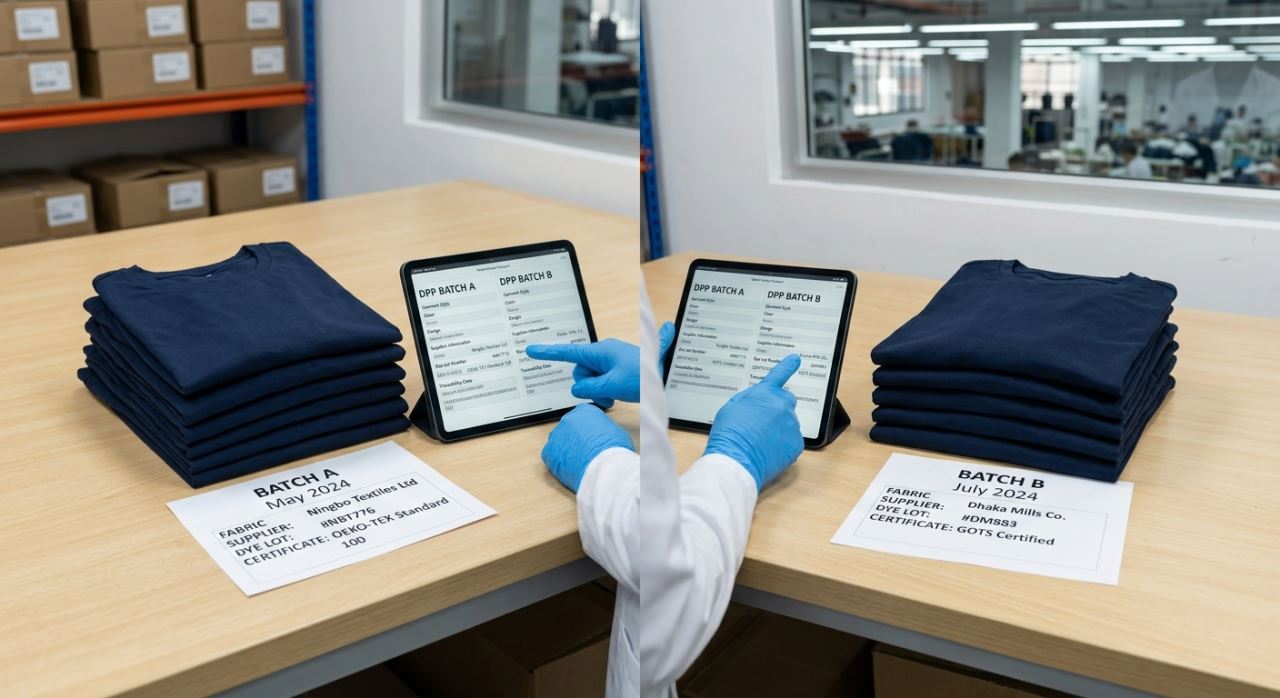
Batch boundaries can also matter.
Suppose Batch A used Supplier 1.
Batch B used Supplier 2.
If the relevant product information differs significantly, one generic model-level record may no longer describe both accurately.
This is one reason the chosen identification level matters.
Factories should also avoid silently rewriting product history.
Imagine a product sold six months ago using one material composition.
A later production run changes the material.
If the same passport is simply overwritten, the customer scanning the older garment may see information that was never true for that product.
That is a serious data-integrity problem.

A simple factory rule can prevent many issues:
Every approved product change should ask whether DPP information is affected.
If no, continue.
If yes, update the relevant passport before production or shipment.
Key Ideas
- Product information can change between development and production.
• DPP should connect to existing product-change workflows.
• Changes should be classified by risk and impact.
• Version history protects product-data integrity.
• Batch or item identification may become important when product information varies.
• New product information should not rewrite the history of older products.
• DPP impact should become part of product-change approval.
Conclusion
A Digital Product Passport is not a one-time data-entry exercise.
It is a living product record.
Factories need to keep it aligned with actual production.
At QUIVK, we believe one simple change-control question can prevent many problems:
Did this product change affect the passport?
If yes, update the digital record before the change reaches the market.






